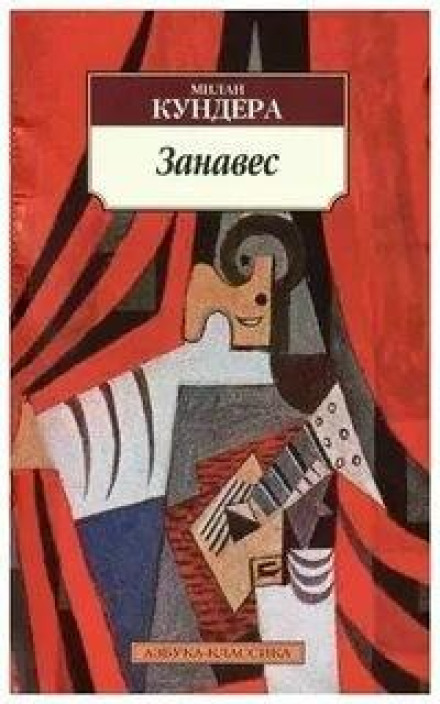
The Curtain: An Essay in Seven Parts
6 hrs. 25 min.
Language
Russian
Author
Milan Kundera
Author
Milan Kundera
Narrator
Mikhail Polezhaev
Narrator
Mikhail Polezhaev
Description
“The Curtains” by Milan Kundera is not just a literary treatise, but a profound philosophical reflection on the nature of literature, art, and reality. In his own manner, Kundera weaves together essayistic thinking and literary scholarship, creating a work that raises questions about the purpose of the novel and the role of the author in the modern world.
The book’s central theme is the “curtain” that hides the true essence of life and the world from us. Kundera invites the reader to consider that this curtain is nothing more than artificial constructions—things literature helps to push aside, opening new horizons of understanding and perception. The author looks at the development of the novel through the lens of key figures of world literature, such as Cervantes, Tolstoy, Flaubert, and others, showing how they expanded the boundaries of human perception.
The book is built as a series of reflections and observations enriched with numerous literary examples. Kundera freely turns to stories from his own life, anecdotes, and memories, which gives the text a special intimacy and warmth. Yet behind the ease and humor lies a deep philosophical subtext. The author raises questions not only about literature, but also about a person’s existential experience.
One of the key questions Kundera touches upon is the role of literature in the modern world—its influence on how we understand and interpret reality. He reflects on how literature can become a way to break the “curtain” of stereotypes and prejudice, prompting the reader to look at the world—and at themselves—differently.
“The Curtains” is a book for thoughtful readers who are ready not only to enjoy the text, but also to reflect on the questions the author sets before them. Kundera pushes us to think about what it means to be a writer and a reader, how literature affects our perception of reality, and what role it plays in our lives.
The book’s central theme is the “curtain” that hides the true essence of life and the world from us. Kundera invites the reader to consider that this curtain is nothing more than artificial constructions—things literature helps to push aside, opening new horizons of understanding and perception. The author looks at the development of the novel through the lens of key figures of world literature, such as Cervantes, Tolstoy, Flaubert, and others, showing how they expanded the boundaries of human perception.
The book is built as a series of reflections and observations enriched with numerous literary examples. Kundera freely turns to stories from his own life, anecdotes, and memories, which gives the text a special intimacy and warmth. Yet behind the ease and humor lies a deep philosophical subtext. The author raises questions not only about literature, but also about a person’s existential experience.
One of the key questions Kundera touches upon is the role of literature in the modern world—its influence on how we understand and interpret reality. He reflects on how literature can become a way to break the “curtain” of stereotypes and prejudice, prompting the reader to look at the world—and at themselves—differently.
“The Curtains” is a book for thoughtful readers who are ready not only to enjoy the text, but also to reflect on the questions the author sets before them. Kundera pushes us to think about what it means to be a writer and a reader, how literature affects our perception of reality, and what role it plays in our lives.
100%
01:06
1
29:30
2
17:48
3
16:12
4
19:47
5
21:49
6
21:23
7
15:35
8
22:09
9
24:58
10
16:49
11
15:18
12
33:39
13
20:22
14
25:13
15
25:04
16
18:19
17
24:05
18
16:18
19
