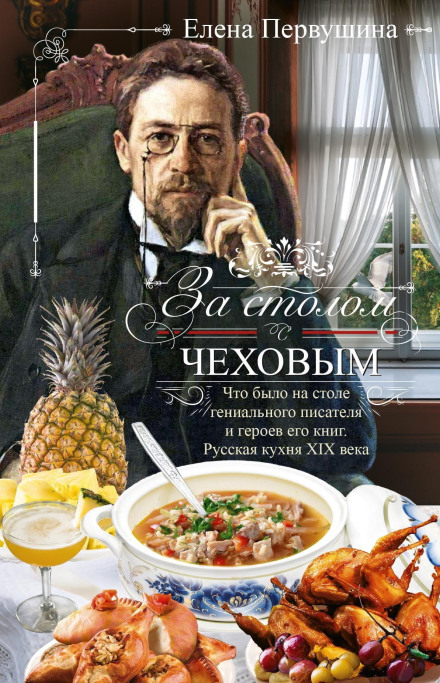
At the Table with Chekhov. What Was on the Table of the Great Writer and the Heroes of His Books. Russian Cuisine of the 19th Century
10 hrs. 14 min.
Language
Russian
Author
Elena Pervushina
Author
Elena Pervushina
Narrator
Lyubov Odintsova
Narrator
Lyubov Odintsova
Description
“A person who does not pay proper attention to nutrition cannot be called truly intelligent,” the classic of Russian literature A. P. Chekhov argued. He became famous not only as a brilliant storyteller, but also as a subtle connoisseur of good food. A special place among his gastronomic preferences was occupied by crucian carp in sour cream: “Of all silent fish, the best is the fried crucian carp…” Anton Pavlovich’s hospitality was almost limitless: many people always gathered at his table, and there were plenty of treats. In his texts, with clear affection, he listed dishes: “…they served a sauce made from pigeons, something from offal, fried suckling pig, duck, partridge, cauliflower, vareniki, cottage cheese with milk, jelly, and, in the end, pancakes with jam.” Some of his descriptions are so appetizing that it’s hard to read them without a reaction: “Kulebyaka must be appetizing, shameless—fully in all its nakedness, so the temptation is there. You start eating it, and from it comes oil like tears; the filling is fatty, juicy—with eggs, with offal, with onions…” He valued pancakes no less, talking about them with playful riddling: “How do they bake pancakes? It’s unknown… Only the distant future will learn about it…” As V. Pokhlebkin noted, Chekhov’s culinary details became an important part of the atmosphere of his plays—and he did it masterfully. This book will bring reading pleasure and introduce you to an excellent selection of recipes from that era.
In the A4 PDF version, the original publisher’s layout is preserved.
In the A4 PDF version, the original publisher’s layout is preserved.
100%
1:23:57
За столом с Чеховым. Что было на столе гениального писателя и героев его книг. Русская кухня XIX века 01
45:33
За столом с Чеховым. Что было на столе гениального писателя и героев его книг. Русская кухня XIX века 02
45:54
За столом с Чеховым. Что было на столе гениального писателя и героев его книг. Русская кухня XIX века 03
14:41
За столом с Чеховым. Что было на столе гениального писателя и героев его книг. Русская кухня XIX века 04
17:13
За столом с Чеховым. Что было на столе гениального писателя и героев его книг. Русская кухня XIX века 05
04:00
За столом с Чеховым. Что было на столе гениального писателя и героев его книг. Русская кухня XIX века 06
33:27
За столом с Чеховым. Что было на столе гениального писателя и героев его книг. Русская кухня XIX века 07
16:10
За столом с Чеховым. Что было на столе гениального писателя и героев его книг. Русская кухня XIX века 08
39:56
За столом с Чеховым. Что было на столе гениального писателя и героев его книг. Русская кухня XIX века 09
04:11
За столом с Чеховым. Что было на столе гениального писателя и героев его книг. Русская кухня XIX века 10
11:50
За столом с Чеховым. Что было на столе гениального писателя и героев его книг. Русская кухня XIX века 11
20:14
За столом с Чеховым. Что было на столе гениального писателя и героев его книг. Русская кухня XIX века 12
00:38
За столом с Чеховым. Что было на столе гениального писателя и героев его книг. Русская кухня XIX века 13
15:44
За столом с Чеховым. Что было на столе гениального писателя и героев его книг. Русская кухня XIX века 14
14:34
За столом с Чеховым. Что было на столе гениального писателя и героев его книг. Русская кухня XIX века 15
22:46
За столом с Чеховым. Что было на столе гениального писателя и героев его книг. Русская кухня XIX века 16
51:25
За столом с Чеховым. Что было на столе гениального писателя и героев его книг. Русская кухня XIX века 17
1:30:04
За столом с Чеховым. Что было на столе гениального писателя и героев его книг. Русская кухня XIX века 18
31:11
За столом с Чеховым. Что было на столе гениального писателя и героев его книг. Русская кухня XIX века 19
51:26
За столом с Чеховым. Что было на столе гениального писателя и героев его книг. Русская кухня XIX века 20
