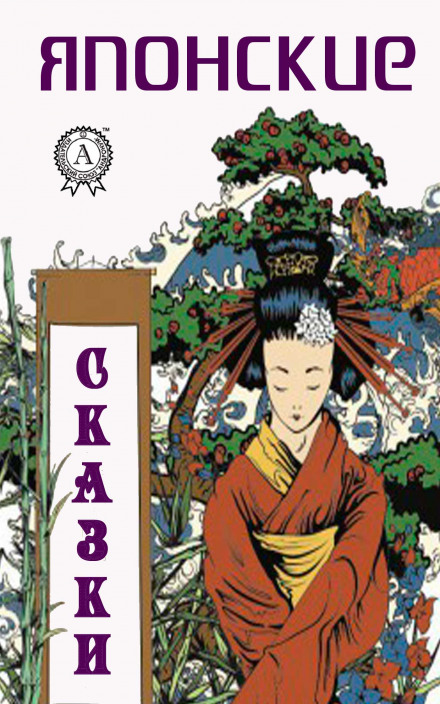
Japanese Fairy Tales
1 hr. 2 min.
Language
Russian
Narrator
Vsevolod Larionov
Narrator
Yulia Yulskaya
Narrator
Anatoly Barantsev
Narrator
Vsevolod Abdulov
Narrator
Alexey Borzunov
Description
Japan… Modern buildings, a huge stream of cars, and wonderful ancient pagodas—one or two stories—amid tiny gardens with miniature mountains, dwarf forests, and waterfalls. Ancient, thousand-year mausoleums and temples still stand on Japanese soil, as well as towns and parks with poetic names: “The Light of the Sun,” “The Gates of Sunlight,” “A Frozen Symphony”… Sacred deer, stags, and monkeys live freely in temple gardens, trustingly take fruit from visitors, and play with children.
The Japanese people love nature—gently and deeply. In poetry and fairy tales they sang about the blossoms of plums and cherries, the red foliage of maples, and the first snow.
The Japanese worship beauty. In every room, no matter how small it is, there are always elegantly arranged flower bouquets in exquisite vases, as well as cut tree branches. The art of arranging bouquets (ikebana) is an entire science, whose masters are widely known—just like masters of calligraphy, embroidery, wooden sculpture, or the carving of wonderful little boxes.
And just as lovingly, with attention to every word and the unique poetry of details, Japanese people pass their fairy tales from generation to generation—wise, unhurried, thoughtful, amusing, or slightly sad.
In Russia, fairy tales of many peoples of the world have long been known, but Japanese ones took a long time to reach us. The first to open them to Russian readers was Leo Tolstoy. In his masterful retelling, they gained new life. Sergey Y. Marshak also worked hard on them, and under his editorship several collections of Japanese fairy tales were published.
A fairy tale in Japan is rest after a working day. “If you tell it in the daytime, the mice will laugh,” the Japanese say. Indeed, what could be more pleasant than listening at home in the evenings when everyone is gathered, to funny and captivating old legends.
Japanese fairy tales are known for their special refined subtle humor. There is always a joke, a play on words, and an unexpectedly cheerful ending. In Japan, “amusing” stories based on a funny situation are very popular, mocking some shortcomings or eccentricities. Exactly two such fairy tales you will hear on this record. One is very funny—about the lazy Taro and how he “cured” himself of his laziness; the other is even funnier—about a foolish fellow, and as they say, “there is no medicine for stupidity.”
But before you hear these entertaining fairy tales, another guest will enter your home—a fairy tale that’s called exactly that: “Knock-knock-knock, open the door.” A sweet, kind story, slightly sad, just like its heroine—a little girl who once appeared, to the joy of an old man and an old woman, right out of a golden melon…
The Japanese people love nature—gently and deeply. In poetry and fairy tales they sang about the blossoms of plums and cherries, the red foliage of maples, and the first snow.
The Japanese worship beauty. In every room, no matter how small it is, there are always elegantly arranged flower bouquets in exquisite vases, as well as cut tree branches. The art of arranging bouquets (ikebana) is an entire science, whose masters are widely known—just like masters of calligraphy, embroidery, wooden sculpture, or the carving of wonderful little boxes.
And just as lovingly, with attention to every word and the unique poetry of details, Japanese people pass their fairy tales from generation to generation—wise, unhurried, thoughtful, amusing, or slightly sad.
In Russia, fairy tales of many peoples of the world have long been known, but Japanese ones took a long time to reach us. The first to open them to Russian readers was Leo Tolstoy. In his masterful retelling, they gained new life. Sergey Y. Marshak also worked hard on them, and under his editorship several collections of Japanese fairy tales were published.
A fairy tale in Japan is rest after a working day. “If you tell it in the daytime, the mice will laugh,” the Japanese say. Indeed, what could be more pleasant than listening at home in the evenings when everyone is gathered, to funny and captivating old legends.
Japanese fairy tales are known for their special refined subtle humor. There is always a joke, a play on words, and an unexpectedly cheerful ending. In Japan, “amusing” stories based on a funny situation are very popular, mocking some shortcomings or eccentricities. Exactly two such fairy tales you will hear on this record. One is very funny—about the lazy Taro and how he “cured” himself of his laziness; the other is even funnier—about a foolish fellow, and as they say, “there is no medicine for stupidity.”
But before you hear these entertaining fairy tales, another guest will enter your home—a fairy tale that’s called exactly that: “Knock-knock-knock, open the door.” A sweet, kind story, slightly sad, just like its heroine—a little girl who once appeared, to the joy of an old man and an old woman, right out of a golden melon…
100%
05:08
01-tuk-tuk-tuk-otkrojj-dver
05:18
02-tuk-tuk-tuk-otkrojj-dver
05:37
03-tuk-tuk-tuk-otkrojj-dver
06:10
04-tuk-tuk-tuk-otkrojj-dver
06:02
05-tuk-tuk-tuk-otkrojj-dver
04:39
06-tuk-tuk-tuk-otkrojj-dver
06:41
07-dve-ljagushki
05:10
08-nastojatel-i-sluzhka
05:07
09-kak-dostat-zhivuju-obezjanu
07:04
10-kak-dostat-zhivuju-obezjanu
05:41
11-kak-dostat-zhivuju-obezjanu
