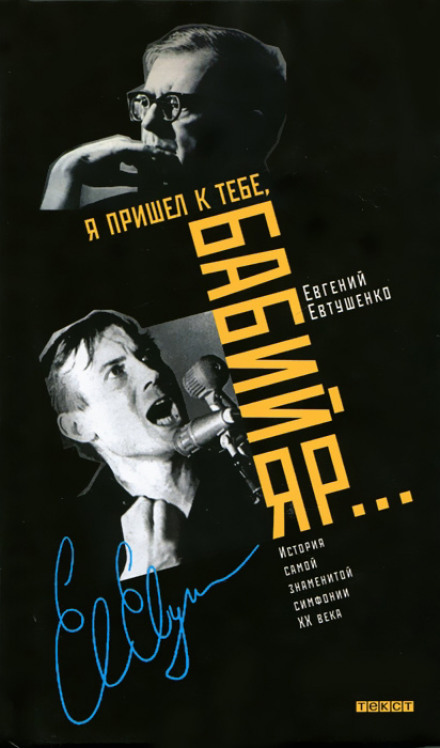
I Came to You, Babi Yar... The Story of the Most Famous Symphony of the 20th Century
2 hrs. 43 min.
Language
Russian
Author
Yevgeny Yevtushenko
Author
Yevgeny Yevtushenko
Narrator
Sergey Gerasimov
Narrator
Sergey Gerasimov
Description
Yevgeny Yevtushenko tells the story of how Dmitri Shostakovich’s Thirteenth Symphony was created—a work that rightfully belongs among the great masterpieces of the 20th century—as well as the story of his poem “Babi Yar,” published in “Literary Gazette” in 1961 and instantly becoming an event.
Shostakovich’s music and Yevtushenko’s verses spoke about the tragedy that happened in 1941 and created “the first sounding monument to Babi Yar.”
“This symphony, at the wave of the conductor’s baton, could easily turn the concert hall into Golgotha, then into a prison cell where Dreyfus languishes, then into a street in Białystok where white feathers of a pogrom float above, then into Anna Frank’s little room, then into a fairground burlesque with clownish pipes, then into the dark vaults under which a trial of Galileo takes place, then into a Moscow shop where half-phantom women quietly move. The whole concert hall rose up when, sideways between the musicians, as they hammered their bows on the stands, there pressed in—a man clenching his own hands, tightly, with a slightly comical rooster crest, with crookedly sitting glasses—Shostakovich.”
Shostakovich’s music and Yevtushenko’s verses spoke about the tragedy that happened in 1941 and created “the first sounding monument to Babi Yar.”
“This symphony, at the wave of the conductor’s baton, could easily turn the concert hall into Golgotha, then into a prison cell where Dreyfus languishes, then into a street in Białystok where white feathers of a pogrom float above, then into Anna Frank’s little room, then into a fairground burlesque with clownish pipes, then into the dark vaults under which a trial of Galileo takes place, then into a Moscow shop where half-phantom women quietly move. The whole concert hall rose up when, sideways between the musicians, as they hammered their bows on the stands, there pressed in—a man clenching his own hands, tightly, with a slightly comical rooster crest, with crookedly sitting glasses—Shostakovich.”
100%
00:29
00_00_Evtushenko_E_Ya_prishYol_k_tebe_Babiy_Yar
00:19
00_01_Soderzhanie
15:34
01_01_Rozhdenie 13-y simfonii
27:21
01_02_Kak ya shel k Babemu Yaru
28:51
01_03_Pohorony Stalina
25:40
01_04_Lzhivaya legenda
22:41
02_00_Eho 13-y simfonii
21:08
03_00_Prodolzheniy 13-y simfonii bez muzyki
21:29
04_00_Shekspir o Mihoelse
