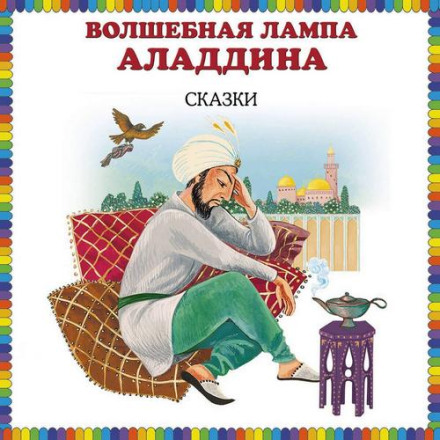
Aladdin's Magic Lamp (collection)
1 hr. 24 min.
Description
The presented audio collection is a profound cross-section of the great monument of medieval literature, “One Thousand and One Nights,” in a strict academic translation by Mikhail Salye. At first glance, the three stories included in the release are plot-autonomous, yet they are inseparably bound together by the great compositional device of the Ancient East—an unbroken framing narrative. Each of these tales speaks in the voice of the wise Scheherazade, who, night after night, conducts an intricate psychological game with the formidable king Shahryar. Stopping her story at the most intriguing moment, she step by step heals the ruler’s *wounded soul, hardened after his wife’s betrayal, and day by day delays the execution of his death sentence.
From the standpoint of literary history, this collection is unique in that it clearly demonstrates the complex, “patchwork” fate of the formation of the Arabic cycle:
1. “Little Khuddi” (in a number of readers published as “The Story of Ali-Khoja, a Merchant from Baghdad”)—an exquisite courtroom parable included in the genuine, historical core of Arabic manuscripts (first appeared in a European edition by Antoine Galland in the 18th century). The plot unfolds in Baghdad during the time of the legendary caliph Harun al-Rashid. The story of a jar of olives, under which golden coins were secretly hidden, explores the classic themes of betrayal by a close friend, the impotence of corrupt judges (qadis), and the triumph of a child’s wisdom that helps the caliph restore justice.
2. “Aladdin and the Magic Lamp”—the main jewel of the collection. From a historical and literary perspective, it shares a fate with “Ali Baba”: it did not exist in the original medieval Arabic manuscripts. The text was written down by the French orientalist Antoine Galland from the words of the Syrian storyteller Hanna Diyab at the beginning of the 18th century, after which Galland, on his own initiative, inserted the story of a poor tailor’s son into the canonical cycle.
3. “The Tale of the Sultan of Suman and the Physician Duban” (in the academic edition—“A Tale of the Persian Doctor”)—a unique artifact. This work does not belong at all to the traditional canonical text of “1001 Nights.” This is a so-called “wandering” Arabic fairy tale, translated by M. Salye from other Eastern chronicles, but the Eksmo publishing house traditionally includes it in children’s collections for its deep moral lesson. It tells of a wise healer who cured the king of leprosy, and of how the envy of the counselors destroys both the righteous ruler and the formidable lord who trusted them.
The text is read by the master of artistic word Alexander Aravushkin. His deep, measured, truly academic voice lacks unnecessary childish theatricality. The narrator skillfully recreates the authentic, hypnotic atmosphere of ancient storytelling, preserving the complex rhythmic structure and the noble diction of Salye’s translation.
“Once upon a time, in one of the cities of China... there was a poor tailor named Mustafa. And he had a son named Aladdin, and this son was wayward, lazy, and wicked; he did not obey his father in anything and learned no craft at all, only went out to play with street boys...”
100%
21:29
1. Маленький Кадди
46:04
2. Алладин и волшебная лампа
16:52
3. История Суманского султана и врача Дубана
