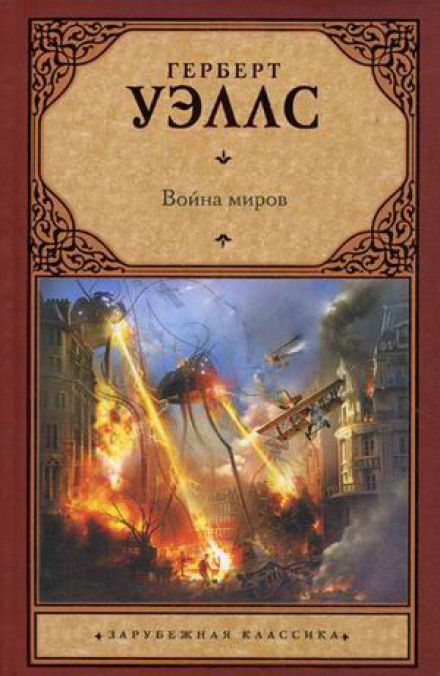
The War of the Worlds
7 hrs. 0 min.
Language
Russian
Author
Herbert Wells
Author
Herbert Wells
Narrator
Vyacheslav Gerasimov
Narrator
Vyacheslav Gerasimov
Description
One of the grandest canvases in the entire history of world science fiction—almost unmatched in literature: a harsh, realistic picture of the confrontation between humankind and the unknown and the unknowable. In this respect, Wells’s novel has become an absolute classic. Standing alongside other representatives of the genre—“they came from outer space to enslave us”—it looks like a truly unreachable Everest.
War of the Worlds is perhaps his most famous science-fiction novel, and over the last one hundred ten years its fantastical elements have been broken up by followers, imitators, and plagiarists. Films have been made, sequels written, fan fiction produced, books inspired by it—and God knows what else. It would seem that only respectable and fairly indestructible remains should be left from the novel. Yet the book lives, and reading it is just as fascinating as it was one hundred ten years ago. The novel stays alive thanks to its realistic component—through vivid people like those who animate Dickens and Thackeray. In this most fantastic of novels, we see the true Victorian era—slow, confident, already in the final days of its life, yet not ready to capitulate and certainly not to die.
War of the Worlds is perhaps his most famous science-fiction novel, and over the last one hundred ten years its fantastical elements have been broken up by followers, imitators, and plagiarists. Films have been made, sequels written, fan fiction produced, books inspired by it—and God knows what else. It would seem that only respectable and fairly indestructible remains should be left from the novel. Yet the book lives, and reading it is just as fascinating as it was one hundred ten years ago. The novel stays alive thanks to its realistic component—through vivid people like those who animate Dickens and Thackeray. In this most fantastic of novels, we see the true Victorian era—slow, confident, already in the final days of its life, yet not ready to capitulate and certainly not to die.
100%
06:41
Voyna_mirov_01
06:53
Voyna_mirov_02
06:47
Voyna_mirov_03
07:00
Voyna_mirov_04
06:42
Voyna_mirov_05
06:46
Voyna_mirov_06
06:46
Voyna_mirov_07
06:53
Voyna_mirov_08
07:12
Voyna_mirov_09
06:57
Voyna_mirov_10
06:47
Voyna_mirov_11
07:28
Voyna_mirov_12
07:04
Voyna_mirov_13
06:43
Voyna_mirov_14
06:46
Voyna_mirov_15
06:43
Voyna_mirov_16
07:04
Voyna_mirov_17
06:48
Voyna_mirov_18
06:49
Voyna_mirov_19
07:06
Voyna_mirov_20
06:53
Voyna_mirov_21
06:49
Voyna_mirov_22
06:50
Voyna_mirov_23
07:33
Voyna_mirov_24
06:55
Voyna_mirov_25
06:57
Voyna_mirov_26
07:02
Voyna_mirov_27
07:45
Voyna_mirov_28
06:45
Voyna_mirov_29
07:13
Voyna_mirov_30
07:23
Voyna_mirov_31
06:45
Voyna_mirov_32
06:47
Voyna_mirov_33
06:42
Voyna_mirov_34
07:34
Voyna_mirov_35
06:48
Voyna_mirov_36
07:25
Voyna_mirov_37
06:50
Voyna_mirov_38
06:58
Voyna_mirov_39
07:09
Voyna_mirov_40
06:48
Voyna_mirov_41
06:43
Voyna_mirov_42
06:53
Voyna_mirov_43
06:55
Voyna_mirov_44
06:55
Voyna_mirov_45
06:48
Voyna_mirov_46
06:42
Voyna_mirov_47
06:51
Voyna_mirov_48
07:14
Voyna_mirov_49
07:11
Voyna_mirov_50
06:45
Voyna_mirov_51
08:19
Voyna_mirov_52
06:51
Voyna_mirov_53
06:49
Voyna_mirov_54
06:46
Voyna_mirov_55
06:56
Voyna_mirov_56
06:53
Voyna_mirov_57
07:48
Voyna_mirov_58
07:38
Voyna_mirov_59
07:07
Voyna_mirov_60
00:26
Voyna_mirov_61
