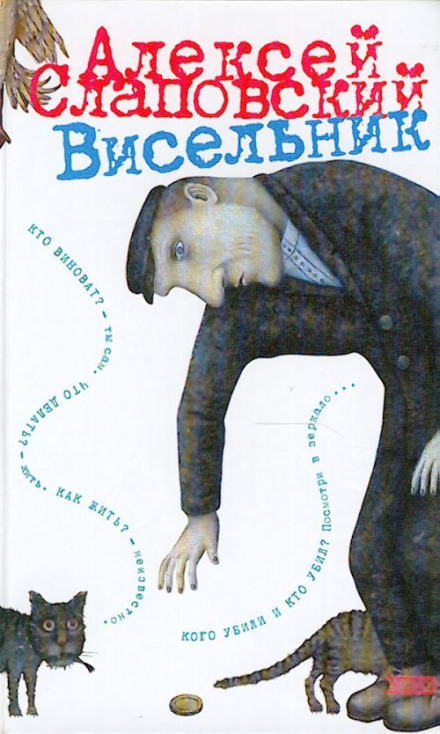
The Hanged Man
3 hrs. 53 min.
Language
Russian
Author
Alexey Slapovsky
Author
Alexey Slapovsky
Narrator
Yury Zaborovsky
Narrator
Yury Zaborovsky
Description
“Hangman” may seem an ordinary work if you ignore the wise old saying that everything is learned by comparison. In many ways, it differs from the traditional outpourings of the kind and provincial schemer Slapovsky—though, perhaps, it isn’t especially remarkable within the many ranks of good, solid literature. The main character is a successful businessman—elegant like James Bond, and cynical like a capitalist in Soviet propaganda’s depiction. He is used to solving all his problems himself. He doesn’t do anything just like that: every move is planned in advance, with about five steps ahead…
100%
00:24
00-viselnik
29:07
01-viselnik
25:09
02-viselnik
28:19
03-viselnik
25:28
04-viselnik
27:03
05-viselnik
25:31
06-viselnik
21:26
07-viselnik
25:50
08-viselnik
25:24
09-viselnik
