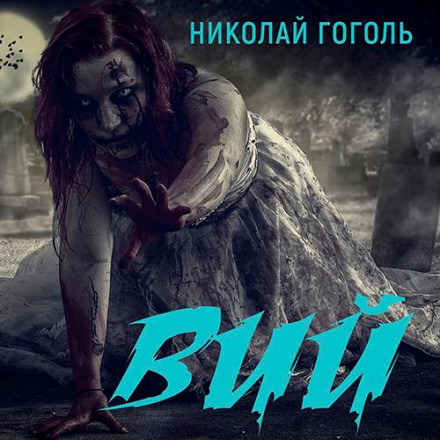
Viy
2 hrs. 23 min.
Language
Russian
Author
Nikolai Gogol
Author
Nikolai Gogol
Narrator
Vyacheslav Manylov
Narrator
Vyacheslav Manylov
Description
Nikolai Gogol’s book “Viy” needs no introduction—thanks to its thrilling and mysterious mystifications and the folk spirit finely felt through the text, it has already become part of an immortal cultural treasure trove. This is a real horror book, although it also raises questions of faith and disbelief, praises the power of prayer and the steadfastness of the spirit. Once in the home of a witch, the seminarian-philosopher Khoma Brut barely manages to break free from her clutches and tries to forget what happened as if it were a terrible dream. But the rector orders him to read prayers at the coffin of the dead pannochka for three days—only later it turns out she was that very witch, someone Khoma had no intention of meeting under any circumstances. Khoma must hold on for three nights… The tale “Viy” has always enjoyed constant popular love; it has been adapted countless times for film and television, and even today its magical influence is shrouded in a halo of mystery.
Nikolai Vasilyevich Gogol is the author of the most famous novel-novelette “Dead Souls,” as well as the greatest works of Russian literature: the novelettes “The Overcoat,” “Taras Bulba,” “Evenings on a Farm Near Dikanka,” “The Nose,” “Viy,” “Notes of a Madman,” “The Coach,” “The Portrait,” “Nevsky Prospekt,” the comedy “The Inspector General,” “Marriage,” and the collection of novelettes “Mirgorod.” His life and work are filled with mystery and mysticism—so he was, is, and will be the most enigmatic writer, a brilliant satirist, and an unsurpassed playwright.
Nikolai Vasilyevich Gogol is the author of the most famous novel-novelette “Dead Souls,” as well as the greatest works of Russian literature: the novelettes “The Overcoat,” “Taras Bulba,” “Evenings on a Farm Near Dikanka,” “The Nose,” “Viy,” “Notes of a Madman,” “The Coach,” “The Portrait,” “Nevsky Prospekt,” the comedy “The Inspector General,” “Marriage,” and the collection of novelettes “Mirgorod.” His life and work are filled with mystery and mysticism—so he was, is, and will be the most enigmatic writer, a brilliant satirist, and an unsurpassed playwright.
100%
00:10
1
00:35
2
38:35
3
39:04
4
35:03
5
29:24
6
00:12
7
