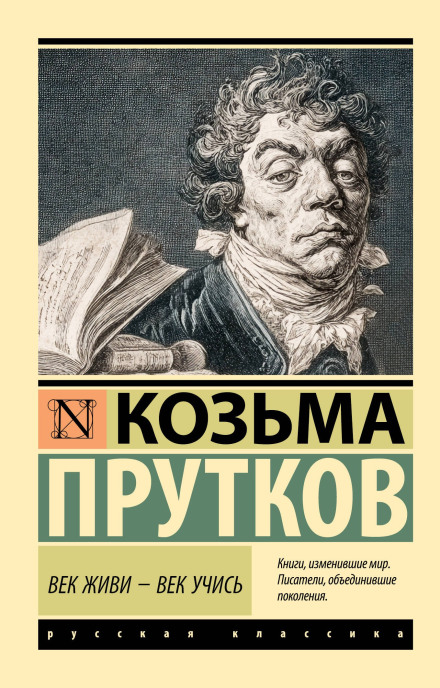
Live and Learn
7 hrs. 14 min.
Language
Russian
Author
Kozma Prutkov
Author
Kozma Prutkov
Narrator
Igor Pronin
Narrator
Igor Pronin
Description
“Live for a century—learn for a century,” “If you want to be happy, be so”—these and many other timeless sayings are attributed to the fictional sage Kozma Prutkov.
Meet the “classic,” whose plays, poems, and sharp witticisms have sounded contemporary for more than a century and a half.
Kozma Petrovich Prutkov is a literary character created in the 1850s–1860s by Aleksei Konstantinovich Tolstoy and the Zhemchuzhnikov brothers. The authors devised his biography and personality: according to the legend, he is a civil servant as well as a romantically inclined poet and writer who mocks intellectual sluggishness and ostentatious political “good intentions.” The character was developed so convincingly that many readers took Prutkov for a real man of letters.
Prutkov is credited with many winged phrases, some of which have become nearly proverbial: “Live for a century—learn for a century!,” “If you want to be happy, be so,” “What we have— we don’t keep; when it’s lost—we grieve,” and others. His aphorisms, plays, and poems expose foolishness passing itself off as common sense, and even today his satire has lost none of its edge or relevance.
Meet the “classic,” whose plays, poems, and sharp witticisms have sounded contemporary for more than a century and a half.
Kozma Petrovich Prutkov is a literary character created in the 1850s–1860s by Aleksei Konstantinovich Tolstoy and the Zhemchuzhnikov brothers. The authors devised his biography and personality: according to the legend, he is a civil servant as well as a romantically inclined poet and writer who mocks intellectual sluggishness and ostentatious political “good intentions.” The character was developed so convincingly that many readers took Prutkov for a real man of letters.
Prutkov is credited with many winged phrases, some of which have become nearly proverbial: “Live for a century—learn for a century!,” “If you want to be happy, be so,” “What we have— we don’t keep; when it’s lost—we grieve,” and others. His aphorisms, plays, and poems expose foolishness passing itself off as common sense, and even today his satire has lost none of its edge or relevance.
100%
33:10
Век живи – век учись 01
15:49
Век живи – век учись 02
59:30
Век живи – век учись 03
19:39
Век живи – век учись 04
05:43
Век живи – век учись 05
34:01
Век живи – век учись 06
17:04
Век живи – век учись 07
13:28
Век живи – век учись 08
28:10
Век живи – век учись 09
34:57
Век живи – век учись 10
01:37
Век живи – век учись 11
04:49
Век живи – век учись 12
53:18
Век живи – век учись 13
10:55
Век живи – век учись 14
21:34
Век живи – век учись 15
09:17
Век живи – век учись 16
22:30
Век живи – век учись 17
15:10
Век живи – век учись 18
11:05
Век живи – век учись 19
13:40
Век живи – век учись 20
08:59
Век живи – век учись 21
