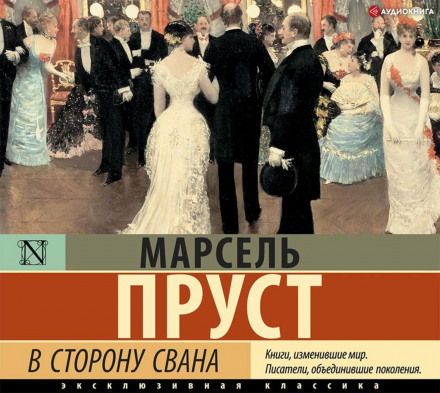
Swann's Way
17 hrs. 14 min.
Language
Russian
Author
Marcel Proust
Author
Marcel Proust
Narrator
Konstantin Korolkov
Narrator
Konstantin Korolkov
Description
The novel “Swann in Love,” opening the cycle “In Search of Lost Time,” made—after its publication in 1913—quite an ambiguous impression on French critics: Proust’s stylistic innovation, boldly playing with time and events and weaving them into a fairly complex chronologically unified whole, was accepted by far from everyone. However, time has proved both the critics’ limitations and the genius of the writer: his exquisite, piercing, and sad work about love, jealousy, growing up, and misunderstanding—the eternal loneliness of the man who feels society so acutely—and the unsuccessful and desperate search for ever-elusive beauty still fascinates readers.
