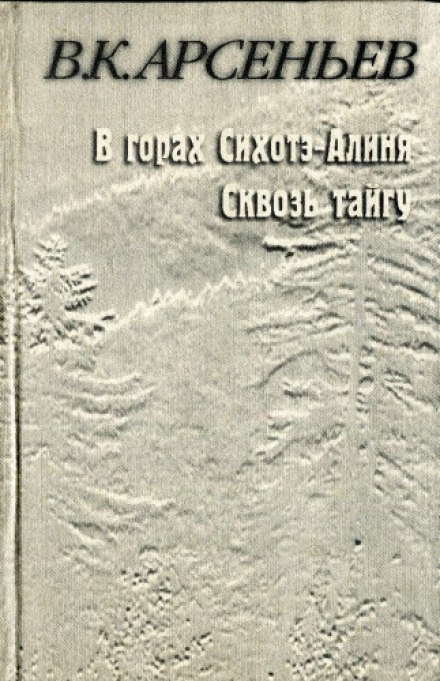
In the Mountains of Sikhote-Alin
12 hrs. 55 min.
Language
Russian
Author
Vladimir Arsenyev
Author
Vladimir Arsenyev
Narrator
Olga Moskaljova
Narrator
Olga Moskaljova
Description
The 20th century was marked by a burst of activity among the country’s scientific circles, and little-known territories were mapped. At that time, the Far Eastern region was sparsely populated and almost completely unexplored. After this region was finally secured to the Russian Empire, scientific expeditions began to be sent here to study and examine these hard-to-reach places. Przhevalsky, Venyukov, Ivanov—and of course? Arsenyev. Vladimir Klavdievich Arsenyev was a famous figure in the history of research in the Far East. His main specialization was topography, but besides that, he was interested in ethnography, zoology, botany, and literature. “Dersu Uzala,” “Along the Ussuri Region,” and “In the Mountains of Sikhote-Alin” brought him no less fame than his scientific endeavors.
Vladimir Klavdievich Arsenyev is the most famous Russian in the history of Far Eastern exploration. He easily found a common language with representatives of indigenous peoples. “The White Captain” — many peoples rightly called Arsenyev; his respectful attitude toward the culture, traditions, and customs of the aboriginal inhabitants earned him a good reputation across the entire Far East. Perhaps that is why he so easily found guides for his journeys among the Golds, the Tungus, and the Chinese. In the extremely difficult expedition described in this book, he was helped by the Chinese man Zhang Bao. A vast territory had to be studied and described in less than two years—filled with dangers, disappointments, and losses.
Vladimir Klavdievich Arsenyev is the most famous Russian in the history of Far Eastern exploration. He easily found a common language with representatives of indigenous peoples. “The White Captain” — many peoples rightly called Arsenyev; his respectful attitude toward the culture, traditions, and customs of the aboriginal inhabitants earned him a good reputation across the entire Far East. Perhaps that is why he so easily found guides for his journeys among the Golds, the Tungus, and the Chinese. In the extremely difficult expedition described in this book, he was helped by the Chinese man Zhang Bao. A vast territory had to be studied and described in less than two years—filled with dangers, disappointments, and losses.
100%
09:00
V_gorah_Sihote-Alinya_01_01
14:07
V_gorah_Sihote-Alinya_01_02
09:28
V_gorah_Sihote-Alinya_01_03
11:27
V_gorah_Sihote-Alinya_01_04
11:27
V_gorah_Sihote-Alinya_01_05
11:34
V_gorah_Sihote-Alinya_01_06
13:04
V_gorah_Sihote-Alinya_01_07
08:57
V_gorah_Sihote-Alinya_01_08
08:47
V_gorah_Sihote-Alinya_01_09
09:16
V_gorah_Sihote-Alinya_01_10
10:51
V_gorah_Sihote-Alinya_01_11
08:59
V_gorah_Sihote-Alinya_01_12
09:24
V_gorah_Sihote-Alinya_01_13
08:44
V_gorah_Sihote-Alinya_01_14
11:19
V_gorah_Sihote-Alinya_01_15
11:10
V_gorah_Sihote-Alinya_01_16
10:13
V_gorah_Sihote-Alinya_01_17
09:42
V_gorah_Sihote-Alinya_01_18
08:23
V_gorah_Sihote-Alinya_01_19
10:14
V_gorah_Sihote-Alinya_01_20
12:28
V_gorah_Sihote-Alinya_01_21
12:56
V_gorah_Sihote-Alinya_01_22
10:17
V_gorah_Sihote-Alinya_01_23
11:29
V_gorah_Sihote-Alinya_01_24
08:36
V_gorah_Sihote-Alinya_01_25
09:28
V_gorah_Sihote-Alinya_01_26
15:25
V_gorah_Sihote-Alinya_01_27
09:51
V_gorah_Sihote-Alinya_01_28
10:02
V_gorah_Sihote-Alinya_01_29
09:10
V_gorah_Sihote-Alinya_01_30
09:15
V_gorah_Sihote-Alinya_01_31
10:01
V_gorah_Sihote-Alinya_01_32
13:06
V_gorah_Sihote-Alinya_01_33
10:59
V_gorah_Sihote-Alinya_01_34
16:44
V_gorah_Sihote-Alinya_01_35
10:43
V_gorah_Sihote-Alinya_01_36
03:14
V_gorah_Sihote-Alinya_01_37
11:06
V_gorah_Sihote-Alinya_02_01
09:09
V_gorah_Sihote-Alinya_02_02
09:48
V_gorah_Sihote-Alinya_02_03
09:47
V_gorah_Sihote-Alinya_02_04
08:54
V_gorah_Sihote-Alinya_02_05
08:26
V_gorah_Sihote-Alinya_02_06
09:32
V_gorah_Sihote-Alinya_02_07
10:05
V_gorah_Sihote-Alinya_02_08
09:15
V_gorah_Sihote-Alinya_02_09
11:44
V_gorah_Sihote-Alinya_02_10
13:23
V_gorah_Sihote-Alinya_02_11
09:14
V_gorah_Sihote-Alinya_02_12
13:19
V_gorah_Sihote-Alinya_02_13
09:19
V_gorah_Sihote-Alinya_02_14
08:38
V_gorah_Sihote-Alinya_02_15
10:53
V_gorah_Sihote-Alinya_02_16
12:13
V_gorah_Sihote-Alinya_02_17
10:12
V_gorah_Sihote-Alinya_02_18
09:16
V_gorah_Sihote-Alinya_02_19
08:31
V_gorah_Sihote-Alinya_02_20
09:31
V_gorah_Sihote-Alinya_02_21
12:27
V_gorah_Sihote-Alinya_02_22
09:25
V_gorah_Sihote-Alinya_02_23
12:06
V_gorah_Sihote-Alinya_02_24
08:28
V_gorah_Sihote-Alinya_02_25
08:25
V_gorah_Sihote-Alinya_02_26
12:11
V_gorah_Sihote-Alinya_02_27
10:05
V_gorah_Sihote-Alinya_02_28
11:11
V_gorah_Sihote-Alinya_02_29
14:00
V_gorah_Sihote-Alinya_02_30
12:46
V_gorah_Sihote-Alinya_02_31
10:35
V_gorah_Sihote-Alinya_02_32
09:02
V_gorah_Sihote-Alinya_02_33
09:34
V_gorah_Sihote-Alinya_02_34
08:53
V_gorah_Sihote-Alinya_02_35
12:04
V_gorah_Sihote-Alinya_02_36
08:51
V_gorah_Sihote-Alinya_02_37
03:25
V_gorah_Sihote-Alinya_02_38
