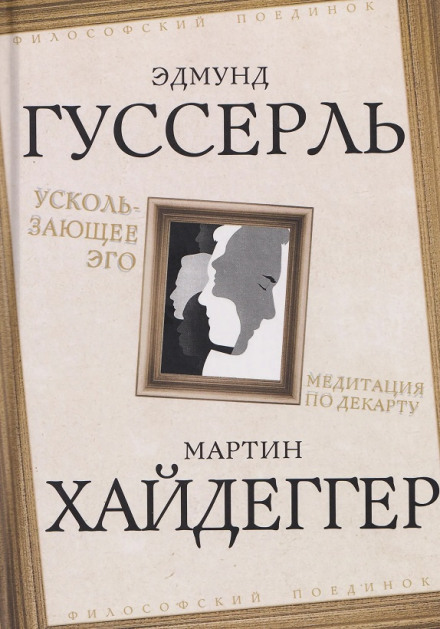
The Elusive Ego. Meditation on Descartes
6 hrs. 35 min.
Language
Russian
Author
Martin Heidegger
Author
Edmund Husserl
Narrator
Igor Marinin
Narrator
Igor Marinin
Description
Edmund Husserl and Martin Heidegger were connected not only by professional interests, but also by a personal bond: Heidegger was viewed as “the successor” to Husserl and his most gifted student. Husserl, the founder of phenomenology, developed an approach reminiscent of a Cartesian meditative procedure—“Cartesian doubt”: it involves temporarily “bracketing” and even putting into question what seems self-evident, for the sake of analyzing subjective, consciously lived experience. This method strongly influenced Heidegger, though later he shifted the emphasis toward the study of concrete human existence—existence itself. Husserl assessed this turn critically, which led to alienation between the philosophers.
The book brings together texts by Husserl and Heidegger on the concept of the “I” (“Ego”), allowing readers to see both points of contact and differences in their views. A PDF file recommended for downloading is attached to the audiobook; it is necessary for a fuller understanding and assimilation of the material.
The book brings together texts by Husserl and Heidegger on the concept of the “I” (“Ego”), allowing readers to see both points of contact and differences in their views. A PDF file recommended for downloading is attached to the audiobook; it is necessary for a fuller understanding and assimilation of the material.
100%
26:48
Ускользающее Эго. Медитация по Декарту 01
18:55
Ускользающее Эго. Медитация по Декарту 02
26:51
Ускользающее Эго. Медитация по Декарту 03
27:07
Ускользающее Эго. Медитация по Декарту 04
41:31
Ускользающее Эго. Медитация по Декарту 05
27:37
Ускользающее Эго. Медитация по Декарту 06
24:03
Ускользающее Эго. Медитация по Декарту 07
21:46
Ускользающее Эго. Медитация по Декарту 08
13:20
Ускользающее Эго. Медитация по Декарту 09
30:34
Ускользающее Эго. Медитация по Декарту 10
38:45
Ускользающее Эго. Медитация по Декарту 11
20:50
Ускользающее Эго. Медитация по Декарту 12
1:17:20
Ускользающее Эго. Медитация по Декарту 13
