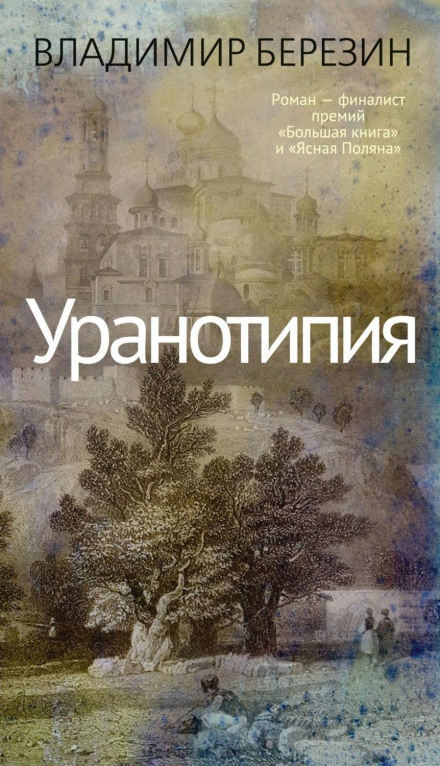
Uranotypia
6 hrs. 19 min.
Language
Russian
Author
Vladimir Berezin
Author
Vladimir Berezin
Narrator
Egor Partin
Narrator
Egor Partin
Description
The 1930s. Palestine. Russian military cartographers are sent on a secret mission to the Holy Land, but for the heroes it isn’t just a diplomatic assignment—Jerusalem is where Fate led them, and each of them has their own trial. Maksim Nikiforovich Bykov dreams of creating an uranotypia of Jerusalem—a prototype of photography that hasn’t even been invented yet. Witold Witkowski, a Pole, is consumed by memories of a young gypsy girl whose freedom he once bought at the slave market for a high price. A fugitive monk moves from the darkness of a cave into the light and meets his death. French and English spies try to find out what mysterious object Russian travelers carry with them everywhere. Vladimir Berezin’s new long-awaited book is written in the best traditions of postmodern historical fiction, in the spirit of Umberto Eco and Vladimir Sharov. It’s a tense, mesmerizing, multi-layered prose that will include both an adventurous plot and a symbolic interpretation of Russian history, along with numerous references to Russian literature. Within the “Uranotypia,” strange mirror labyrinths begin to form: the heroes see each other in dreams, and epochs and spaces double, inviting the reader to step through the looking glass.
