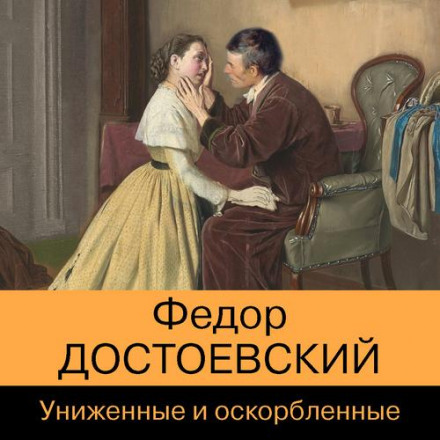
The Humiliated and Insulted
12 hrs. 51 min.
Language
Russian
Author
Fyodor Dostoevsky
Author
Fyodor Dostoevsky
Narrator
Vsevolod Kuznetsov
Narrator
Vsevolod Kuznetsov
Description
The most “bookish” and literary novel by Dostoevsky, written after his return from Siberian penal servitude. This period could not help but influence the ideological and artistic evolution he underwent. From Siberia, he took away the conviction of the tragic detachment of the advanced Russian intelligentsia from the “soil,” and his disbelief in the revolutionary path of transforming Russian reality.
In his artistic rethinking, the writer created a comprehensive and profound study of the problem of human egotism—present both in the “classic” form, predatory and cynical, and in unexpected manifestations: egotism of self-sacrificing love and the egotism of suffering.
The way out of the vicious circle, the classic sees in mercy, love, and forgiveness—reminding us of eternal Christian truths.
In his artistic rethinking, the writer created a comprehensive and profound study of the problem of human egotism—present both in the “classic” form, predatory and cynical, and in unexpected manifestations: egotism of self-sacrificing love and the egotism of suffering.
The way out of the vicious circle, the classic sees in mercy, love, and forgiveness—reminding us of eternal Christian truths.
100%
26:54
01 Часть I. Глава 1
05:22
02 Глава 2
07:00
03 Глава 3
14:07
04 Глава 4
08:42
05 Глава 5
17:16
06 Глава 6
05:32
07 Глава 7
16:37
08 Глава 8
17:26
09 Глава 9
11:03
10 Глава 10
09:44
11 Глава 11
19:34
12 Глава 12
13:22
13 Глава 13
07:32
14 Глава 14
23:51
15 Глава 15
27:13
16 Часть II. Глава 1
27:41
17 Глава 2
10:41
18 Глава 3
11:38
19 Глава 4
19:53
20 Глава 5
12:35
21 Глава 6
13:20
22 Глава 7
17:48
23 Глава 8
13:56
24 Глава 9
18:54
25 Глава 10
18:38
26 Глава 11
16:29
27 Часть III. Глава 1
27:28
28 Глава 2
13:12
29 Глава 3
11:40
30 Глава 4
18:56
31 Глава 5
27:57
32 Глава 6
05:43
33 Глава 7
08:28
34 Глава 8
31:34
35 Глава 9
50:34
36 Глава 10
04:41
37 Часть IV. Глава 1
16:03
38 Глава 2
12:38
39 Глава 3
22:52
40 Глава 4
27:18
41 Глава 5
32:21
42 Глава 6
20:10
43 Глава 7
19:41
44 Глава 8
07:01
45 Глава 9
