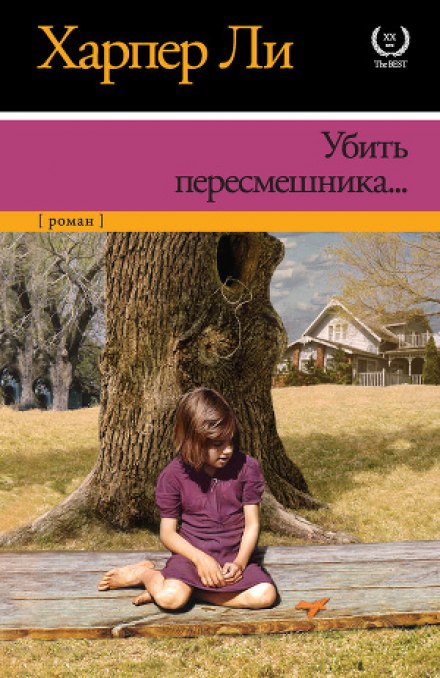
To Kill a Mockingbird
12 hrs. 21 min.
Language
Russian
Author
Harper Lee
Author
Harper Lee
Narrator
Irina Yerisanova
Narrator
Irina Yerisanova
Description
“To Kill a Mockingbird” (1960) is a moving story of a family living in a fictional small town in the south of America, in the state of Alabama. The action takes place in the 1930s, during the Great Depression. The story is told from the perspective of an eight-year-old girl.
The main heroine, Jean Finch, lives with her father Atticus, a lawyer, and her brother Jim. They have a friend Dill, and one enemy for the three of them—a neighbor known by the nickname Boo Radley (the Scarecrow/Spook).
The world through a child’s eyes—complex, contradictory, ambiguous—sweeps across the pages. Everything is mixed in this world: children’s fears and adult problems, a thirst for justice and bitter reality, racial issues of the American South and the complexities of a particular family.
At the center of the plot is a trial of a Black man accused of a rape he did not commit. Jean’s father Atticus defends him and fights with all his might to make sure justice prevails.
Harper Lee is a “genius of one book.” “To Kill a Mockingbird” is her only widely known work. But for this book—translated into almost all languages of the world—the writer received the Pulitzer Prize. The book was recognized as the best American novel of the 20th century by “Library Journal,” and it later brought the author the highest civic award in the USA— the Medal of Freedom.
The main heroine, Jean Finch, lives with her father Atticus, a lawyer, and her brother Jim. They have a friend Dill, and one enemy for the three of them—a neighbor known by the nickname Boo Radley (the Scarecrow/Spook).
The world through a child’s eyes—complex, contradictory, ambiguous—sweeps across the pages. Everything is mixed in this world: children’s fears and adult problems, a thirst for justice and bitter reality, racial issues of the American South and the complexities of a particular family.
At the center of the plot is a trial of a Black man accused of a rape he did not commit. Jean’s father Atticus defends him and fights with all his might to make sure justice prevails.
Harper Lee is a “genius of one book.” “To Kill a Mockingbird” is her only widely known work. But for this book—translated into almost all languages of the world—the writer received the Pulitzer Prize. The book was recognized as the best American novel of the 20th century by “Library Journal,” and it later brought the author the highest civic award in the USA— the Medal of Freedom.
100%
10:14
01_Ubit' peresmeshnika
10:06
02_Ubit' peresmeshnika
10:14
03_Ubit' peresmeshnika
10:24
04_Ubit' peresmeshnika
10:22
05_Ubit' peresmeshnika
10:11
06_Ubit' peresmeshnika
10:05
07_Ubit' peresmeshnika
10:10
08_Ubit' peresmeshnika
10:06
09_Ubit' peresmeshnika
10:12
10_Ubit' peresmeshnika
10:08
11_Ubit' peresmeshnika
10:54
12_Ubit' peresmeshnika
10:44
13_Ubit' peresmeshnika
10:03
14_Ubit' peresmeshnika
10:04
15_Ubit' peresmeshnika
11:41
16_Ubit' peresmeshnika
10:24
17_Ubit' peresmeshnika
10:24
18_Ubit' peresmeshnika
10:56
19_Ubit' peresmeshnika
10:39
20_Ubit' peresmeshnika
10:02
21_Ubit' peresmeshnika
10:16
22_Ubit' peresmeshnika
10:39
23_Ubit' peresmeshnika
10:13
24_Ubit' peresmeshnika
10:04
25_Ubit' peresmeshnika
10:07
26_Ubit' peresmeshnika
11:08
27_Ubit' peresmeshnika
10:02
28_Ubit' peresmeshnika
10:09
29_Ubit' peresmeshnika
10:11
30_Ubit' peresmeshnika
10:50
31_Ubit' peresmeshnika
10:11
32_Ubit' peresmeshnika
10:26
33_Ubit' peresmeshnika
10:52
34_Ubit' peresmeshnika
10:18
35_Ubit' peresmeshnika
10:10
36_Ubit' peresmeshnika
10:03
37_Ubit' peresmeshnika
10:02
38_Ubit' peresmeshnika
10:06
39_Ubit' peresmeshnika
14:06
40_Ubit' peresmeshnika
10:06
41_Ubit' peresmeshnika
10:15
42_Ubit' peresmeshnika
10:05
43_Ubit' peresmeshnika
10:05
44_Ubit' peresmeshnika
10:08
45_Ubit' peresmeshnika
10:08
46_Ubit' peresmeshnika
10:07
47_Ubit' peresmeshnika
10:23
48_Ubit' peresmeshnika
10:21
49_Ubit' peresmeshnika
10:32
50_Ubit' peresmeshnika
10:09
51_Ubit' peresmeshnika
10:07
52_Ubit' peresmeshnika
11:02
53_Ubit' peresmeshnika
10:18
54_Ubit' peresmeshnika
10:02
55_Ubit' peresmeshnika
10:05
56_Ubit' peresmeshnika
10:14
57_Ubit' peresmeshnika
10:23
58_Ubit' peresmeshnika
10:06
59_Ubit' peresmeshnika
10:43
60_Ubit' peresmeshnika
10:09
61_Ubit' peresmeshnika
11:13
62_Ubit' peresmeshnika
13:01
63_Ubit' peresmeshnika
10:30
64_Ubit' peresmeshnika
10:03
65_Ubit' peresmeshnika
10:14
66_Ubit' peresmeshnika
10:38
67_Ubit' peresmeshnika
10:05
68_Ubit' peresmeshnika
10:11
69_Ubit' peresmeshnika
10:34
70_Ubit' peresmeshnika
10:53
71_Ubit' peresmeshnika
01:08
72_Ubit' peresmeshnika
