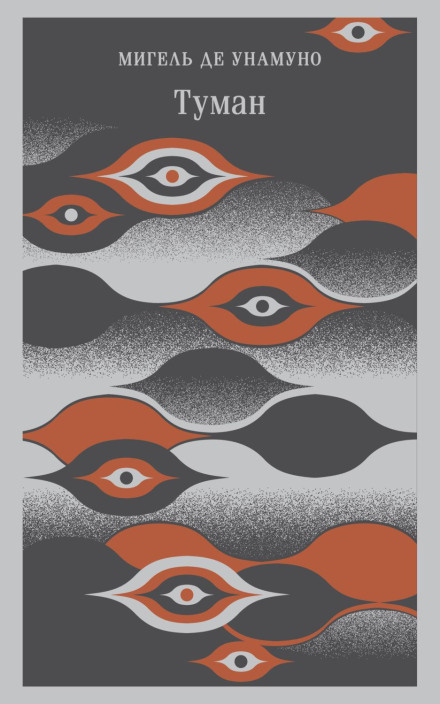
Mist
6 hrs. 30 min.
Language
Russian
Author
Miguel de Unamuno
Author
Miguel de Unamuno
Narrator
Yury Krasikov
Narrator
Yury Krasikov
Description
Miguel de Unamuno is a Spanish classic and philosopher. Against the novel, he invented the genre of “nivola” (or “raman”), changing the rules of literary play. In “The Fog,” Unamuno makes the reader a co-author and lets them choose one of two ending options.
Augusto, the hero of the nivola, suspects that he is merely a product of the author’s imagination—that his life is governed by someone else’s will. The gleam of the eyes of a lovely pianist pulls the hero out of the thick fog of ordinary life, but along with it brings this fatal thought. At first, however, Augusto doesn’t pay much attention to it. All his energy goes into winning over the wilful pianist and taking her away from her fiancé. But the girl begins to play with Augusto’s feelings. In desperation he decides to settle accounts with life—yet first he goes to his creator’s home and learns that the man is going to kill him…
The hero of “The Fog” is both a “little Hamlet” and Don Quixote. Besides allusions to Shakespeare and Cervantes, references to Dostoevsky’s works “Notes from Underground” and “Demons” can also be caught in the text. Unamuno plays not only with his character, but also with the readers. He makes us doubt his existence, hinting that the surrounding world and everything that happens in it is also someone else’s ramán.
The plot of Unamuno’s nivola can become excellent material for arguing in an EGE and OGE essay in Russian language and literature.
Augusto, the hero of the nivola, suspects that he is merely a product of the author’s imagination—that his life is governed by someone else’s will. The gleam of the eyes of a lovely pianist pulls the hero out of the thick fog of ordinary life, but along with it brings this fatal thought. At first, however, Augusto doesn’t pay much attention to it. All his energy goes into winning over the wilful pianist and taking her away from her fiancé. But the girl begins to play with Augusto’s feelings. In desperation he decides to settle accounts with life—yet first he goes to his creator’s home and learns that the man is going to kill him…
The hero of “The Fog” is both a “little Hamlet” and Don Quixote. Besides allusions to Shakespeare and Cervantes, references to Dostoevsky’s works “Notes from Underground” and “Demons” can also be caught in the text. Unamuno plays not only with his character, but also with the readers. He makes us doubt his existence, hinting that the surrounding world and everything that happens in it is also someone else’s ramán.
The plot of Unamuno’s nivola can become excellent material for arguing in an EGE and OGE essay in Russian language and literature.
