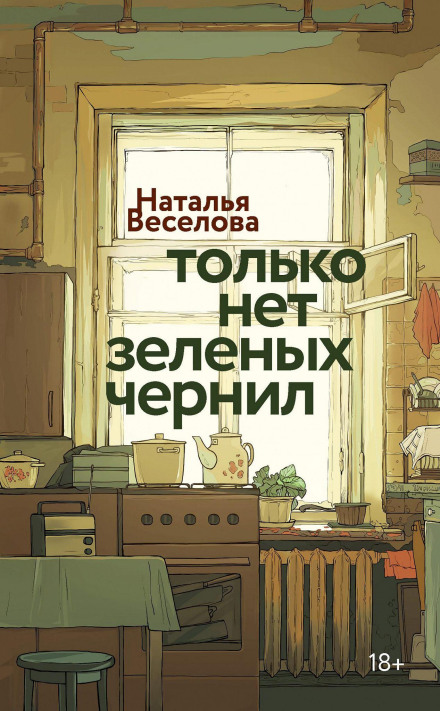
Just No Green Ink
12 hrs. 5 min.
Language
Russian
Author
Natalia Veselova
Author
Natalia Veselova
Narrator
Varvara Sapova
Narrator
Varvara Sapova
Description
Pavel Nilin’s works have long been part of the golden fund of Soviet literature. Starting out in journalism, he preserved the characteristic precision of observation and an interest in everyday life—life and the concerns of the simplest people. That’s why his characters turn out vivid, expressive, and recognizable even today. Films by Ivan Pyryev, Konstantin Voynov, and other directors were made based on Nilin’s books; in the screen adaptations, Faina Ranevskaya, Mark Bernes, Vladimir Vysotsky, and Oleg Yefremov played.
The novella “Already Married for the First Time,” which gave the collection its name, formed the basis of the cult film by Joseph Heifits, starring Evgeniya Glushenko and Nikolai Volkov.
At the center of the story is the eternal conflict between generations: connections and rifts between parents and children, mother and daughter. Antonina—once a concrete worker, and now a cleaner in a research institute—raised her daughter alone at great effort. And what happens in the end? The young years were wasted, hopes weren’t fulfilled, and personal happiness never formed. Her daughter grew up spoiled and selfish, and still didn’t truly become an adult. In her own home, Antonina turns out to be unnecessary—like she’s locked in a cage with no way out.
Yet Nilin leaves his heroine the possibility of finding happiness—not loud and dazzling like in cinema, but quiet, unnoticed, and still genuine.
The novella “Already Married for the First Time,” which gave the collection its name, formed the basis of the cult film by Joseph Heifits, starring Evgeniya Glushenko and Nikolai Volkov.
At the center of the story is the eternal conflict between generations: connections and rifts between parents and children, mother and daughter. Antonina—once a concrete worker, and now a cleaner in a research institute—raised her daughter alone at great effort. And what happens in the end? The young years were wasted, hopes weren’t fulfilled, and personal happiness never formed. Her daughter grew up spoiled and selfish, and still didn’t truly become an adult. In her own home, Antonina turns out to be unnecessary—like she’s locked in a cage with no way out.
Yet Nilin leaves his heroine the possibility of finding happiness—not loud and dazzling like in cinema, but quiet, unnoticed, and still genuine.
100%
14:15
Только нет зеленых чернил 01
34:44
Только нет зеленых чернил 02
1:12:05
Только нет зеленых чернил 03
1:25:40
Только нет зеленых чернил 04
2:10:59
Только нет зеленых чернил 05
3:04:07
Только нет зеленых чернил 06
1:26:23
Только нет зеленых чернил 07
45:47
Только нет зеленых чернил 08
53:37
Только нет зеленых чернил 09
17:43
Только нет зеленых чернил 10
