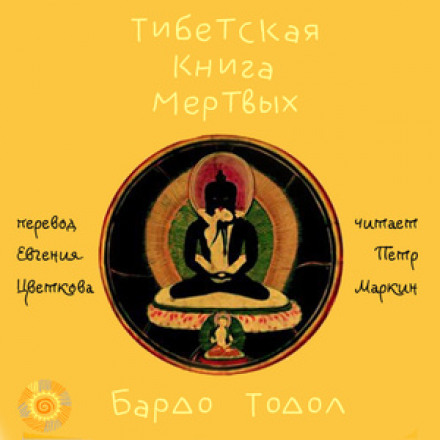
The Tibetan Book of the Dead
4 hrs. 16 min.
Description
"The Tibetan Book of the Dead" is the most common name used in the West for the Tibetan Buddhist text “Bardo Thödol” (also “Bardo Todol”; Liberation in the bardo [through] hearing”). It contains a detailed description of the states—stages (bardos)—through which, according to Tibetan Buddhist tradition, a person’s consciousness passes starting from the process of physical dying and up to the moment of the next incarnation (reincarnation) in a new form. For each stage, special recommendations are given. According to legend, the book was written by Padmasambhava’s teacher in the 8th century and hidden on the Gampo hills in Central Tibet, and later found in the 14th century by a seeker of book treasures, Karma Lingpa.
From the translator and compiler: “The Book of the Dead, Bardo Tödol, the Tibetan sacred book is read among us like the Psalter, over a corpse for 40 days from the day of death, excluding the first three days...
This book is instruction for how the Deceased should behave in the Beyond. On the other hand, this is instruction for us, the living—how and what to prepare for, while still alive, regarding, alas, the inevitable passing from here.
This book is about what will happen to us when we die, and how one should prepare for what awaits us at the Border and beyond, until (as the book claims) we again spill out here, back into another forgetful Existence…” (Evgeny Tsvetkov)
From the translator and compiler: “The Book of the Dead, Bardo Tödol, the Tibetan sacred book is read among us like the Psalter, over a corpse for 40 days from the day of death, excluding the first three days...
This book is instruction for how the Deceased should behave in the Beyond. On the other hand, this is instruction for us, the living—how and what to prepare for, while still alive, regarding, alas, the inevitable passing from here.
This book is about what will happen to us when we die, and how one should prepare for what awaits us at the Border and beyond, until (as the book claims) we again spill out here, back into another forgetful Existence…” (Evgeny Tsvetkov)
100%
01:05
01. ТИБЕТСКАЯ КНИГА МЁРТВЫХ - БАРДО ТОДОЛ
39:24
02. ПРЕДДВЕРИЕ от переводчика и составители Е.Цветкова
24:57
03. ЧИКАИ БАРДО - ПЕРВАЯ и ВТОРАЯ СТУПЕНИ
1:00:47
04. ХОНИИД БАРДО - 14 ДНЕЙ
20:14
05. СИД-ПА БАРДО - ДЕНЬ ПЯТНАДЦАТЫЙ
08:03
06. СУД
07:31
07. ШЕСТЬ МИРОВ - ЛОК
15:06
08. ОЧЕРЕДНОЕ РОЖДЕНИЕ - 5 СПОСОБОВ ЗАКРЫТЬ ВРАТА ЧРЕВА
04:13
09. ВЫБОР ЧРЕВА
04:38
10. КАРМИЧЕСКАЯ БУРЯ
06:13
11. САМО ВОПЛОЩЕНИЕ
26:12
12. ПРИЛОЖЕНИЕ - ЦВЕТКОВ о книге Р. А. Моуди - ЖИЗНЬ ПОСЛЕ ЖИЗНИ
17:52
13. ПРИЛОЖЕНИЕ - СУДНЫЙ ДЕНЬ
04:12
14 ПРИЛОЖЕНИЕ - СОН МАЛЬЧИКА
05:28
15. ПРИЛОЖЕНИЕ - ОЖИДАЮЩИЕ УКАЗА
10:36
16. ПРИЛОЖЕНИЕ - МАНТРЫ ИЛИ ЗАКЛИНАНИЯ
