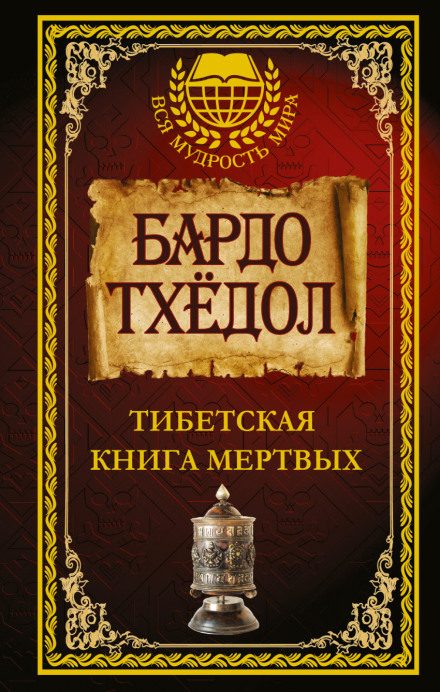
The Tibetan Book of the Dead
2 hrs. 24 min.
Description
“The Tibetan Book of the Dead” — the most common name in the West for the Tibetan Buddhist text “Bardo Thödol” (“Liberation through Hearing in Bardo”). It contains a detailed description of the stage-like states (bardos) through which, according to Tibetan Buddhist tradition, a person’s consciousness passes from the process of physical dying until the moment of rebirth (reincarnation) in a new form. For each stage, special recommendations are provided. “Bardo Thödol” is connected with specific tantric practices of the Nyingma school; its images and associations may be unclear without the corresponding initiation and explanations.
One can experience bardo outside the process of death, with the help of bardo yoga (yoga of the intermediate state). Such practice is needed not only so that practitioners can confirm the existence of the world after death, but also to use knowledge of the Six Realms of samsara to manage one’s next rebirths. For the first time, the book was translated into a European language by Oxford professor W. Y. Evans-Wentz (the translation was published in 1927) and immediately sparked great interest among Western readers thanks to the title suggested by the translator.
One can experience bardo outside the process of death, with the help of bardo yoga (yoga of the intermediate state). Such practice is needed not only so that practitioners can confirm the existence of the world after death, but also to use knowledge of the Six Realms of samsara to manage one’s next rebirths. For the first time, the book was translated into a European language by Oxford professor W. Y. Evans-Wentz (the translation was published in 1927) and immediately sparked great interest among Western readers thanks to the title suggested by the translator.
100%
2:24:53
bardo-tkhedol-tibetskaja-kniga-mertvykh
