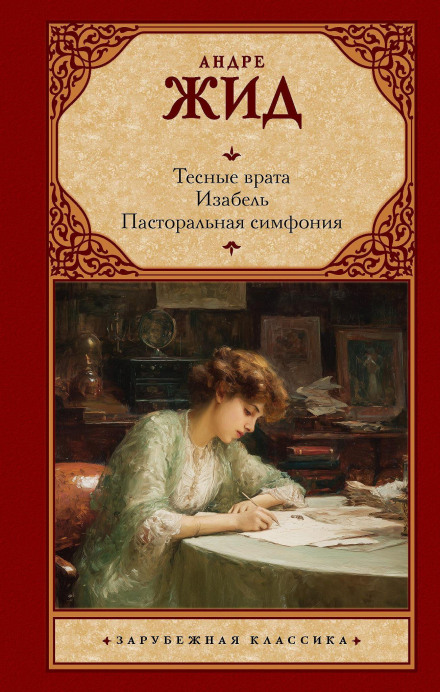
Strait is the Gate. Isabelle. Pastoral Symphony
9 hrs. 21 min.
Language
Russian
Author
André Gide
Author
André Gide
Narrator
Pavel Maslakov
Narrator
Pavel Maslakov
Description
A collection of three works by André Gide—one of the greatest French writers of the 20th century and a Nobel Prize laureate—who significantly influenced the formation of the existentialist school. His works are an example of psychological depth and stylistic perfection.
“Strait is the Gate” offers a glimpse into the author’s personal experience: autobiographical motifs and an exploration of the concepts of virtue and desire make the novella especially sensitive and moving.
“The Pastoral Symphony” and “Isabelle” demonstrate Gide’s mastery in revealing the conflict between an ideal and reality: here love clashes with duty, illusions with truth, and compassion with a destructive passion.
The collection includes three works by André Gide, united by the theme of moral choice and the inner conflict of the individual, allowing the reader to better understand the talent of one of the foremost scholars of the human soul in French literature.
“Strait is the Gate” is, in many ways, an autobiographical novella about the story of Jérôme and Alice—cousins who are in love with each other but are forced to give up their feelings in favor of morality and benevolence.
“Isabelle” is a novella not so much about love as about the awakening of maturity, in which a love story becomes a subject for the author’s reflections. Gérard’s illusions that a trip to the estate of a renowned scholar will provide him with a romantic adventure are shattered by the harsh reality, when he becomes a witness to a drama unfolding in the Floch family.
“The Pastoral Symphony” is a story of forbidden love between a pastor and a blind orphan girl, whom he takes in, raises, and saves from poverty—only for it to end in tragedy, when compassion turns into passion and piety becomes self-deception.
“Strait is the Gate” offers a glimpse into the author’s personal experience: autobiographical motifs and an exploration of the concepts of virtue and desire make the novella especially sensitive and moving.
“The Pastoral Symphony” and “Isabelle” demonstrate Gide’s mastery in revealing the conflict between an ideal and reality: here love clashes with duty, illusions with truth, and compassion with a destructive passion.
The collection includes three works by André Gide, united by the theme of moral choice and the inner conflict of the individual, allowing the reader to better understand the talent of one of the foremost scholars of the human soul in French literature.
“Strait is the Gate” is, in many ways, an autobiographical novella about the story of Jérôme and Alice—cousins who are in love with each other but are forced to give up their feelings in favor of morality and benevolence.
“Isabelle” is a novella not so much about love as about the awakening of maturity, in which a love story becomes a subject for the author’s reflections. Gérard’s illusions that a trip to the estate of a renowned scholar will provide him with a romantic adventure are shattered by the harsh reality, when he becomes a witness to a drama unfolding in the Floch family.
“The Pastoral Symphony” is a story of forbidden love between a pastor and a blind orphan girl, whom he takes in, raises, and saves from poverty—only for it to end in tragedy, when compassion turns into passion and piety becomes self-deception.
100%
3:38:54
Тесные врата. Изабель. Пасторальная симфония 01
43:36
Тесные врата. Изабель. Пасторальная симфония 02
2:49:23
Тесные врата. Изабель. Пасторальная симфония 03
2:09:44
Тесные врата. Изабель. Пасторальная симфония 04
