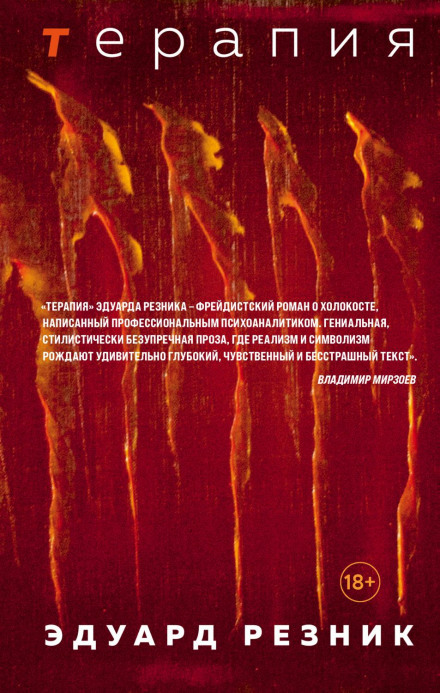
Therapy
16 hrs. 28 min.
Language
Russian
Author
Eduard Reznik
Author
Eduard Reznik
Narrator
Alexander Mozgunov
Narrator
Alexander Mozgunov
Description
Eduard Reznik’s novel is not modern in its epic “long conversation” about childhood traumas that, in other eras, can give rise to phenomena such as fascism.
The two main protagonists of “Therapy”—a psychotherapist and his patient—find themselves on opposite sides of the barbed wire in a concentration camp. And each of them faces a choice that isn’t the easiest: the doctor continues treating the patient even when the patient becomes his executioner.
This book will remind you of the best examples of the genre—such as “Life is Beautiful” by Roberto Benigni, “The Tattooist of Auschwitz” by Morris Hézér, “Sophie's Choice” by William Styron, and of course “Journey into the Cool” by Eugenia Ginzburg.
The novel draws you in not so much with the description of the monstrous reality of the camp, but—with the persuasiveness of the author’s interpretations: Reznik carefully analyzes the motives of his characters and arrives at conclusions that are shocking in their simplicity. All the horrors come from childhood…
The two main protagonists of “Therapy”—a psychotherapist and his patient—find themselves on opposite sides of the barbed wire in a concentration camp. And each of them faces a choice that isn’t the easiest: the doctor continues treating the patient even when the patient becomes his executioner.
This book will remind you of the best examples of the genre—such as “Life is Beautiful” by Roberto Benigni, “The Tattooist of Auschwitz” by Morris Hézér, “Sophie's Choice” by William Styron, and of course “Journey into the Cool” by Eugenia Ginzburg.
The novel draws you in not so much with the description of the monstrous reality of the camp, but—with the persuasiveness of the author’s interpretations: Reznik carefully analyzes the motives of his characters and arrives at conclusions that are shocking in their simplicity. All the horrors come from childhood…
