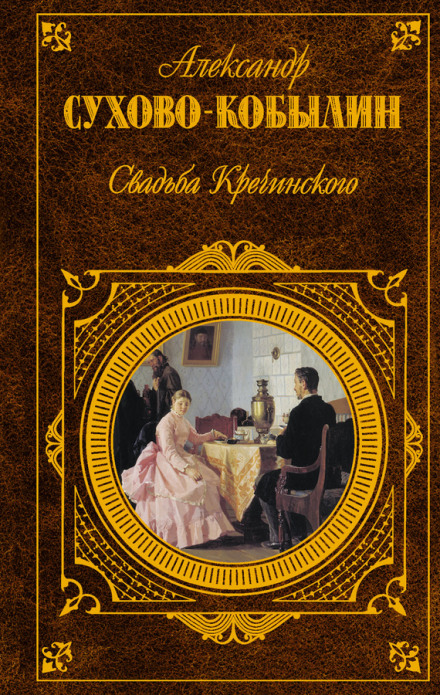
Krechinsky's Wedding
3 hrs. 24 min.
Language
Russian
Author
Alexander Sukhovo-Kobylin
Author
Alexander Sukhovo-Kobylin
Narrator
Larisa Yurova
Narrator
Larisa Yurova
Description
Alexandre SoukhoVo-Kobylin (1817–1903) is rightfully considered one of the most talented satirical playwrights, although only three plays belong to his pen—the trilogy «The Wedding of Krechinsky», «The Case», and «The Death of Tarelkin». From his youth, Alexander developed a passion for literature and philosophy, but tragic circumstances forced him into literary work. The writer was accused of the death of his beloved, Louise Simon-Demanch, and was under investigation for seven years. His grief over the loss, outrage at the unjust accusation, and the experiences connected with bureaucratic arbitrariness and the court proceedings all found expression in his famous trilogy.
«The Wedding of Krechinsky» is a comedy in three acts by Alexandre SoukhoVo-Kobylin, written in 1854. The play is based on a story circulating in Moscow society about a high-society swindler who received a large sum from a moneylender as collateral for a fake solitaire. The work’s release was preceded by drama: the author, accused of murdering his civil wife, created fragments of the play in prison. The comedy is the first part of a dramatic trilogy that also includes «The Case» and «The Death of Tarelkin». First publication: the journal «Sovremennik» (1856, vol. 57, no. 5). The play entered the repertory of Russian theaters, and it was staged in France and Romania.
Creation story
In the autumn of 1850, near the Presnensky outpost, the body of the Frenchwoman Louise Simon-Demanch—SoukhoVo-Kobylin’s civil wife—was found. At first, servants of the murdered woman were suspected; later, «the SoukhoVo-Kobylin case» appeared. The investigation lasted seven years; during those years, the writer was arrested twice and completely changed his way of life. According to literary scholar Natalya Staroselskaya, Alexander «fell into a situation that is, in principle, impossible to erase»: wherever he was, a trail of gossip and talk followed him. Forced to close himself off from high society and reduce his circle of friends to a minimum, SoukhoVo-Kobylin reconsidered his views on life. A note appeared in his diary:
«I am beginning to understand life differently. Work, Work, and Work. Restoring, refreshing work. Among nature, under its morning breath. A strange turning point has occurred. My imprisonment is cruel, because the innocent leads me down another path—and also a blessed one.»
Work on the comedy began in the summer of 1852. Researchers agree that the theme was suggested to SoukhoVo-Kobylin by life itself: he knew well Moscow and provincial manners. However, there are differing accounts about which exact events formed the basis of the plot. According to one version, the story of the failed marriage was heard by the author at his sister’s house from one of the guests; according to another, he learned about it from Yaroslavl landowners, who told each other about the «schemes of a card-sharper» by a local resident named Krysinsky.
In May 1854, the playwright was arrested again; the six months spent in prison were used to revise «The Wedding of Krechinsky». Later the author recalled that time and his self-control with some surprise:
«How could I write comedies while under a deadly accusation and a demand for a bribe of 50 thousand rubles—I don’t know. But I know I wrote Krechinsky in prison.»
After his release in November 1854, a period of new difficulties began in SoukhoVo-Kobylin’s life: the completed play was refused by censorship, and a «red cross» was placed on the manuscript in the author’s presence. While the playwright rewrote certain scenes and polished episodes, his comedy «went around Moscow in copies». Approval was obtained only in August 1855; the censor who reviewed «The Wedding of Krechinsky» noted in his verdict that «the language of this play is very crude, and although the author, according to the censor’s remarks, softened the sharpest parts, nevertheless the entire work bears the stamp of vulgarity.» The «Allowed» mark on the censor’s report was set by none other than the head of the Third Section, Leontiy Dubelt.
Stage fate
Vasily Samoylov as Krechinsky. Alexandrinsky Theatre (1856)
Even before the second arrest, SoukhoVo-Kobylin managed to pass his play to the troupe of the Maly Theatre. Roles were assigned, and the actors began rehearsals. In autumn 1855, after the author left prison, he joined the production process; a note appeared in his diary:
«In the morning I went to rehearsal. Sadzovsky <Rasplyuyev> and Shchepkin <Muromsky> are excellent… A strange feeling comes from the first rehearsal with the author—it’s like his birth… His child came alive, looked at the light, and gave the first cry. Shchepkin, filled with inner delight, kissed me.»
The author himself composed the text of the invitation tickets and oversaw the creation of the playbill. The day before the premiere, he wrote in his diary that «it’s strange and unsettling to see my name on the huge bill of the beneficiary, Sergey Shumsky.» The premiere took place at the end of November 1855 and was deemed successful; after the performance, the actors in the lead roles congratulated the author, who—trying not to catch the viewers’ eyes—sat in the box. The only thing that upset SoukhoVo-Kobylin that day was the absence of his mother, Maria Ivanovna. Telling her about his success, Alexander noted that there was a full house, despite the fact that the ticket price for a box reached seventy silver rubles. For the next performance, as SoukhoVo-Kobylin reported in the same letter, there were no free seats left in the hall. He also mentioned the audience’s reaction to trying, with applause, to call the author onstage: «But I didn’t go out. They don’t deserve that I bow to them.»
Seven months later, in May 1856, residents of St. Petersburg met «The Wedding of Krechinsky». At the Alexandrinsky Theatre, Krechinsky was played by Vasily Samoylov, who managed to combine his hero’s «external polish» with «the habits of bad manners». According to researchers, this interpretation was liked by SoukhoVo-Kobylin more than the one on the Moscow stage, where Krechinsky-Shumsky «was too refined».
«The Wedding of Krechinsky» is a comedy in three acts by Alexandre SoukhoVo-Kobylin, written in 1854. The play is based on a story circulating in Moscow society about a high-society swindler who received a large sum from a moneylender as collateral for a fake solitaire. The work’s release was preceded by drama: the author, accused of murdering his civil wife, created fragments of the play in prison. The comedy is the first part of a dramatic trilogy that also includes «The Case» and «The Death of Tarelkin». First publication: the journal «Sovremennik» (1856, vol. 57, no. 5). The play entered the repertory of Russian theaters, and it was staged in France and Romania.
Creation story
In the autumn of 1850, near the Presnensky outpost, the body of the Frenchwoman Louise Simon-Demanch—SoukhoVo-Kobylin’s civil wife—was found. At first, servants of the murdered woman were suspected; later, «the SoukhoVo-Kobylin case» appeared. The investigation lasted seven years; during those years, the writer was arrested twice and completely changed his way of life. According to literary scholar Natalya Staroselskaya, Alexander «fell into a situation that is, in principle, impossible to erase»: wherever he was, a trail of gossip and talk followed him. Forced to close himself off from high society and reduce his circle of friends to a minimum, SoukhoVo-Kobylin reconsidered his views on life. A note appeared in his diary:
«I am beginning to understand life differently. Work, Work, and Work. Restoring, refreshing work. Among nature, under its morning breath. A strange turning point has occurred. My imprisonment is cruel, because the innocent leads me down another path—and also a blessed one.»
Work on the comedy began in the summer of 1852. Researchers agree that the theme was suggested to SoukhoVo-Kobylin by life itself: he knew well Moscow and provincial manners. However, there are differing accounts about which exact events formed the basis of the plot. According to one version, the story of the failed marriage was heard by the author at his sister’s house from one of the guests; according to another, he learned about it from Yaroslavl landowners, who told each other about the «schemes of a card-sharper» by a local resident named Krysinsky.
In May 1854, the playwright was arrested again; the six months spent in prison were used to revise «The Wedding of Krechinsky». Later the author recalled that time and his self-control with some surprise:
«How could I write comedies while under a deadly accusation and a demand for a bribe of 50 thousand rubles—I don’t know. But I know I wrote Krechinsky in prison.»
After his release in November 1854, a period of new difficulties began in SoukhoVo-Kobylin’s life: the completed play was refused by censorship, and a «red cross» was placed on the manuscript in the author’s presence. While the playwright rewrote certain scenes and polished episodes, his comedy «went around Moscow in copies». Approval was obtained only in August 1855; the censor who reviewed «The Wedding of Krechinsky» noted in his verdict that «the language of this play is very crude, and although the author, according to the censor’s remarks, softened the sharpest parts, nevertheless the entire work bears the stamp of vulgarity.» The «Allowed» mark on the censor’s report was set by none other than the head of the Third Section, Leontiy Dubelt.
Stage fate
Vasily Samoylov as Krechinsky. Alexandrinsky Theatre (1856)
Even before the second arrest, SoukhoVo-Kobylin managed to pass his play to the troupe of the Maly Theatre. Roles were assigned, and the actors began rehearsals. In autumn 1855, after the author left prison, he joined the production process; a note appeared in his diary:
«In the morning I went to rehearsal. Sadzovsky <Rasplyuyev> and Shchepkin <Muromsky> are excellent… A strange feeling comes from the first rehearsal with the author—it’s like his birth… His child came alive, looked at the light, and gave the first cry. Shchepkin, filled with inner delight, kissed me.»
The author himself composed the text of the invitation tickets and oversaw the creation of the playbill. The day before the premiere, he wrote in his diary that «it’s strange and unsettling to see my name on the huge bill of the beneficiary, Sergey Shumsky.» The premiere took place at the end of November 1855 and was deemed successful; after the performance, the actors in the lead roles congratulated the author, who—trying not to catch the viewers’ eyes—sat in the box. The only thing that upset SoukhoVo-Kobylin that day was the absence of his mother, Maria Ivanovna. Telling her about his success, Alexander noted that there was a full house, despite the fact that the ticket price for a box reached seventy silver rubles. For the next performance, as SoukhoVo-Kobylin reported in the same letter, there were no free seats left in the hall. He also mentioned the audience’s reaction to trying, with applause, to call the author onstage: «But I didn’t go out. They don’t deserve that I bow to them.»
Seven months later, in May 1856, residents of St. Petersburg met «The Wedding of Krechinsky». At the Alexandrinsky Theatre, Krechinsky was played by Vasily Samoylov, who managed to combine his hero’s «external polish» with «the habits of bad manners». According to researchers, this interpretation was liked by SoukhoVo-Kobylin more than the one on the Moscow stage, where Krechinsky-Shumsky «was too refined».
100%
01:04
00_01_Deystvuyuschie litsa
00:18
01_00_Deystvie pervoe
05:27
01_01_Yavlenie pervoe
00:58
01_02_Yavlenie vtoroe
08:03
01_03_Yavlenie trete
02:45
01_04_Yavlenie chetvertoe
05:33
01_05_Yavlenie pyatoe
01:19
01_06_Yavlenie shestoe
02:54
01_07_Yavlenie sedmoe
04:38
01_08_Yavlenie vosmoe
02:18
01_09_Yavlenie devyatoe
05:46
01_10_Yavlenie desyatoe
03:46
01_11_Yavlenie odinnadtsatoe
02:40
01_12_Yavlenie dvenadtsatoe
07:42
01_13_Yavlenie trinadtsatoe
01:42
01_14_Yavlenie chetyrnadtsatoe
06:28
01_15_Yavlenie pyatnadtsatoe
00:33
01_16_Yavlenie shestnadtsatoe
03:51
02_01_Yavlenie pervoe
03:52
02_02_Yavlenie vtoroe
05:51
02_03_Yavlenie trete
02:24
02_04_Yavlenie chetvertoe
00:30
02_05_Yavlenie pyatoe
05:40
02_06_Yavlenie shestoe
03:00
02_07_Yavlenie sedmoe
08:50
02_08_Yavlenie vosmoe
00:31
02_09_Yavlenie devyatoe
01:42
02_10_Yavlenie desyatoe
02:45
02_11_Yavlenie odinnadtsatoe
01:52
02_12_Yavlenie dvenadtsatoe
01:51
02_13_Yavlenie trinadtsatoe
03:12
02_14_Yavlenie chetyrnadtsatoe
07:57
02_15_Yavlenie pyatnadtsatoe
05:27
02_16_Yavlenie shestnadtsatoe
07:47
03_01_Yavlenie pervoe
05:22
03_02_Yavlenie vtoroe
09:26
03_03_Yavlenie trete
02:57
03_04_Yavlenie chetvertoe
10:21
03_05_Yavlenie pyatoe
06:26
03_06_Yavlenie shestoe
08:35
03_07_Yavlenie sedmoe
03:34
03_08_Yavlenie vosmoe
26:26
04_Krechinskiy i Rasplyuev
