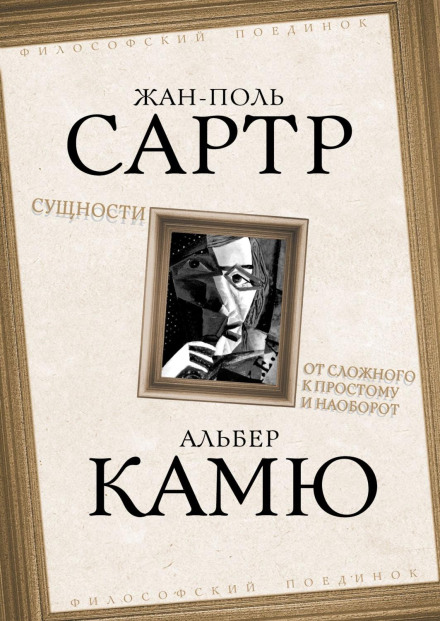
Essences: From the Complex to the Simple and Back
9 hrs. 43 min.
Language
Russian
Author
Jean-Paul Sartre
Author
Albert Camus
Narrator
Olga Chizhova
Narrator
Olga Chizhova
Description
The concept of essence is fundamental in existential philosophy. Existentialists consider all of reality—including the human being—only as an object, the “essence,” “existence” (existentia) in deep cognition. Applied to a person, they acquire their essence (“existence”) throughout life. Jean-Paul Sartre (1905–1980), the greatest representative of existentialism, carried out a comprehensive analysis of essences in various manifestations. However, another representative of existentialism—Albert Camus (1913–1960)—accused Sartre of needlessly complicating the problem and claimed that he managed to approach the true essence of a person more closely than other researchers. The book presents the most significant works of Sartre and Camus on this topic.
In PDF A4 format, the publisher’s layout is preserved.
In PDF A4 format, the publisher’s layout is preserved.
100%
39:07
01. Бытие и ничто. Введение
19:07
02. Бытие и ничто. Бытие-для-себя
20:21
03. Бытие и ничто. Фактичность для-себя
40:07
04. Бытие и ничто. Для-себя и бытие ценности
26:05
05. Бытие и ничто. Для-себя и бытие возможностей
08:22
06. Бытие и ничто. «Я» и круговорот самости
27:24
07. Бытие и ничто. Трансцендентность
23:50
08. Бытие и ничто. Определение как отрицание
1:03:02
09. Бытие и ничто. Качество и количество, потенциальность, инструментальность
42:59
10. Бытие и ничто. Время мира
09:41
11. Бытие и ничто. Познание
17:11
12. Альбер Камю. Антропоморфный мир. Введение
09:54
13. Антропоморфный мир. «Униженное мышление»
06:26
14. Антропоморфный мир. «Абсурдный человек»
27:56
15. Антропоморфный мир. Образы и опыты. Маркиз де Сад
45:42
16. Антропоморфный мир. Руссо и революция
36:09
17. Антропоморфный мир. Гегель
40:26
18. Антропоморфный мир. Ницше
1:19:24
19. Антропоморфный мир. Маркс
