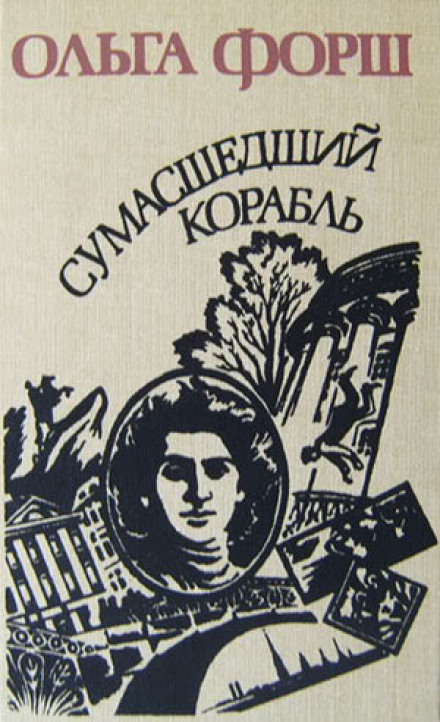
The Crazy Ship
6 hrs. 48 min.
Language
Russian
Author
Olga Forsh
Author
Olga Forsh
Narrator
Leontina Brotskaya
Narrator
Leontina Brotskaya
Description
This novel by Olga Forsh was written only ten years after the events it describes—and it resurrects the shifted, truly mad, exhilarating reality of the House of Arts, the writers’ commune created with the closest involvement of Gorky at the initiative of Chukovsky. At the time, many such communes existed—rations and benefits were distributed by professional criteria. But “Disk,” as the House of Arts was called in Petrograd, became a legend: a club, a lecture hall, a school, and an intellectual center of the former capital. They were cast aside to die—yet instead it came alive in a new form: instead of a stone administrative-bureaucratic labyrinth, instead of a geometric city of officials, madmen, and terrorists, there was born a transparent, ghostly city of artists, forever hungry and therefore dreaming the impossible while awake. In general, it was a realized artistic utopia of the Silver Age: “And so close it comes to the collapsing dirty houses—unknown, unknown to anyone, but desired by us from time immemorial.” The Silver Age could not end any other way: art entered life, fused with it, and destroyed it.
