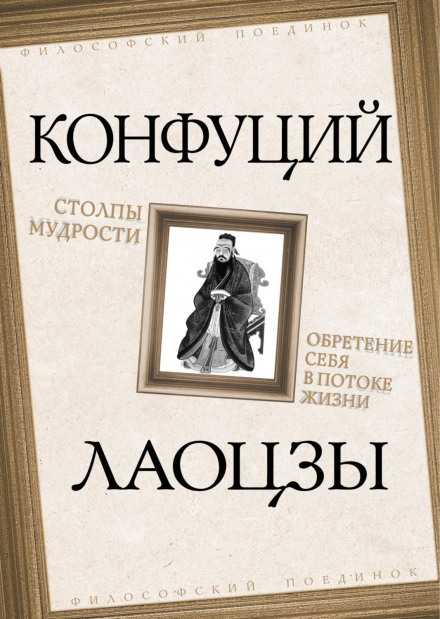
The Pillars of Wisdom
9 hrs. 30 min.
Description
Confucius and Laozi are the two most famous Chinese philosophers. They were contemporaries, lived in the 6th–5th centuries BCE, but their philosophical views differed greatly. Confucius attached great importance to life rules—“pillars of wisdom,” a special ritual of behavior in society. Confucius’s school eventually reached the status of state ideology.
The central concept in Laozi’s philosophy was “Dao,” which can be roughly translated as the “flow of life,” the “great way”—an all-pervading power, both a means and an end of existence. In Laozi’s view, the presence of rigid normative ethical systems in society—such as Confucianism—shows that society has problems which such a system can only intensify, unable to resolve them.
The central concept in Laozi’s philosophy was “Dao,” which can be roughly translated as the “flow of life,” the “great way”—an all-pervading power, both a means and an end of existence. In Laozi’s view, the presence of rigid normative ethical systems in society—such as Confucianism—shows that society has problems which such a system can only intensify, unable to resolve them.
100%
06:10
Столпы мудрости - 0 - Обрести ученость
07:53
Столпы мудрости - 1 - Благородный муж
08:35
Столпы мудрости - 2 - Соблюдая ритуал
08:06
Столпы мудрости - 3 - Человечность
07:31
Столпы мудрости - 4 - Тяжелая ноша
10:12
Столпы мудрости - 5 - Все уходящее
12:13
Столпы мудрости - 6 - Что дальше_
13:35
Столпы мудрости - 7 - Комментарии
1:07:50
Столпы мудрости - 8 - Лаоцзы. Поток жизни (из книги «Даодэцзин»)
51:20
Столпы мудрости - 9 - Комментарии
53:17
Столпы мудрости - 10 - К главе 21
1:11:03
Столпы мудрости - 11 - К главе 41
37:29
Столпы мудрости - 12 - К главе 61
1:09:01
Столпы мудрости - 13 - Сыма Цянь. Конфуций и Лаоцзы
26:53
Столпы мудрости - 14 - Чжуан Чжоу. Вечные превращения (из книги «Чжуанцзы»)
05:12
Столпы мудрости - 15 - Приложение. Карл Ясперс. Лаоцзы
09:20
Столпы мудрости - 16 - Дао
07:06
Столпы мудрости - 17 - Дао и мир
04:07
Столпы мудрости - 18 - Становление мира и единичного в мире
36:58
Столпы мудрости - 19 - Дао и отдельный человек (жизненная практика)
23:54
Столпы мудрости - 20 - Дао и государственное правление
14:14
Столпы мудрости - 21 - В чем смысл книги Лаоцзы
11:54
Столпы мудрости - 22 - Образы вслед Лаоцзы
06:10
Столпы мудрости - 23 - Место и границы Лаоцзы в история
