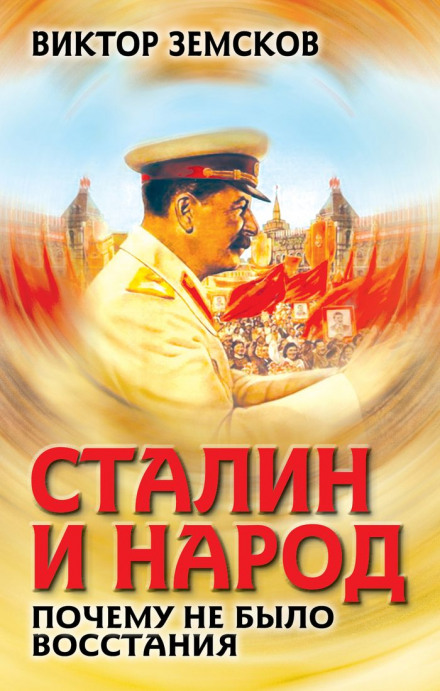
Stalin and the People. Why There Was No Uprising
9 hrs. 39 min.
Language
Russian
Author
Viktor Zemskov
Author
Viktor Zemskov
Narrator
Vyacheslav Gerasimov
Narrator
Vyacheslav Gerasimov
Description
One of the main themes in Soviet history is the people’s attitude toward I.V. Stalin. Why did the people support him despite harsh policies toward peasantry, despite repression, despite heavy losses in the Great Patriotic War? Liberal-minded historians explain it as a “slave psychology” of the Russian people—their habit of worshiping the supreme ruler. The author of this book has a different opinion.
Viktor Nikolaevich Zemskov, a Russian historian and Doctor of Historical Sciences, back in the late 1980s gained access to statistical reports of the OGPU-NKVD-MVD-MGB. The data he collected has no analogues in history; therefore, for the last twenty years, V.N. Zemskov has been the leading specialist on this question.
In the book presented to your attention, Zemskov provides and analyzes data from the closed archives of Soviet state security from the early 1930s to the late 1940s concerning the “Great Break” (collectivization), the repression of 1937, the state of society on the eve of the war and during the war—and much more. As a result, a complete and objective picture of the people’s life under Stalin is created; the reasons why the people trusted him become clear.
Viktor Nikolaevich Zemskov, a Russian historian and Doctor of Historical Sciences, back in the late 1980s gained access to statistical reports of the OGPU-NKVD-MVD-MGB. The data he collected has no analogues in history; therefore, for the last twenty years, V.N. Zemskov has been the leading specialist on this question.
In the book presented to your attention, Zemskov provides and analyzes data from the closed archives of Soviet state security from the early 1930s to the late 1940s concerning the “Great Break” (collectivization), the repression of 1937, the state of society on the eve of the war and during the war—and much more. As a result, a complete and objective picture of the people’s life under Stalin is created; the reasons why the people trusted him become clear.
100%
07:35
01_01_Velikiy perelom
07:05
01_02_Velikiy perelom
04:45
01_03_Velikiy perelom
05:10
01_04_Velikiy perelom
06:38
01_05_Velikiy perelom
06:09
01_06_Velikiy perelom
07:11
01_07_Velikiy perelom
06:41
01_08_Velikiy perelom
07:03
01_09_Velikiy perelom
05:51
01_10_Velikiy perelom
05:56
01_11_Velikiy perelom
08:34
01_12_Velikiy perelom
07:00
01_13_Velikiy perelom
05:46
01_14_Velikiy perelom
06:12
01_15_Velikiy perelom
06:23
01_16_Velikiy perelom
07:16
01_17_Velikiy perelom
08:02
01_18_Velikiy perelom
06:03
01_19_Velikiy perelom
06:38
01_20_Velikiy perelom
07:10
01_21_Velikiy perelom
06:15
01_22_Velikiy perelom
07:28
01_23_Velikiy perelom
05:39
01_24_Velikiy perelom
06:00
02_01_Stalinskie repressii
05:52
02_02_Stalinskie repressii
07:40
02_03_Stalinskie repressii
06:56
02_04_Stalinskie repressii
06:30
02_05_Stalinskie repressii
06:22
02_06_Stalinskie repressii
06:37
02_07_Stalinskie repressii
06:04
02_08_Stalinskie repressii
07:00
02_09_Stalinskie repressii
06:31
02_10_Stalinskie repressii
05:17
02_11_Stalinskie repressii
06:06
02_12_Stalinskie repressii
06:27
02_13_Stalinskie repressii
05:49
02_14_Stalinskie repressii
05:23
02_15_Stalinskie repressii
06:27
02_16_Stalinskie repressii
04:10
02_17_Stalinskie repressii
07:36
02_18_Stalinskie repressii
07:18
03_01_Nakanune voyny
05:49
03_02_Nakanune voyny
05:26
03_03_Nakanune voyny
05:41
03_04_Nakanune voyny
06:42
03_05_Nakanune voyny
06:17
03_06_Nakanune voyny
07:45
03_07_Nakanune voyny
07:06
04_01_V gody voyny
07:41
04_02_V gody voyny
06:27
04_03_V gody voyny
05:54
04_04_V gody voyny
07:05
04_05_V gody voyny
06:36
04_06_V gody voyny
06:22
04_07_V gody voyny
06:58
04_08_V gody voyny
06:17
04_09_V gody voyny
06:25
04_10_V gody voyny
07:05
04_11_V gody voyny
06:16
04_12_V gody voyny
05:24
04_13_V gody voyny
06:34
05_01_Zhertvy Yalty
07:05
05_02_Zhertvy Yalty
06:01
05_03_Zhertvy Yalty
06:59
05_04_Zhertvy Yalty
06:06
05_05_Zhertvy Yalty
05:38
05_06_Zhertvy Yalty
06:27
05_07_Zhertvy Yalty
05:54
05_08_Zhertvy Yalty
06:48
05_09_Zhertvy Yalty
06:11
05_10_Zhertvy Yalty
05:39
05_11_Zhertvy Yalty
06:44
05_12_Zhertvy Yalty
06:53
05_13_Zhertvy Yalty
07:15
05_14_Zhertvy Yalty
06:45
05_15_Zhertvy Yalty
05:09
05_16_Zhertvy Yalty
05:47
05_17_Zhertvy Yalty
07:15
05_18_Zhertvy Yalty
07:32
05_19_Zhertvy Yalty
07:00
05_20_Zhertvy Yalty
06:29
05_21_Zhertvy Yalty
06:47
05_22_Zhertvy Yalty
06:24
05_23_Zhertvy Yalty
06:07
05_24_Zhertvy Yalty
05:02
05_25_Zhertvy Yalty
06:27
05_26_Zhertvy Yalty
06:11
05_27_Zhertvy Yalty
04:10
05_28_Zhertvy Yalty
