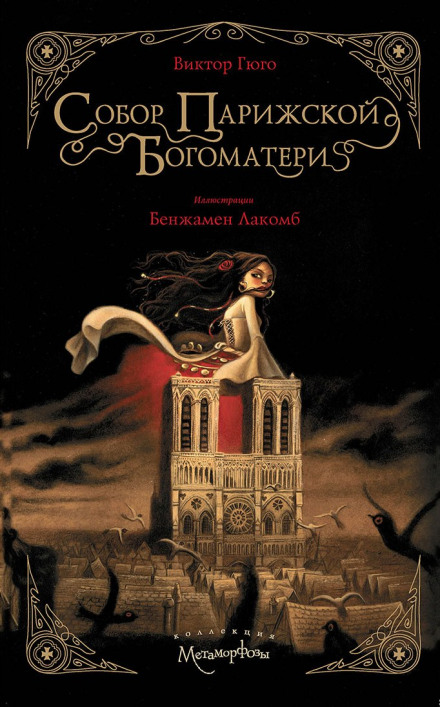
The Hunchback of Notre-Dame
18 hrs. 3 min.
Language
Russian
Author
Victor Hugo
Author
Victor Hugo
Narrator
Aleksey Kovalenok
Narrator
Aleksey Kovalenok
Description
On January 6, 1482, in Paris, there is “a celebration combining the feast of the Lord’s Baptism with an ancient pagan festival of jesters.” On this day, by tradition, comic lights are lit in the Place de Grève, and trees are decorated (a kind of precursor of the Christmas tree).
Read on...
At the order of Cardinal Charles of Bourbon, in the central hall of the Palace of Justice (“the Great Hall”) they were to present a play featuring characters from the Bible, as well as ancient Roman gods—an all-out mystery. The play was dedicated to the wedding planned at the time: “the son of the lion of France,” the heir to the French throne, the Dauphin Charles, and Margaret of Austria. After the mystery, the election of the chief entertainer of Paris—the jester pope—was to take place.
The Cardinal and honored Flemish guests were late for the mystery because they had been listening to the university lecturer’s speeches for too long. A lazy schoolboy (a student) Jehan Frolo, younger brother of one of the main characters, mocks the lecturers, bursars, and patrons (“And in our shop there’s all sorts of junk in fours: four holidays, four faculties, four lecturers, four bursars, four patrons, and four librarians!”). The author of the mystery, Pierre Gringore, promised to speak with the Cardinal and the performance began in Charles’s absence. When the king arrived—along with the Flemish ambassadors (in particular Guillaume Reem and Jacques Copenol)—Pierre “clenched his fists in helpless rage,” because the people were no longer interested in the poet’s brilliant creation. The last hope of finishing the mystery “dissipated like smoke” when the crowd, shouting, “Esmeralda in the square!” burst out of the palace.
The election of the jester pope took place—he became Quasimodo, the humpbacked bell-ringer of Notre-Dame Cathedral. In despair, Pierre fled the palace. He had nowhere to spend the night, because the money earned for the mystery he planned to use to pay for lodging. He decided to share the people’s joy and went to the fire in the square. There, Pierre saw a dancing girl “of such beauty that even God would prefer her to the Virgin Mary.” After the dance, Esmeralda began to display unusual abilities of her little goat, Jolly. For this, Esmeralda was criticized by the priest Claude Frollo, standing in the crowd, Quasimodo’s deformed mentor. Thieves, beggars, and drifters honored their new humpback king. Seeing this, Claude tears Quasimodo’s clothes off, takes the scepter, and leads the humpback away.
The Romani woman collects money for her dance and goes home. Pierre follows her, hoping that, besides her beautiful looks, she has a good heart and that she will help him with housing. Right before Pierre’s eyes, Quasimodo and someone else with a closed face kidnap the Romani woman. Esmeralda is saved by the shining officer Phoebus de Chateaupers. Esmeralda falls in love with him.
Following the girl, Gringore ends up in the Court of Miracles, where Parisian beggars live. Copenol accuses Pierre of an illegal trespass onto the Court of Miracles’ territory and plans to hang him. The poet begs to be accepted into their community but cannot withstand the difficult test: it requires stealing a wallet from a dummy with jingle-bells without letting the bells ring. In the final moments before the execution, the beggars remember that, according to the law, Pierre must say whether there is a woman who will marry him. If such a woman is found, the sentence is lifted. Esmeralda agreed to become the poet’s wife. He recognized her. Their “wedding” was for four years. But the girl doesn’t let Gringore touch her. As it turns out, Esmeralda wore an amulet intended to help her find her parents—only there was one important “but”: the charm works only while the Romani woman remains a virgin.
After the “wedding,” Gringore accompanies Esmeralda during her performances in the square. During another dance, the archdeacon Frollo recognizes the poet’s former student in her new companion and starts questioning the poet in detail about how he got involved with the street dancer. The fact that Esmeralda and Gringore are married enrages the priest; he demands of the philosopher a promise that he won’t touch Esmeralda. Gringore tells Frollo that Esmeralda is in love with a certain Phoebus and dreams of him day and night. The news triggers an unprecedented fit of jealousy in the archdeacon: he decides—at any cost—to find out who that Phoebus is and to track him down.
Frollo’s search succeeds. Driven by jealousy, he not only finds Captain Phoebus, but also wounds him seriously during his meeting with Esmeralda—thereby making Esmeralda even more hostile toward him.
Esmeralda is accused of Phoebus’s murder (Claude manages to escape the crime scene by jumping through a window into the river), taken into custody, and tortured. Unable to bear it any longer, the girl admits her “guilt.” Esmeralda is sentenced to execution by hanging at the Place de Grève. On the night before the execution, the archdeacon comes to her cell. He offers the prisoner escape with him, but she angrily rejects the murderer of her beloved Phoebus. Even before her death, all her thoughts are occupied by Phoebus. Fate grants her one last chance to see him. He stood completely cold-blooded on the balcony of his fiancée’s house, Fleur-de-Lys. In the final moment, Quasimodo saves her and hides her in the cathedral.
Esmeralda continues to dream of the captain of the king’s archers (his wound proved not fatal), still not believing that he has long forgotten her. All the residents of the Court of Miracles go to rescue her innocent sister. They storm Notre-Dame Cathedral, which zealously protects Quasimodo, believing that the vagabonds have come to execute the Romani woman. In this fight, Copenol Trouillefou and Jehan Frollo die.
When the cathedral siege begins, Esmeralda is asleep. Suddenly two people come into her cell: her “husband” Pierre Gringore and a man dressed in black. Afraid, she still follows them. They secretly lead her out of the cathedral. Too late, Esmeralda realizes that the mysterious silent companion is none other than archdeacon Claude Frollo. On the other bank of the river, Claude asks her one last time what she chooses: to be with him or to be hanged. The girl refuses. Then the enraged priest turns her over to the custody of the recluse Gudule.
Gudule is cruel and tactless toward the girl—after all, she is a Romani. But everything is decided in the most unusual way: it turns out that little Agnessa, kidnapped by the Romani from Gudule (Paketta Chantfleurie), and Esmeralda are the same person. Gudule promises to save her daughter and hides her in her cell. But when the guards come for the girl, Phoebus de Chateaupers is among them. Overcome by love, Esmeralda forgets caution and calls him. The mother’s efforts are in vain. The daughter is taken away. In the end, she tries to save her to the last, but she dies herself.
Esmeralda is brought back to the square once again. Only then does she understand the horror of inevitable death. From the top of the cathedral, Quasimodo and, of course, Claude Frollo watched this tragic scene.
Realizing that Frollo is responsible for the Romani woman’s death, an enraged Quasimodo threw his adoptive father from the top of the cathedral. Claude Frollo smashed to death. As Quasimodo’s gaze shifted from the square to the foot of the cathedral—from the Romani woman’s body writhing in her death throes to the priest’s mutilated corpse—he desperately screamed: “That’s everything I loved!” After that, the hunchback vanished.
The novel’s final scene describes how two bodies were found in the tomb of the gibbet of Montfaucon, one of which was embracing the other. They were Quasimodo and Esmeralda. When they tried to separate them, Quasimodo’s skeleton crumbled into dust.
The Cardinal and honored Flemish guests were late for the mystery because they had been listening to the university lecturer’s speeches for too long. A lazy schoolboy (a student) Jehan Frolo, younger brother of one of the main characters, mocks the lecturers, bursars, and patrons (“And in our shop there’s all sorts of junk in fours: four holidays, four faculties, four lecturers, four bursars, four patrons, and four librarians!”). The author of the mystery, Pierre Gringore, promised to speak with the Cardinal and the performance began in Charles’s absence. When the king arrived—along with the Flemish ambassadors (in particular Guillaume Reem and Jacques Copenol)—Pierre “clenched his fists in helpless rage,” because the people were no longer interested in the poet’s brilliant creation. The last hope of finishing the mystery “dissipated like smoke” when the crowd, shouting, “Esmeralda in the square!” burst out of the palace.
The election of the jester pope took place—he became Quasimodo, the humpbacked bell-ringer of Notre-Dame Cathedral. In despair, Pierre fled the palace. He had nowhere to spend the night, because the money earned for the mystery he planned to use to pay for lodging. He decided to share the people’s joy and went to the fire in the square. There, Pierre saw a dancing girl “of such beauty that even God would prefer her to the Virgin Mary.” After the dance, Esmeralda began to display unusual abilities of her little goat, Jolly. For this, Esmeralda was criticized by the priest Claude Frollo, standing in the crowd, Quasimodo’s deformed mentor. Thieves, beggars, and drifters honored their new humpback king. Seeing this, Claude tears Quasimodo’s clothes off, takes the scepter, and leads the humpback away.
The Romani woman collects money for her dance and goes home. Pierre follows her, hoping that, besides her beautiful looks, she has a good heart and that she will help him with housing. Right before Pierre’s eyes, Quasimodo and someone else with a closed face kidnap the Romani woman. Esmeralda is saved by the shining officer Phoebus de Chateaupers. Esmeralda falls in love with him.
Following the girl, Gringore ends up in the Court of Miracles, where Parisian beggars live. Copenol accuses Pierre of an illegal trespass onto the Court of Miracles’ territory and plans to hang him. The poet begs to be accepted into their community but cannot withstand the difficult test: it requires stealing a wallet from a dummy with jingle-bells without letting the bells ring. In the final moments before the execution, the beggars remember that, according to the law, Pierre must say whether there is a woman who will marry him. If such a woman is found, the sentence is lifted. Esmeralda agreed to become the poet’s wife. He recognized her. Their “wedding” was for four years. But the girl doesn’t let Gringore touch her. As it turns out, Esmeralda wore an amulet intended to help her find her parents—only there was one important “but”: the charm works only while the Romani woman remains a virgin.
After the “wedding,” Gringore accompanies Esmeralda during her performances in the square. During another dance, the archdeacon Frollo recognizes the poet’s former student in her new companion and starts questioning the poet in detail about how he got involved with the street dancer. The fact that Esmeralda and Gringore are married enrages the priest; he demands of the philosopher a promise that he won’t touch Esmeralda. Gringore tells Frollo that Esmeralda is in love with a certain Phoebus and dreams of him day and night. The news triggers an unprecedented fit of jealousy in the archdeacon: he decides—at any cost—to find out who that Phoebus is and to track him down.
Frollo’s search succeeds. Driven by jealousy, he not only finds Captain Phoebus, but also wounds him seriously during his meeting with Esmeralda—thereby making Esmeralda even more hostile toward him.
Esmeralda is accused of Phoebus’s murder (Claude manages to escape the crime scene by jumping through a window into the river), taken into custody, and tortured. Unable to bear it any longer, the girl admits her “guilt.” Esmeralda is sentenced to execution by hanging at the Place de Grève. On the night before the execution, the archdeacon comes to her cell. He offers the prisoner escape with him, but she angrily rejects the murderer of her beloved Phoebus. Even before her death, all her thoughts are occupied by Phoebus. Fate grants her one last chance to see him. He stood completely cold-blooded on the balcony of his fiancée’s house, Fleur-de-Lys. In the final moment, Quasimodo saves her and hides her in the cathedral.
Esmeralda continues to dream of the captain of the king’s archers (his wound proved not fatal), still not believing that he has long forgotten her. All the residents of the Court of Miracles go to rescue her innocent sister. They storm Notre-Dame Cathedral, which zealously protects Quasimodo, believing that the vagabonds have come to execute the Romani woman. In this fight, Copenol Trouillefou and Jehan Frollo die.
When the cathedral siege begins, Esmeralda is asleep. Suddenly two people come into her cell: her “husband” Pierre Gringore and a man dressed in black. Afraid, she still follows them. They secretly lead her out of the cathedral. Too late, Esmeralda realizes that the mysterious silent companion is none other than archdeacon Claude Frollo. On the other bank of the river, Claude asks her one last time what she chooses: to be with him or to be hanged. The girl refuses. Then the enraged priest turns her over to the custody of the recluse Gudule.
Gudule is cruel and tactless toward the girl—after all, she is a Romani. But everything is decided in the most unusual way: it turns out that little Agnessa, kidnapped by the Romani from Gudule (Paketta Chantfleurie), and Esmeralda are the same person. Gudule promises to save her daughter and hides her in her cell. But when the guards come for the girl, Phoebus de Chateaupers is among them. Overcome by love, Esmeralda forgets caution and calls him. The mother’s efforts are in vain. The daughter is taken away. In the end, she tries to save her to the last, but she dies herself.
Esmeralda is brought back to the square once again. Only then does she understand the horror of inevitable death. From the top of the cathedral, Quasimodo and, of course, Claude Frollo watched this tragic scene.
Realizing that Frollo is responsible for the Romani woman’s death, an enraged Quasimodo threw his adoptive father from the top of the cathedral. Claude Frollo smashed to death. As Quasimodo’s gaze shifted from the square to the foot of the cathedral—from the Romani woman’s body writhing in her death throes to the priest’s mutilated corpse—he desperately screamed: “That’s everything I loved!” After that, the hunchback vanished.
The novel’s final scene describes how two bodies were found in the tomb of the gibbet of Montfaucon, one of which was embracing the other. They were Quasimodo and Esmeralda. When they tried to separate them, Quasimodo’s skeleton crumbled into dust.
100%
1:07:03
1 Recorded Audio 2012-ноя-17 06-01-22
1:12:26
10 Recorded Audio 2012-дек-03 07-09-25
1:09:58
11 Recorded Audio 2012-дек-21 07-00-59
44:55
12 Recorded Audio 2012-дек-23 12-11-28
1:25:54
13 Recorded Audio 2012-дек-23 05-05-05
1:11:12
14 Recorded Audio 2012-дек-25 02-24-45
1:05:28
15 Recorded Audio 2012-дек-29 01-12-47
23:22
16 Recorded Audio 2012-дек-29 04-38-45
1:08:25
2 Recorded Audio 2012-ноя-18 11-25-04
54:25
3 Recorded Audio 2012-ноя-18 03-03-25
1:40:34
4 Recorded Audio 2012-ноя-23 06-34-34
57:55
5 Recorded Audio 2012-ноя-24 03-21-37
1:00:38
6 Recorded Audio 2012-ноя-24 06-29-43
1:36:24
7 Recorded Audio 2012-ноя-25 11-51-07
50:41
8 Recorded Audio 2012-ноя-26 07-08-05
1:34:38
9 Recorded Audio 2012-дек-01 07-07-10
