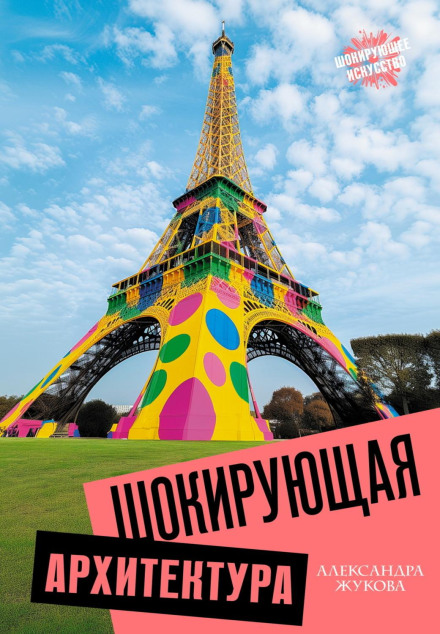
Shocking Architecture
6 hrs. 26 min.
Language
Russian
Author
Alexandra Zhukova
Author
Alexandra Zhukova
Narrator
Nina Gurkova
Narrator
Nina Gurkova
Description
When it comes to architecture, we immediately picture the object—after all, architecture surrounds us everywhere and accompanies our whole life. But when it comes to architects, that clarity disappears: the subject starts to hide in fog, even though many people know the names of the authors of the most famous buildings—Palladio or Le Corbusier, Bazhenov or Rastrelli. We’ve all heard of these genius builders. Yet not everyone can imagine how exactly they worked, where they drew their inspiration from, how the ideas and images were born that would later take shape in stone, glass, wood, or concrete. So we end up with an interesting paradox: architecture is open and familiar to everyone, but creating it is a mysterious process, little understood, almost mystical. Accordingly, architects seem to us like closed, unapproachable people—just like priests—who possess secret knowledge and skills.
And, of course, behind almost every architectural masterpiece there are curious facts, mysterious events, or surprising, sometimes dramatic, relationships between authors and patrons. And when we do show curiosity, we ask ourselves with astonishment: is it really true that the Eiffel Tower is only the gates to an exhibition? Is it true that a palace and a service were named and created in honor of an ordinary frog? And is it really the case that a German cathedral was built for 600 years, and that in Austria there is a house whose balconies and roof are covered with entire gardens? Or that in the Russian and English parks there are two completely identical bridges, and that skyscrapers appeared thanks to palms?
25 entertaining, sometimes shocking stories, including: • how Florence got its dome thanks to doors • how a palace frog became famous in three empires • the minister’s vanity and the king’s envy • how Moscow ended up on the shores of the Black Sea • what was left from an exhibition—only the entrance • what skyscrapers are grateful to palms for • a secret marriage, a smart house, and pyramids • a resort for hobbits • how architects took a hundred years to invent a chair.
And, of course, behind almost every architectural masterpiece there are curious facts, mysterious events, or surprising, sometimes dramatic, relationships between authors and patrons. And when we do show curiosity, we ask ourselves with astonishment: is it really true that the Eiffel Tower is only the gates to an exhibition? Is it true that a palace and a service were named and created in honor of an ordinary frog? And is it really the case that a German cathedral was built for 600 years, and that in Austria there is a house whose balconies and roof are covered with entire gardens? Or that in the Russian and English parks there are two completely identical bridges, and that skyscrapers appeared thanks to palms?
25 entertaining, sometimes shocking stories, including: • how Florence got its dome thanks to doors • how a palace frog became famous in three empires • the minister’s vanity and the king’s envy • how Moscow ended up on the shores of the Black Sea • what was left from an exhibition—only the entrance • what skyscrapers are grateful to palms for • a secret marriage, a smart house, and pyramids • a resort for hobbits • how architects took a hundred years to invent a chair.
