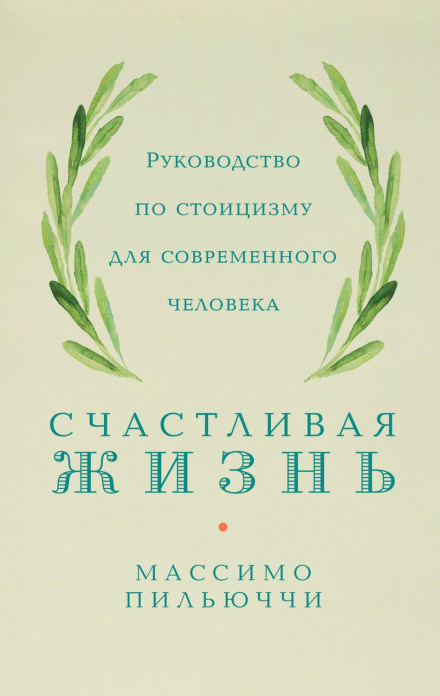
A Field Guide to a Happy Life: 53 Brief Lessons for Living
2 hrs. 30 min.
Language
Russian
Author
Massimo Pigliucci
Author
Massimo Pigliucci
Narrator
Andrey Yadykin
Narrator
Andrey Yadykin
Description
Stoicism is rightfully considered one of the most outstanding schools of ancient philosophy—a philosophical system that took shape in the III–II centuries BCE in Greece and was later adopted by Rome as well. The author, American philosopher, biologist, and publicist, uses a small number of this thinker’s well-known works and tries to reconstruct his worldview using modern language, modern style, and modern narratives—making the once extraordinary Stoic doctrine accessible and appealing to a person of the 21st century. He turns to the ideas of Epictetus, the Roman philosopher-slave, one of the most prominent representatives of Stoicism. The construction presented by him, called “Stoicism 2.0,” also has a practical purpose: according to the author’s plan, it can teach a person of today the art not only of living—but of living happily. Stoic wisdom, proven over two millennia, has, in the author’s view, exceptional value in the world of postmodernity.
