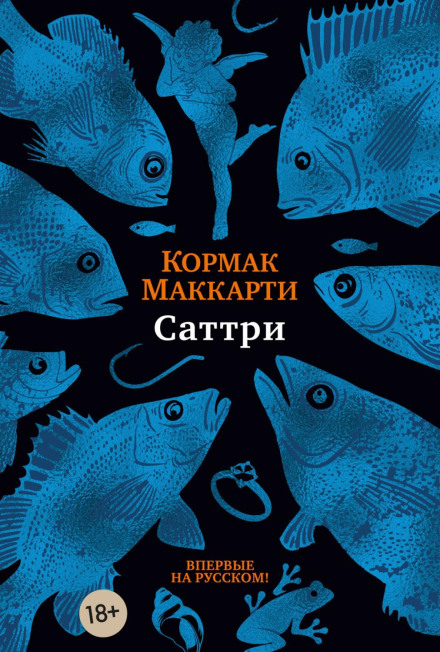
Suttree
20 hrs. 24 min.
Language
Russian
Author
Cormac McCarthy
Author
Cormac McCarthy
Narrator
Egor Partin
Narrator
Egor Partin
Description
Cormac McCarthy is a modern American literary classic of the highest caliber, a recipient of the MacArthur Fellowship “for genius.” He is a master of complex emotional states and unconventional syntax—well known to our readers through novels such as “No Country for Old Men” (the Coen brothers’ film adaptation of this book received four Oscars) and “The Road” (which won the Pulitzer Prize and was also adapted), his “Border Trilogy” (the first novel, “All the Pretty Horses,” received the National Book Award and was adapted for the screen by Billy Bob Thornton, with Matt Damon and Penélope Cruz in the leading roles) and “Blood Meridian.”
A special place in his legacy is occupied by the epic tragicomedy “Suttree”—“the unthinkable—yet completely natural—combination of James Joyce’s ‘Ulysses’ and John Steinbeck’s ‘Cannery Row’” (New York Times), a “nearly autobiographical” work by the famous recluse.
So, the setting is Knoxville, Tennessee; the year is the 1950s. Cornelius Suttree, a scion of a wealthy family, for unknown reasons left his wife with a small son and moved into a houseboat on the river. He eats the fish he catches himself, drinks everything that burns (and what friends bring him), and spends time among “the society of thieves, misfits, scoundrels… loafers, bullies, fools, murderers, gamblers, madams… and all sorts of other assorted nasty troublemakers,” but he never loses his human dignity and looks at the world with detached simplicity.
A special place in his legacy is occupied by the epic tragicomedy “Suttree”—“the unthinkable—yet completely natural—combination of James Joyce’s ‘Ulysses’ and John Steinbeck’s ‘Cannery Row’” (New York Times), a “nearly autobiographical” work by the famous recluse.
So, the setting is Knoxville, Tennessee; the year is the 1950s. Cornelius Suttree, a scion of a wealthy family, for unknown reasons left his wife with a small son and moved into a houseboat on the river. He eats the fish he catches himself, drinks everything that burns (and what friends bring him), and spends time among “the society of thieves, misfits, scoundrels… loafers, bullies, fools, murderers, gamblers, madams… and all sorts of other assorted nasty troublemakers,” but he never loses his human dignity and looks at the world with detached simplicity.
