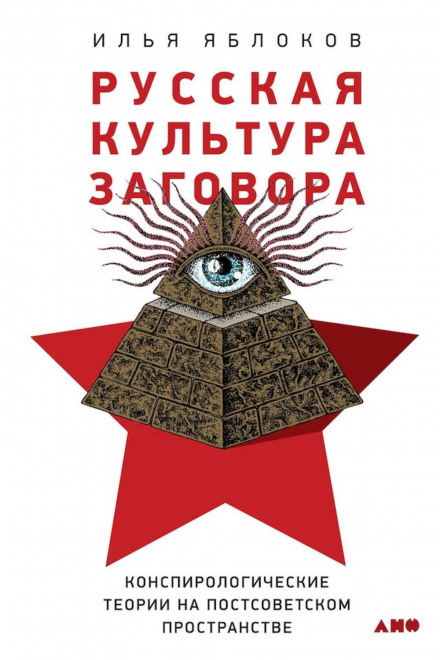
Russian Culture of Conspiracy
9 hrs. 5 min.
Language
Russian
Author
Ilya Yablokov
Author
Ilya Yablokov
Narrator
Vadim Chernobel'sky
Narrator
Vadim Chernobel'sky
Description
"Show everything that’s hidden!", "The truth is somewhere nearby", "If you’re not paranoid, it doesn’t mean you’re not being watched"… How often do we hear these phrases that have become slogans of our time? Bookshelves are filled with publications about “enemies of Russia.” TV programs talk about intrigues of foreign special services: now even the Chinese coronavirus turns out to be an invention by Americans! And the outlet Meduza, as some commentators on Russian Facebook believe, works for the FSB!
Politicians and opposition figures alike believe that world politics is made by the all-powerful Rothschild and Rockefeller clans’ hands, or by Kremlin hardliners, or the U.S. State Department. And ordinary Russians are convinced that nothing happens just like that: everything is somebody’s order, somebody’s dirty PR, and definitely somebody’s evil intent.
In her book, historian, media expert, and University of Leeds lecturer Ilya Yablokov shows that belief in conspiracy theories is not necessarily a sign of paranoid thinking. It’s not only a natural reaction of a modern person to a complex world — a way through which an ordinary person, who has no influence on the events around them, learns about the world. It’s also a powerful political tool actively used by Russian elites for their purposes, and, as the book demonstrates, one that has unbelievably reshaped the country in the post-Soviet period.
Politicians and opposition figures alike believe that world politics is made by the all-powerful Rothschild and Rockefeller clans’ hands, or by Kremlin hardliners, or the U.S. State Department. And ordinary Russians are convinced that nothing happens just like that: everything is somebody’s order, somebody’s dirty PR, and definitely somebody’s evil intent.
In her book, historian, media expert, and University of Leeds lecturer Ilya Yablokov shows that belief in conspiracy theories is not necessarily a sign of paranoid thinking. It’s not only a natural reaction of a modern person to a complex world — a way through which an ordinary person, who has no influence on the events around them, learns about the world. It’s also a powerful political tool actively used by Russian elites for their purposes, and, as the book demonstrates, one that has unbelievably reshaped the country in the post-Soviet period.
100%
23:03
000
33:43
001
29:46
002
07:53
003
18:44
004
19:23
005
10:56
006
22:08
007
24:05
008
20:24
009
15:21
010
11:19
011
23:16
012
24:46
013
21:48
014
24:31
015
15:31
016
22:37
017
32:21
018
10:34
019
27:02
020
30:48
021
17:16
022
22:47
023
11:26
024
23:43
025
