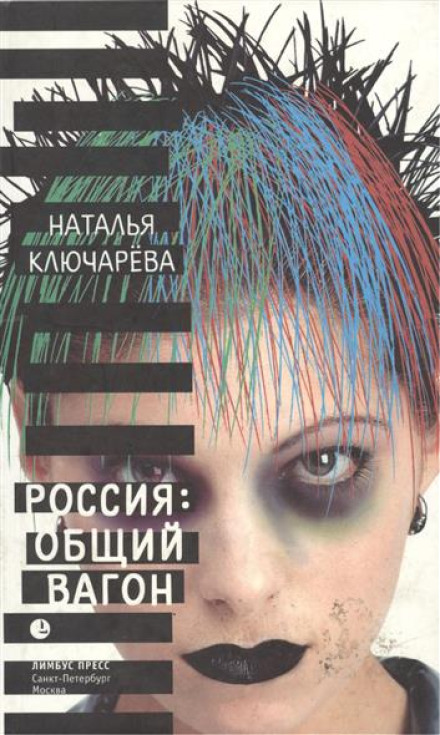
Russia: The Common Carriage
4 hrs. 45 min.
Language
Russian
Author
Natalya Klyuchareva
Author
Natalya Klyuchareva
Narrator
Leontina Brotskaya
Narrator
Leontina Brotskaya
Description
A young writer, Natalia Kliuchareva, managed in her first novel the hardest thing of all: not merely to write magnificent literature, but to become the voice of an entire country—with all its pain, tears—torn apart, drunk, yet also beautiful, and strong.
Even before the book was published, it caused a storm of emotions among the literary community and online. People so different as Maria Arbatova, Eduard Limonov, and Viktor Toporov responded to it approvingly. Admirers of delicate “sappy” prose criticize it listlessly. Yet there is an opinion that “Russia: The Common Train,” like Zakhar Prilepin’s “Sanykya,” is a forerunner of future Russian literature—proud, angry, and beautiful.
Even before the book was published, it caused a storm of emotions among the literary community and online. People so different as Maria Arbatova, Eduard Limonov, and Viktor Toporov responded to it approvingly. Admirers of delicate “sappy” prose criticize it listlessly. Yet there is an opinion that “Russia: The Common Train,” like Zakhar Prilepin’s “Sanykya,” is a forerunner of future Russian literature—proud, angry, and beautiful.
100%
05:11
001-russia
16:34
002-russia
06:07
003-russia
09:32
004-russia
09:06
005-russia
03:37
006-russia
13:27
007-russia
07:32
008-russia
05:26
009-russia
02:32
010-russia
08:45
011-russia
12:20
012-russia
07:14
013-russia
12:26
014-russia
19:22
015-russia
08:07
016-russia
03:13
017-russia
09:36
018-russia
02:26
019-russia
06:12
020-russia
23:56
021-russia
10:39
022-russia
04:18
023-russia
14:51
024-russia
25:36
025-russia
18:07
026-russia
07:50
027-russia
08:25
028-russia
02:35
029-russia
