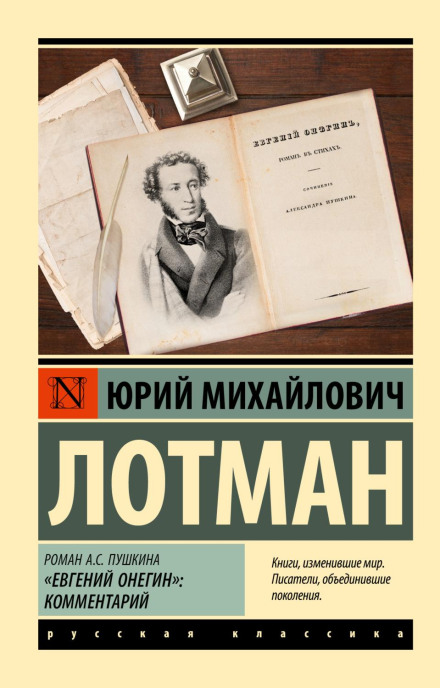
Alexander Pushkin's Novel 'Eugene Onegin': A Commentary
20 hrs. 29 min.
Language
Russian
Author
Yuri Lotman
Author
Yuri Lotman
Narrator
Dmitry Shabrov
Narrator
Dmitry Shabrov
Description
The verse novel “Eugene Onegin” at first glance seems clear and accessible, but this impression is deceptive. In fact, a multitude of riddles are hidden in its lines, and their meaning often slips away from the modern reader. Hints and veiled references, the abundance of characters, realities, concepts, and objects that were well known to people of the Pushkin era but are almost unknown today do not prevent admiration for the poetic perfection of “Eugene Onegin,” yet they may hinder seeing and understanding it truly deeply and completely: any work lives within the cultural and historical context of its time.
The book will be of equal interest to philologists, students, and all lovers of Pushkin, and it will serve as a kind of key to the mysteries concealed in the classic text.
