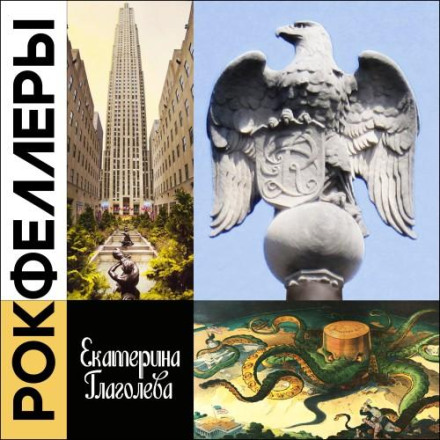
The Rockefellers
25 hrs. 23 min.
Language
Russian
Author
Ekaterina Glagoleva
Author
Ekaterina Glagoleva
Narrator
Alexander Lutoshkin
Narrator
Alexander Lutoshkin
Description
The nearly two-century history of the Rockefeller family—who gave the world industrialists, bankers, politicians, patrons of the arts, and philanthropists, the first billionaire, and one of America’s vice presidents—runs closely intertwined with the history of the United States from the Civil War to the present day. They were called bloodsuckers, and their largest oil company in the world was likened to a tentacle that strangled America; they were accused of being puppeteers who controlled the government, and yet admired for their ability to build everything on an industrial basis, even charity. The Rockefellers collected works of art, built mansions—and invested money in education and healthcare. Thanks to them exist the Rockefeller University, the Museum of Modern Art, and the Lincoln Center. With their money, the most diverse projects were carried out in China, Greece, Mexico, France, and Israel; leaders of the USSR and Russia worked with them—from Khrushchev to Yeltsin. So what is true and what is conjecture? The answer is given by Ekaterina Glagoleva’s book about a world-famous clan that preserved its family values, upbringing principles, and credo across five generations—doing what no one else had done yet.
100%
01:56
0001
01:27
0002
23:03
0003
22:48
0004
23:21
0005
23:32
0006
27:49
0007
27:50
0008
21:10
0009
22:07
0010
25:49
0011
25:47
0012
24:42
0013
24:35
0014
21:26
0015
21:25
0016
20:16
0017
20:06
0018
19:43
0019
20:02
0020
21:08
0021
38:21
0022
39:33
0023
25:01
0024
25:43
0025
25:26
0026
24:06
0027
23:45
0028
23:52
0029
24:07
0030
24:23
0031
28:14
0032
28:30
0033
27:50
0034
20:55
0035
21:06
0036
20:31
0037
24:00
0038
28:10
0039
28:40
0040
26:19
0041
26:08
0042
21:09
0043
20:47
0044
23:15
0045
23:01
0046
26:17
0047
25:47
0048
36:37
0049
20:33
0050
20:55
0051
23:20
0052
23:13
0053
23:24
0054
23:29
0055
29:45
0056
29:06
0057
28:38
0058
18:54
0059
28:25
0060
28:28
0061
28:46
0062
24:50
0063
