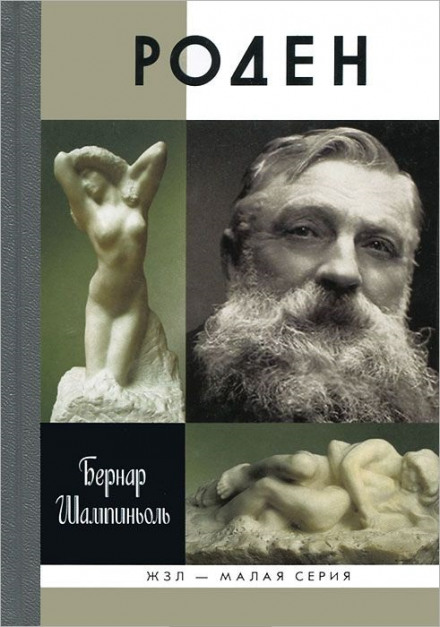
Rodin
7 hrs. 49 min.
Language
Russian
Author
Bernard Champigneulle
Author
Bernard Champigneulle
Narrator
Irina Vorobyova
Narrator
Irina Vorobyova
Description
How can a person born into a respectable but poor family who couldn’t even master the elementary school curriculum and was forced to earn a living as a decorator until the age of thirty-seven become an outstanding sculptor crowned with worldwide fame? The appearance of the genius Rodin is one of the most stunning phenomena in the history of world art. The motion, gesture, and pose captured by him convey an unlimited range of emotions no less eloquently than facial expression. With his vivid talent and enormous capacity for work, he left behind hundreds of statues and thousands of drawings, but he spent years—even decades—working on some plots.
A contemporary of the Impressionists who destroyed traditional approaches in painting, Rodin was the only sculptor who, with desperate rage, fought the academic dogmas. His love affairs were discussed throughout Paris, but he always returned to one woman, whom he married 53 years after they met.
Art historian and critic Bernard Champigneulles describes the life of the sculptor—full of turmoil and hard work—in an era when the former system of moral values had collapsed, and the emerging art of modernism was struggling to find its way.
A contemporary of the Impressionists who destroyed traditional approaches in painting, Rodin was the only sculptor who, with desperate rage, fought the academic dogmas. His love affairs were discussed throughout Paris, but he always returned to one woman, whom he married 53 years after they met.
Art historian and critic Bernard Champigneulles describes the life of the sculptor—full of turmoil and hard work—in an era when the former system of moral values had collapsed, and the emerging art of modernism was struggling to find its way.
100%
00:32
00_00_Shampinol_B_Roden_VorobYova_I
01:03
00_01_Soderzhanie
02:58
00_02_Predislovie
41:01
01_Molchalivyy uchenik
41:25
02_Trudnye vremena
49:23
03_Iskusstvo i remeslo
53:20
04_«Grazhdane Kale»
31:39
05_«YA medlitelen v rabote»
25:57
06_«Bozhestvennaya komediya»
21:31
07_Pesni lyubvi i sladostrastiya
48:03
08_Chelovecheskaya komediya
33:58
09_Villa Briyan
24:21
10_Sobory
25:17
11_Bednyy malenkiy polevoy tsvetok
27:43
12_Otel Biron
21:38
13_Bolshaya ten
04:48
14_Posmertnaya slava
06:20
15_Osnovnye daty zhizni i tvorchestva Ogyusta Rodena
07:39
16_Naibolee izvestnye proizvedeniya Rodena
01:12
17_Bibliografiya
