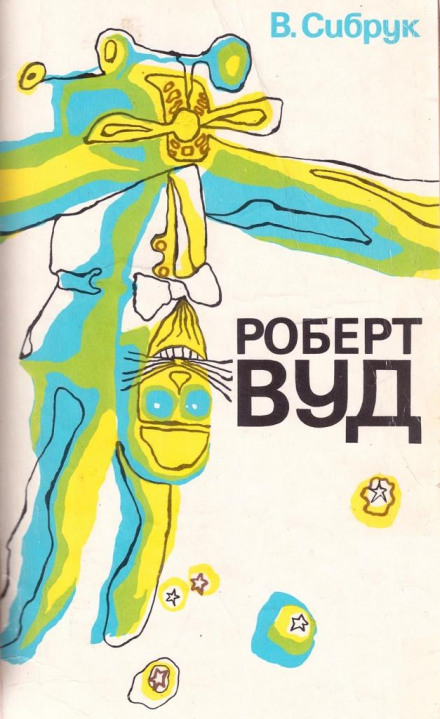
Robert Williams Wood: Modern Wizard of the Laboratory
11 hrs. 19 min.
Description
This book is a biography of the brilliant American experimental physicist Robert Williams Wood. In fact, it is a collection of anecdotes from his life, diary entries, funny, scientific, and sometimes detective-like stories.
The Russian translation was done in 1946 under the editorship of academician Sergey Ivanovich Vavilov (“a cool, no-nonsense scientist”). Here is what he writes:
“Wood became truly a legendary figure for physicists all over the world—a genuine virtuoso and sorcerer of experiment. Wood’s genius lies in his ability to set extraordinary problems and find for them completely untried, yet at the same time surprisingly ‘simple’ paths.
Wood’s main field of activity is physical optics. In this area, with his name are primarily associated a striking series of works on the resonant glow of vapors and gases that formed the basis of modern quantum theory of atomic structure. Great importance in the development of new physics and astrophysics was given to Wood’s spectroscopic technique: his famous 40-foot spectrograph, and masterful diffraction gratings. In modern technology, Wood’s name is forever tied to photographing in infrared and ultraviolet rays, to signaling with those rays, and to using them for analytical and detective purposes. Ultrasonic technology is also, to a large extent, indebted to R. Wood.”
It should be noted that to write Wood’s biography based on his diaries, a rather unusual author was chosen.
Wood was a boy from a good family, graduated from Harvard, married early and successfully, traveled around the world, progressed in his profession from success to success, and received every possible title and honor—without even bothering to defend a doctoral thesis (PhD). He moved among the cream of society, alternating scientific work in the best laboratories in the world with social entertainments. He exposed pseudo-scientific theories, charlatans, and mediums.
William Seabrook was a scandalous author of documentary prose; throughout his life he wrote about exotic tribes, witchcraft, occultism, and satanism. Out of research curiosity he tried human flesh. His marriage lasted six years and fell apart because of a tendency toward sadism. Seabrook wrote the biography of Wood during a remission after treatment for acute alcoholism and drug addiction.
As different as the author’s and the hero’s lives were, so different was their ending.
Seabrook committed suicide by taking a fatal dose of drugs in the autumn of 1945.
Wood died peacefully in his sleep in 1955, outliving his biographer by ten years.
“Wise scientists—be like scientists.”
The Russian translation was done in 1946 under the editorship of academician Sergey Ivanovich Vavilov (“a cool, no-nonsense scientist”). Here is what he writes:
“Wood became truly a legendary figure for physicists all over the world—a genuine virtuoso and sorcerer of experiment. Wood’s genius lies in his ability to set extraordinary problems and find for them completely untried, yet at the same time surprisingly ‘simple’ paths.
Wood’s main field of activity is physical optics. In this area, with his name are primarily associated a striking series of works on the resonant glow of vapors and gases that formed the basis of modern quantum theory of atomic structure. Great importance in the development of new physics and astrophysics was given to Wood’s spectroscopic technique: his famous 40-foot spectrograph, and masterful diffraction gratings. In modern technology, Wood’s name is forever tied to photographing in infrared and ultraviolet rays, to signaling with those rays, and to using them for analytical and detective purposes. Ultrasonic technology is also, to a large extent, indebted to R. Wood.”
It should be noted that to write Wood’s biography based on his diaries, a rather unusual author was chosen.
Wood was a boy from a good family, graduated from Harvard, married early and successfully, traveled around the world, progressed in his profession from success to success, and received every possible title and honor—without even bothering to defend a doctoral thesis (PhD). He moved among the cream of society, alternating scientific work in the best laboratories in the world with social entertainments. He exposed pseudo-scientific theories, charlatans, and mediums.
William Seabrook was a scandalous author of documentary prose; throughout his life he wrote about exotic tribes, witchcraft, occultism, and satanism. Out of research curiosity he tried human flesh. His marriage lasted six years and fell apart because of a tendency toward sadism. Seabrook wrote the biography of Wood during a remission after treatment for acute alcoholism and drug addiction.
As different as the author’s and the hero’s lives were, so different was their ending.
Seabrook committed suicide by taking a fatal dose of drugs in the autumn of 1945.
Wood died peacefully in his sleep in 1955, outliving his biographer by ten years.
“Wise scientists—be like scientists.”
100%
09:51
Wood-00
1:04:40
Wood-01
25:20
Wood-02
41:05
Wood-03
32:52
Wood-04
22:36
Wood-05
25:22
Wood-06
22:34
Wood-07
39:34
Wood-08
27:29
Wood-09
22:00
Wood-10
43:03
Wood-11
14:36
Wood-12
19:06
Wood-13
45:38
Wood-14
27:21
Wood-15
18:40
Wood-16
45:09
Wood-17
51:13
Wood-18
33:11
Wood-19
23:57
Wood-20
24:17
Wood-21
