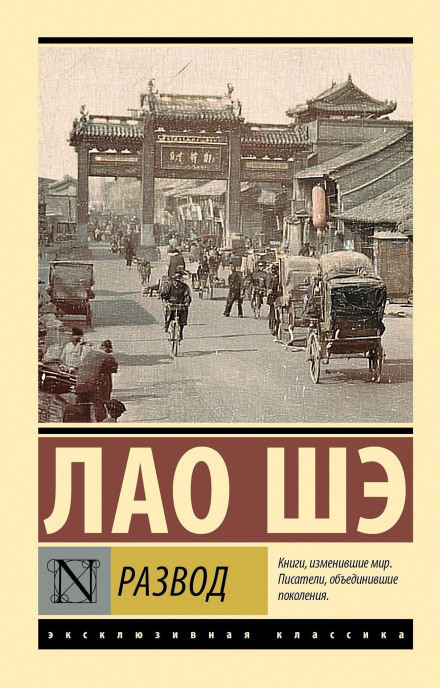
Divorce
8 hrs. 35 min.
Description
Lao She’s novel “Divorce” is an acknowledged classic of 20th-century Chinese literature, now again available to Russian-speaking readers: the book last appeared in Russian in the 1990s.
At its center is the theme of the “small man,” explored with the author’s characteristic subtle psychological insight and irony. The reader is shown the inner lives of Beijing officials—their hopes, anxieties, and self-deception.
The writer reflects on problems that have not lost their sharpness even today: a family crisis, bureaucratic routine, the collapse of a dream, and the mirage of success. The novel makes it possible to see universal human weaknesses through the lens of Chinese culture of the 1930s.
“Divorce” is a social-psychological story about Beijing clerks—about their concerns and passions, about drab everyday life with unloved wives, and about their timid attempts to grasp at the hope of a better life. With mocking precision, Lao She depicts financial administration, where only men work, where rumors and intrigues multiply, and where his employees—“small men”—fantasize about themselves as characters of grand scale.
Zhang Dage is a minor official, proud of his useful connections and believing it to be his calling to bring people together and dissuade them from divorce. When he learns that his colleague Lao Li is burdened by a marriage arranged by his parents, Zhang Dage decides, at any cost, to prevent the divorce…
At its center is the theme of the “small man,” explored with the author’s characteristic subtle psychological insight and irony. The reader is shown the inner lives of Beijing officials—their hopes, anxieties, and self-deception.
The writer reflects on problems that have not lost their sharpness even today: a family crisis, bureaucratic routine, the collapse of a dream, and the mirage of success. The novel makes it possible to see universal human weaknesses through the lens of Chinese culture of the 1930s.
“Divorce” is a social-psychological story about Beijing clerks—about their concerns and passions, about drab everyday life with unloved wives, and about their timid attempts to grasp at the hope of a better life. With mocking precision, Lao She depicts financial administration, where only men work, where rumors and intrigues multiply, and where his employees—“small men”—fantasize about themselves as characters of grand scale.
Zhang Dage is a minor official, proud of his useful connections and believing it to be his calling to bring people together and dissuade them from divorce. When he learns that his colleague Lao Li is burdened by a marriage arranged by his parents, Zhang Dage decides, at any cost, to prevent the divorce…
100%
28:38
Развод 01
33:04
Развод 02
22:56
Развод 03
18:32
Развод 04
25:08
Развод 05
28:30
Развод 06
25:44
Развод 07
24:59
Развод 08
29:29
Развод 09
30:29
Развод 10
21:56
Развод 11
23:19
Развод 12
24:43
Развод 13
27:09
Развод 14
24:24
Развод 15
28:49
Развод 16
22:20
Развод 17
33:35
Развод 18
24:13
Развод 19
17:04
Развод 20
