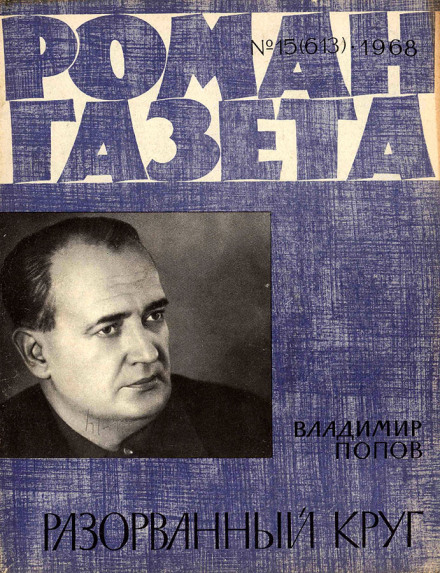
The Broken Circle
13 hrs. 14 min.
Language
Russian
Author
Vladimir Popov
Author
Vladimir Popov
Narrator
Elizaveta Krupina
Narrator
Elizaveta Krupina
Description
The main storyline is connected with solving a technical problem: a collective of a tire factory fights for a new, progressive technology. But the industrial side of the conflict is only the foundation for the unfolding events. Step by step, the narration captures the reader with a sharp, dramatic struggle of beliefs, characters, and human passions—unexpected moves and turns.
“Broken Circle” is a work that is sharply contemporary, one could even say topical. But this topicality isn’t superficial and fleeting—it runs much deeper, into the very essence of the novel’s conflicts and characters. And above all—in the main character, the factory director Bryantsev.
People like Aleksey Bryantsev were produced by our time, which opens unprecedented room for bold experiments, searches, and creative initiative. In the image of Bryantsev, these possibilities unfold brightly and diversely. He is an integral, principled man, uncompromising toward any stagnation, formalism, and bourgeois complacency. He is capable, for the sake of the cause, of sacrificing his own interests and well-being. Bryantsev’s courage is based on exact engineering knowledge and calculation, on a firm certainty that he is right, and—most importantly—on a deep faith in the collective, in the people he himself raised.
The figure of a new kind of leader—someone with genuinely state-minded thinking, a true communist—stands fully revealed in the novel. Bryantsev’s image is a great success of the writer.
There is yet another important hero in “Broken Circle.” It is the collective of an active public institution at the plant: the workers-researchers. With living, believable authenticity, the author recreates the atmosphere of tireless searching and the beating of creative thought. Through the images of the most vivid representatives of the collective—workers Kristich, Kayola, Zavarykin, and the engineer-inventor Tselin—the theme of labor-as-creativity, labor marked by bright signs of the communist future, develops and deepens.
“Broken Circle” is a work that is sharply contemporary, one could even say topical. But this topicality isn’t superficial and fleeting—it runs much deeper, into the very essence of the novel’s conflicts and characters. And above all—in the main character, the factory director Bryantsev.
People like Aleksey Bryantsev were produced by our time, which opens unprecedented room for bold experiments, searches, and creative initiative. In the image of Bryantsev, these possibilities unfold brightly and diversely. He is an integral, principled man, uncompromising toward any stagnation, formalism, and bourgeois complacency. He is capable, for the sake of the cause, of sacrificing his own interests and well-being. Bryantsev’s courage is based on exact engineering knowledge and calculation, on a firm certainty that he is right, and—most importantly—on a deep faith in the collective, in the people he himself raised.
The figure of a new kind of leader—someone with genuinely state-minded thinking, a true communist—stands fully revealed in the novel. Bryantsev’s image is a great success of the writer.
There is yet another important hero in “Broken Circle.” It is the collective of an active public institution at the plant: the workers-researchers. With living, believable authenticity, the author recreates the atmosphere of tireless searching and the beating of creative thought. Through the images of the most vivid representatives of the collective—workers Kristich, Kayola, Zavarykin, and the engineer-inventor Tselin—the theme of labor-as-creativity, labor marked by bright signs of the communist future, develops and deepens.
100%
00:28
00-popov-v-razorvannyy-krug
11:00
01-razorvannyy-krug
14:35
02-razorvannyy-krug
14:38
03-razorvannyy-krug
15:00
04-razorvannyy-krug
12:38
05-razorvannyy-krug
23:57
06-razorvannyy-krug
16:25
07-razorvannyy-krug
29:03
08-razorvannyy-krug
18:21
09-01-razorvannyy-krug
19:58
09-02-razorvannyy-krug
18:57
09-03-razorvannyy-krug
17:07
09-04-razorvannyy-krug
24:07
10-razorvannyy-krug
24:30
11-01-razorvannyy-krug
23:34
11-02-razorvannyy-krug
14:57
12-razorvannyy-krug
22:15
13-razorvannyy-krug
31:10
14-razorvannyy-krug
19:53
15-razorvannyy-krug
15:03
16-razorvannyy-krug
36:17
17-razorvannyy-krug
32:50
18-razorvannyy-krug
16:57
19-razorvannyy-krug
21:57
20-razorvannyy-krug
22:14
21-razorvannyy-krug
34:01
22-razorvannyy-krug
35:33
23-razorvannyy-krug
25:30
24-razorvannyy-krug
10:38
25-razorvannyy-krug
29:55
26-razorvannyy-krug
25:15
27-razorvannyy-krug
34:34
28-razorvannyy-krug
21:01
29-razorvannyy-krug
19:11
30-razorvannyy-krug
24:57
31-razorvannyy-krug
16:03
32-razorvannyy-krug
