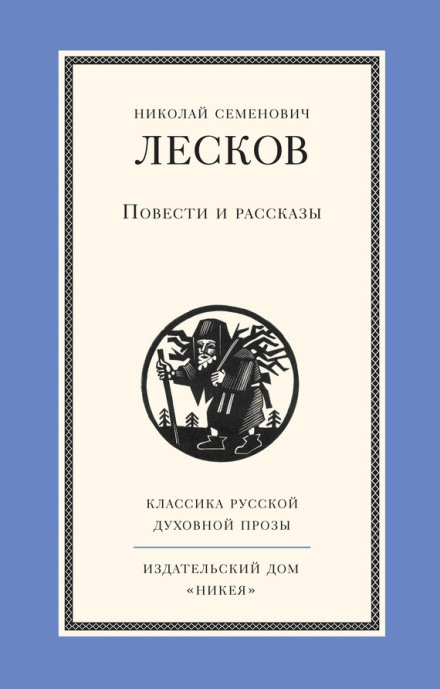
Stories and Novellas
3 hrs. 28 min.
Language
Russian
Author
Nikolai Leskov
Author
Nikolai Leskov
Narrator
Andrey Yaroslavtsev
Narrator
Denis Bersenev
Narrator
Vasily Bochkarev
Narrator
Nadezhda Pertseva
Description
As part of the project “A Year of Literature in Russia.” Nikolai Leskov—who wrote criticism—was considered by Russian people to be the most Russian of all Russian writers, and the one who knew the Russian people deepest and broadest, as they truly are. Readers were (and remain) captivated by the writer’s tale-like, artistic manner. Leskov himself said: “My priests speak spiritually, nihilists—nihilistly, peasants—like peasants; upstarts and buffoons— with antics, and so on. This folk, vulgar, and ornate language, with which many pages of my works are written, is not composed by me but overheard from a peasant, from a semi-intellectual, from loud-mouthed men, from the madmen and the saints… For I collected it for many years by little words, by proverbs, and by particular expressions caught on the wing, in crowds, on barges, at recruiting offices and in monasteries…”. Many of the author’s most famous works were written using the celebrated Leskov-style tale: “The Combatant Woman,” “The Enchanted Angel,” “The Enchanted Wanderer,” “Lefty,” “The Stubborn Artist,” and others. Less well-known and less popular works of the writer, in terms of artistic perfection, are no less than this list: among them are the story “Selected Grain” and the tales “Robbery,” “A Pearl Necklace,” “Chertogon”—filled with famous Leskov humor, folklore, and poetry. Leo Tolstoy, who highly valued the writer’s talent and his folk spirit, once said, “Leskov is a writer of the future.”
Contents:
1. “Robbery”
2. “Chertogon”
3. “Selected Grain”
4. “A Pearl Necklace”
Contents:
1. “Robbery”
2. “Chertogon”
3. “Selected Grain”
4. “A Pearl Necklace”
100%
21:55
01_01
20:49
01_02
21:13
01_03
18:59
01_04
22:10
02
20:57
03_01
20:33
03_02
20:48
03_03
21:02
04_01
20:21
04_02
