Stories
7 hrs. 25 min.
Language
Russian
Author
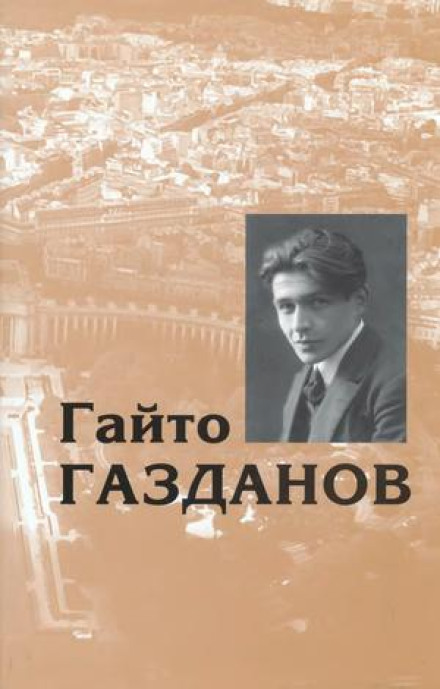
Gaito Gazdanov
Author
Gaito Gazdanov
Narrator
Evgeny Ternovsky
Narrator
Evgeny Ternovsky
Description
Gayto Gazdanov was born in St. Petersburg into a forester’s family. In 1919, as part of General Wrangel’s army, he fought against the Bolsheviks, and a year later he was evacuated to Constantinople. In Turkey and Bulgaria he received a secondary education, and in 1923 he came to Paris, studying at the Sorbonne while working as a night taxi driver. Gazdanov’s first works were published in 1926–1931 in the émigré journal “Volya Rossii” (“The Will of Russia”). In 1930 his novel “Evening with Clair” was published; with the release of this novel, many critics began placing Gazdanov alongside Nabokov. In 1932, under the influence of M. Osorgin, Gazdanov joined a Masonic lodge. During World War II, Gazdanov remained in France; despite his dislike of the Soviet Union, he was an active participant in the Resistance movement. After the war, in 1953, he was invited to Munich to work at the radio station “Liberty,” and he worked there until his death. In Russia, Gazdanov’s works began to be published only after perestroika. His writing style often resembles the stylistics of Franz Kafka; at any rate, novels by Gazdanov such as “The History of One Journey” (1935) and “The Ghost of Alexander Wolf” (1944–1948) were frequently compared by critics to Kafka.
Contents
— The Friend Brak 00:53:36
— Black Swans 00:46:26
— Mistake 00:41:24
— Evening Companion 01:16:55
— Princess Mary 00:30:57
— The Fate of Solemeya 00:50:52
— Funeral Service 00:28:26
— Beggar 00:51:58
— Ivanov’s Letters 01:04:54
— Black Swans 00:46:26
— Mistake 00:41:24
— Evening Companion 01:16:55
— Princess Mary 00:30:57
— The Fate of Solemeya 00:50:52
— Funeral Service 00:28:26
— Beggar 00:51:58
— Ivanov’s Letters 01:04:54
100%
05:01
01-tovarisch-brak-01
05:02
01-tovarisch-brak-02
05:04
01-tovarisch-brak-03
05:02
01-tovarisch-brak-04
05:01
01-tovarisch-brak-05
05:01
01-tovarisch-brak-06
05:02
01-tovarisch-brak-07
05:01
01-tovarisch-brak-08
05:01
01-tovarisch-brak-09
05:02
01-tovarisch-brak-10
03:20
01-tovarisch-brak-11
05:02
02-chernye-lebedi-01
05:01
02-chernye-lebedi-02
05:00
02-chernye-lebedi-03
05:02
02-chernye-lebedi-04
05:01
02-chernye-lebedi-05
05:02
02-chernye-lebedi-06
05:02
02-chernye-lebedi-07
05:01
02-chernye-lebedi-08
05:01
02-chernye-lebedi-09
01:14
02-chernye-lebedi-10
05:01
03-oshibka-01
05:03
03-oshibka-02
05:00
03-oshibka-03
05:03
03-oshibka-04
05:02
03-oshibka-05
05:01
03-oshibka-06
05:02
03-oshibka-07
05:01
03-oshibka-08
01:11
03-oshibka-09
05:00
04-vecherniy-sputnik-01
05:01
04-vecherniy-sputnik-02
05:02
04-vecherniy-sputnik-03
05:01
04-vecherniy-sputnik-04
05:01
04-vecherniy-sputnik-05
05:01
04-vecherniy-sputnik-06
05:01
04-vecherniy-sputnik-07
05:01
04-vecherniy-sputnik-08
05:01
04-vecherniy-sputnik-09
05:02
04-vecherniy-sputnik-10
05:03
04-vecherniy-sputnik-11
05:03
04-vecherniy-sputnik-12
05:03
04-vecherniy-sputnik-13
05:01
04-vecherniy-sputnik-14
05:02
04-vecherniy-sputnik-15
01:33
04-vecherniy-sputnik-16
05:02
05-knyazhna-meri-01
05:03
05-knyazhna-meri-02
05:02
05-knyazhna-meri-03
05:01
05-knyazhna-meri-04
05:02
05-knyazhna-meri-05
05:02
05-knyazhna-meri-06
00:35
05-knyazhna-meri-07
05:01
06-sudba-solomei-01
05:04
06-sudba-solomei-02
05:02
06-sudba-solomei-03
05:01
06-sudba-solomei-04
05:04
06-sudba-solomei-05
05:02
06-sudba-solomei-06
05:03
06-sudba-solomei-07
05:02
06-sudba-solomei-08
05:01
06-sudba-solomei-09
05:01
06-sudba-solomei-10
00:32
06-sudba-solomei-11
05:01
07-panihida-01
05:00
07-panihida-02
05:01
07-panihida-03
05:02
07-panihida-04
05:01
07-panihida-05
03:22
07-panihida-06
05:01
08-nischiy-01
05:02
08-nischiy-02
05:02
08-nischiy-03
05:01
08-nischiy-04
05:01
08-nischiy-05
05:02
08-nischiy-06
05:04
08-nischiy-07
05:01
08-nischiy-08
05:01
08-nischiy-09
05:01
08-nischiy-10
01:43
08-nischiy-11
05:02
09-pisma-ivanova-01
05:03
09-pisma-ivanova-02
05:02
09-pisma-ivanova-03
05:02
09-pisma-ivanova-04
05:02
09-pisma-ivanova-05
05:00
09-pisma-ivanova-06
05:01
09-pisma-ivanova-07
05:02
09-pisma-ivanova-08
05:01
09-pisma-ivanova-09
05:02
09-pisma-ivanova-10
05:01
09-pisma-ivanova-11
05:02
09-pisma-ivanova-12
04:33
09-pisma-ivanova-13
