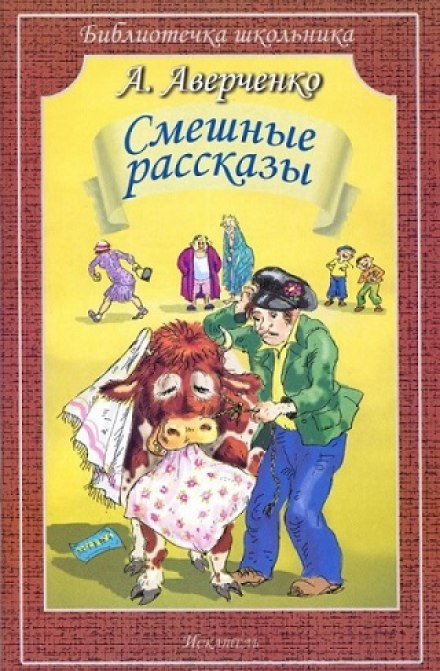
Stories
2 hrs. 24 min.
Language
Russian
Author
Arkadiy Averchenko
Author
Vlas Doroshevich
Narrators
Sergey Oleksyak, Kirill Radtsig, Sergey Kazakov, Alexander Kuritsyn, Dmitry Shilyaev, Alexey Shulin, Egor Serov, Ivan Litvinov, Kirill Emelyanov, Vasily Bochkarev
Narrator
Sergey Oleksyak
Narrator
Kirill Radtsig
Narrator
Sergey Kazakov
Narrator
Alexander Kuritsyn
Narrator
Dmitry Shilyaev
Narrator
Alexey Shulin
Narrator
Egor Serov
Narrator
Ivan Litvinov
Narrator
Kirill Emelyanov
Narrator
Vasily Bochkarev
Description
Arkady Timofeyevich Averchenko (1880-1925) — a Russian humorist writer, playwright, and theater critic.
Even during his lifetime, he was compared to humorists from across the ocean—Mark Twain and O’Henry—and ordinary readers bestowed on Arkady Timofeyevich the title “king of laughter.” And today, his works remain extremely popular with a very wide circle of readers.
Arkady Averchenko can truly be called a literary “natural talent”—the future writer did not receive any systematic education. According to the playful “Autobiography” he wrote himself for one of his books, he had no desire to study, so he pretended to be sick and weak. That’s why he didn’t attend gymnasium, and his older sisters taught him at home. In reality, because of an eye injury he suffered in childhood, Arkady was forced to study at home. Later, after leaving his family, he managed to complete only two classes of an urban real school.
In 1908, a group of young writers in St. Petersburg decides to publish a new magazine, “Satirikon,” whose secretary—and soon after editor—becomes Averchenko.
For many years, Averchenko successfully worked in the magazine’s team with well-known people—Teffi, Sasha Cherny, Osip Dymov, N. V. Remizov, and others. That’s where his most brilliant humorous stories appeared. During Averchenko’s time at “Satirikon,” the magazine became extraordinarily popular; plays were staged in many theaters across the country based on his stories (“Liteiny Theatre,” “The Crooked Mirror,” “The Bat”). For Averchenko, work in this publication became a central milestone in his creative biography…
Vlas Mikhailovich Doroshevich (1865-1922) — Russian journalist, publicist, and theater critic; one of the best-known feuilletonists of the late 19th and early 20th centuries.
Along with Chekhov and Gilyarovsky, he collaborated with magazines “Budilnik” and “Razvlecheniya.” His sharp observation, rich imagination, wit, and extensive life experience found expression in his articles and feuilletons.
The writer became a prominent figure of pre-revolutionary journalism and a favorite feuilletonist of the urban middle class and merchants; for fifteen years he headed the editorial office of “Russkoe Slovo,” turning the newspaper into the most widely circulated Russian publication.
Contents:
Arkady Averchenko
01. A Noble Girl (read by Sergey Oleksyak)
02. Friendship (read by Kirill Radtsig)
03. A Connoisseur of the Female Heart (read by Sergey Kazakov)
04. The Story of One Painting (read by Alexander Kuritsyn)
05. Crooked Angles (read by Kirill Emelyanov)
06. Medicine (read by Dmitry Shilyaev)
07. At the French Exhibition, 100 Years On (read by Dmitry Shilyaev)
08. A Sentimental Novel (read by Alexey Shulin)
09. The Master’s Film Trick (read by Dmitry Shilyaev)
Vlas Doroshevich
10. How I Was a Turk (read by Sergey Kazakov)
11. Husbands of Actresses (read by Ivan Litvinov)
12. A Woman Writer (read by Egor Serov)
13. Success with Women (read by Vasily Bochkarëv)
Even during his lifetime, he was compared to humorists from across the ocean—Mark Twain and O’Henry—and ordinary readers bestowed on Arkady Timofeyevich the title “king of laughter.” And today, his works remain extremely popular with a very wide circle of readers.
Arkady Averchenko can truly be called a literary “natural talent”—the future writer did not receive any systematic education. According to the playful “Autobiography” he wrote himself for one of his books, he had no desire to study, so he pretended to be sick and weak. That’s why he didn’t attend gymnasium, and his older sisters taught him at home. In reality, because of an eye injury he suffered in childhood, Arkady was forced to study at home. Later, after leaving his family, he managed to complete only two classes of an urban real school.
In 1908, a group of young writers in St. Petersburg decides to publish a new magazine, “Satirikon,” whose secretary—and soon after editor—becomes Averchenko.
For many years, Averchenko successfully worked in the magazine’s team with well-known people—Teffi, Sasha Cherny, Osip Dymov, N. V. Remizov, and others. That’s where his most brilliant humorous stories appeared. During Averchenko’s time at “Satirikon,” the magazine became extraordinarily popular; plays were staged in many theaters across the country based on his stories (“Liteiny Theatre,” “The Crooked Mirror,” “The Bat”). For Averchenko, work in this publication became a central milestone in his creative biography…
Vlas Mikhailovich Doroshevich (1865-1922) — Russian journalist, publicist, and theater critic; one of the best-known feuilletonists of the late 19th and early 20th centuries.
Along with Chekhov and Gilyarovsky, he collaborated with magazines “Budilnik” and “Razvlecheniya.” His sharp observation, rich imagination, wit, and extensive life experience found expression in his articles and feuilletons.
The writer became a prominent figure of pre-revolutionary journalism and a favorite feuilletonist of the urban middle class and merchants; for fifteen years he headed the editorial office of “Russkoe Slovo,” turning the newspaper into the most widely circulated Russian publication.
Contents:
Arkady Averchenko
01. A Noble Girl (read by Sergey Oleksyak)
02. Friendship (read by Kirill Radtsig)
03. A Connoisseur of the Female Heart (read by Sergey Kazakov)
04. The Story of One Painting (read by Alexander Kuritsyn)
05. Crooked Angles (read by Kirill Emelyanov)
06. Medicine (read by Dmitry Shilyaev)
07. At the French Exhibition, 100 Years On (read by Dmitry Shilyaev)
08. A Sentimental Novel (read by Alexey Shulin)
09. The Master’s Film Trick (read by Dmitry Shilyaev)
Vlas Doroshevich
10. How I Was a Turk (read by Sergey Kazakov)
11. Husbands of Actresses (read by Ivan Litvinov)
12. A Woman Writer (read by Egor Serov)
13. Success with Women (read by Vasily Bochkarëv)
100%
11:53
01-arkadijj-averchenko-blagorodnaja-devushka-sergejj-oleksjak
10:32
02-arkadijj-averchenko-druzhba-kirill-radcig
12:46
03-arkadijj-averchenko-znatok-zhenskogo-serdca-sergejj-kazakov
06:26
04-arkadijj-averchenko-istorija-odnojj-kartiny-aleksandr-kuricyn
11:59
05-arkadijj-averchenko-krivye-ugly-kirill-emeljanov
16:46
06-arkadijj-averchenko-lekarstvo-dmitrijj-shiljaev
05:56
07-arkadijj-averchenko-na-francuzskojj-vystavke-za-100-let-dmitrijj-shiljaev
11:07
08-arkadijj-averchenko-sentimentalnyjj-roman-aleksejj-shulin
07:58
09-arkadijj-averchenko-fokus-velikogo-kino-dmitrijj-shiljaev
23:14
10-vlas-doroshevich-kak-ja-byl-turkom-sergejj-kazakov
05:37
11-vlas-doroshevich-muzhja-aktris-chitaet-ivan-litvinov
09:09
12-vlas-doroshevich-pisatelnica-chitaet-egor-serov
11:35
13-vlas-doroshevich-uspekh-u-zhenshhin-vasilijj-bochkarjov
