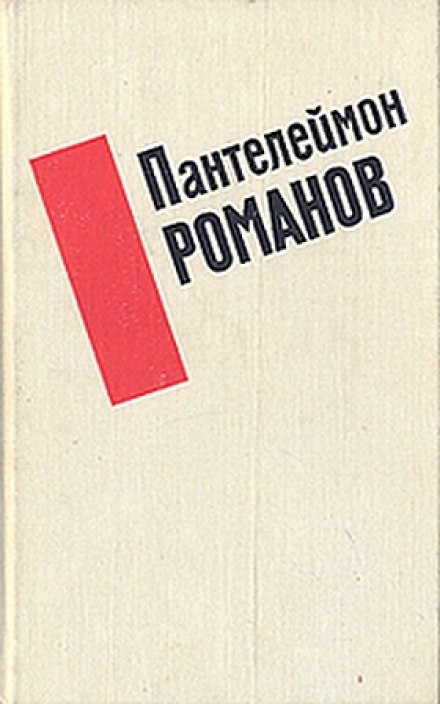
Stories
11 hrs. 20 min.
Language
Russian
Author
Panteleymon Romanov
Author
Panteleymon Romanov
Narrator
Evgeny Ternovsky
Narrator
Evgeny Ternovsky
Description
Panteleimon Sergeyevich Romanov (July 12 (24), 1884 — April 8, 1938) was a Russian prose writer.
He wrote a large number of short stories—long kept at the level of lightly ironic nature sketches of Soviet everyday life. However, in the second half of the 1920s he published a series of socially and politically sharp stories: “Without Bird Cherry” (1926), “Trial of a Pioneer,” “The Right to Life, or the Problem of Party-Freedom” (1927). The story “Without Bird Cherry,” depicting the unromantic “love life” of Komsomol members and the vulgar ideas of “new people” about morality, made the author famous across all Russia; its title became a saying and was translated into several languages. In the same vein, Panteleimon Romanov’s satirical novels “A New Tablet” (1928), “Comrade Kislyakov” (1930), and “Property” (1933) portrayed the philistinism of Soviet everyday life, the opportunism of intellectuals and writers. Throughout this period, Romanov was subject to systematic persecution by Soviet criticism, which saw his writings as nothing but “slander” and “defamation”; nevertheless, he fundamentally did not want to give up. Romanov justified his position as a satirist in a speech at the First Congress of Soviet Writers (1934).
He wrote a large number of short stories—long kept at the level of lightly ironic nature sketches of Soviet everyday life. However, in the second half of the 1920s he published a series of socially and politically sharp stories: “Without Bird Cherry” (1926), “Trial of a Pioneer,” “The Right to Life, or the Problem of Party-Freedom” (1927). The story “Without Bird Cherry,” depicting the unromantic “love life” of Komsomol members and the vulgar ideas of “new people” about morality, made the author famous across all Russia; its title became a saying and was translated into several languages. In the same vein, Panteleimon Romanov’s satirical novels “A New Tablet” (1928), “Comrade Kislyakov” (1930), and “Property” (1933) portrayed the philistinism of Soviet everyday life, the opportunism of intellectuals and writers. Throughout this period, Romanov was subject to systematic persecution by Soviet criticism, which saw his writings as nothing but “slander” and “defamation”; nevertheless, he fundamentally did not want to give up. Romanov justified his position as a satirist in a speech at the First Congress of Soviet Writers (1934).
Contents
The Promised Land
Holy Alms
House No. 3
Bad Goods
Unmanageable People
Smoke
Patient People
A Gift from God
Light Service
Beast
A Timid Fellow
A Strong People
State Property
Traffic Jams
Blue Dress
A Bewitched Village
Technical Words
Instructions
A Natural Disaster
Believers
Wretched
A Swedish Machine
Thirteen Logs
Economy
Not the Right Person
Kulaks
Little Black Cakes
Little Lights
By the Ferry
An Actress
Stars
Apple Blossom
A Woman in Black
On the Volga
An Actress
Afanasyev
I Want to Accept the Path of My Land Entirely
Holy Alms
House No. 3
Bad Goods
Unmanageable People
Smoke
Patient People
A Gift from God
Light Service
Beast
A Timid Fellow
A Strong People
State Property
Traffic Jams
Blue Dress
A Bewitched Village
Technical Words
Instructions
A Natural Disaster
Believers
Wretched
A Swedish Machine
Thirteen Logs
Economy
Not the Right Person
Kulaks
Little Black Cakes
Little Lights
By the Ferry
An Actress
Stars
Apple Blossom
A Woman in Black
On the Volga
An Actress
Afanasyev
I Want to Accept the Path of My Land Entirely
100%
02:07
0001
09:36
0002
07:43
0003
11:19
0004
17:34
0005
12:34
0006
13:35
0007
10:03
0008
10:05
0009
09:06
0010
06:50
0011
10:31
0012
13:48
0013
09:14
0014
06:01
0015
03:10
0016
11:30
0017
12:53
0018
02:51
0019
16:03
0020
12:14
0021
09:28
0022
10:25
0023
13:34
0024
10:31
0025
09:53
0026
09:26
0027
07:42
0028
15:16
0029
09:32
0030
10:33
0031
05:02
0032
07:55
0033
04:18
0034
06:24
0035
08:47
0036
05:28
0037
04:50
0038
02:37
0039
05:55
0040
03:44
0041
05:06
0042
05:05
0043
02:33
0044
06:49
0045
06:04
0046
23:56
0047
05:53
0048
08:22
0049
07:10
0050
08:35
0051
15:05
0052
08:36
0053
10:09
0054
03:06
0055
06:15
0056
08:01
0057
06:23
0058
04:50
0059
13:17
0060
05:08
0061
03:02
0062
04:31
0063
12:50
0064
06:29
0065
03:04
0066
03:07
0067
06:48
0068
03:20
0069
10:48
0070
25:44
0071
29:38
0072
20:18
0073
20:03
0074
