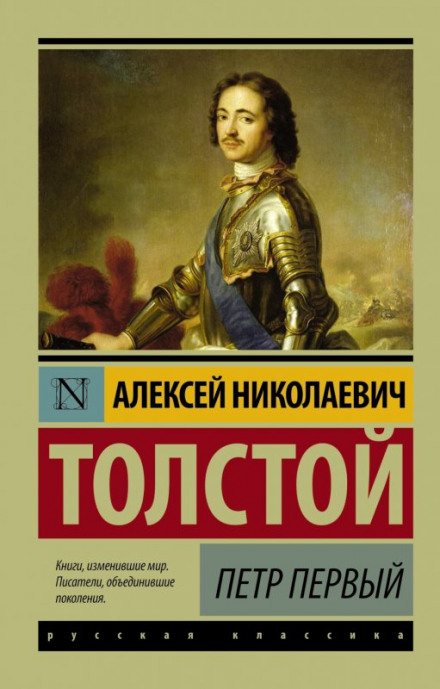
Peter the First
42 hrs. 29 min.
Language
Russian
Author
Alexey Nikolayevich Tolstoy
Author
Alexey Nikolayevich Tolstoy
Narrator
Yury Zaborovsky
Narrator
Yury Zaborovsky
Description
“Peter I” is rightfully considered one of the best historical novels. The book enjoyed phenomenal success in Russia and among Russian readers abroad. Alexei Tolstoy’s historical concept has for many years sparked debate and objections, yet the novel’s artistic power remains convincing and alluring to many generations of readers.
From a series of Streltsy uprisings and the twilight of Byzantine ossification, a figure of impulsive and active hero steps to the forefront—capable of creating a new native landscape: with freshly hewn ship masts, with snow-white sea clouds, with the cheerful swells of the Baltic. The sleeping forces of the people, cramped by boyar stubbornness and miserable corners, are melted into the seething energy of the “nestlings of Peter.” The forging of Russia goes in harmony with the emergence of a “wrought-iron breach” under the walls of Azov, leading to a great victory by the unassailable Narva.
“Peter I” bursts with zest, captivates with an abundance of precise details, and enchants with the plasticity of the language.
From a series of Streltsy uprisings and the twilight of Byzantine ossification, a figure of impulsive and active hero steps to the forefront—capable of creating a new native landscape: with freshly hewn ship masts, with snow-white sea clouds, with the cheerful swells of the Baltic. The sleeping forces of the people, cramped by boyar stubbornness and miserable corners, are melted into the seething energy of the “nestlings of Peter.” The forging of Russia goes in harmony with the emergence of a “wrought-iron breach” under the walls of Azov, leading to a great victory by the unassailable Narva.
“Peter I” bursts with zest, captivates with an abundance of precise details, and enchants with the plasticity of the language.
