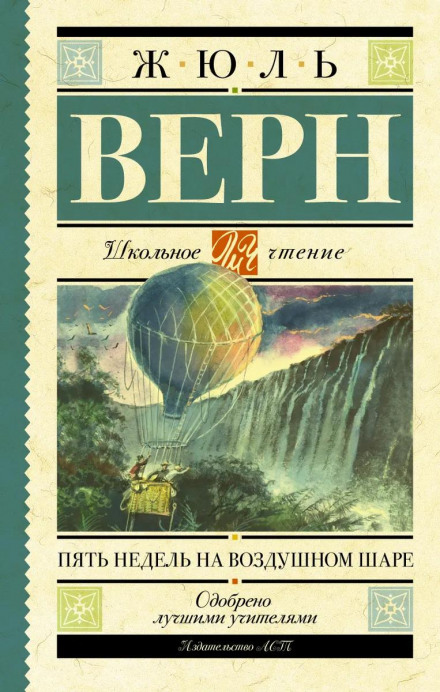
Five Weeks in a Balloon
9 hrs. 40 min.
Language
Russian
Author
Jules Verne
Author
Jules Verne
Narrator
Filipp Matveev-Vitovsky
Narrator
Filipp Matveev-Vitovsky
Description
Jules Verne (1828–1905) is the famous French science-fiction writer who loved the sea and adventures from early childhood. At age eleven, he joins a ship as a cabin boy bound for India. His father brings the runaway home—already, the ship has set sail and left the anchor behind. At their insistence, Jules Verne completes law studies at the Sorbonne, but does not follow his father’s path as a notary; instead, he becomes drawn to theater and literature. A talented author, he attracts publishers’ attention and soon signs a contract requiring Verne to write two novels every year for 20 years. His first novel, *Five Weeks in a Balloon* (1863), brings him wide fame immediately. The book begins in 1862, when Dr. Samuel Ferguson of the Royal Geographical Society—together with his servant Joe and his friend Richard Kennedy—sets off on a hydrogen-filled balloon across (then little-known) Africa in search of the sources of the great Nile. The heroes face dangerous adventures, geographical discoveries, struggles with the local population and the environment. Like a true scientist, Jules Verne assembled an enormous card index on different fields of knowledge, wrote scientific works, and created an illustrated geography. With his heroes, the writer travels hundreds of roads—over land, under water, through the air, around the continents of Asia and Africa, around the whole globe, and finally reaches outer space. From novel to novel, a hymn to human reason and will keeps sounding through the pages.
100%
17:13
Пять недель на воздушном шаре - 0 -
06:50
Пять недель на воздушном шаре - 1 -
15:06
Пять недель на воздушном шаре - 2 -
11:38
Пять недель на воздушном шаре - 3 -
11:02
Пять недель на воздушном шаре - 4 -
10:15
Пять недель на воздушном шаре - 5 -
10:28
Пять недель на воздушном шаре - 6 -
12:47
Пять недель на воздушном шаре - 7 -
09:39
Пять недель на воздушном шаре - 8 -
10:04
Пять недель на воздушном шаре - 9 -
13:21
Пять недель на воздушном шаре - 10 -
16:37
Пять недель на воздушном шаре - 11 -
13:43
Пять недель на воздушном шаре - 12 -
16:03
Пять недель на воздушном шаре - 13 -
21:30
Пять недель на воздушном шаре - 14 -
17:50
Пять недель на воздушном шаре - 15 -
17:51
Пять недель на воздушном шаре - 16 -
19:42
Пять недель на воздушном шаре - 17 -
11:21
Пять недель на воздушном шаре - 18 -
12:13
Пять недель на воздушном шаре - 19 -
14:56
Пять недель на воздушном шаре - 20 -
16:47
Пять недель на воздушном шаре - 21 -
15:34
Пять недель на воздушном шаре - 22 -
15:40
Пять недель на воздушном шаре - 23 -
12:19
Пять недель на воздушном шаре - 24 -
12:55
Пять недель на воздушном шаре - 25 -
12:42
Пять недель на воздушном шаре - 26 -
12:28
Пять недель на воздушном шаре - 27 -
12:49
Пять недель на воздушном шаре - 28 -
15:57
Пять недель на воздушном шаре - 29 -
08:58
Пять недель на воздушном шаре - 30 -
11:17
Пять недель на воздушном шаре - 31 -
13:51
Пять недель на воздушном шаре - 32 -
10:15
Пять недель на воздушном шаре - 33 -
18:31
Пять недель на воздушном шаре - 34 -
09:51
Пять недель на воздушном шаре - 35 -
11:02
Пять недель на воздушном шаре - 36 -
16:49
Пять недель на воздушном шаре - 37 -
09:28
Пять недель на воздушном шаре - 38 -
08:13
Пять недель на воздушном шаре - 39 -
13:29
Пять недель на воздушном шаре - 40 -
09:25
Пять недель на воздушном шаре - 41 -
16:25
Пять недель на воздушном шаре - 42 -
06:00
Пять недель на воздушном шаре - 43 -
