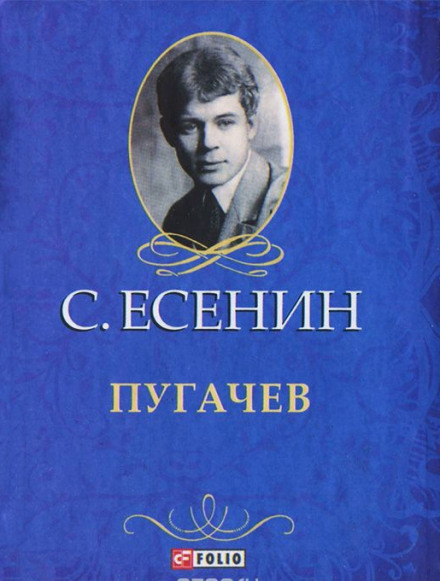
Pugachev
1 hr. 23 min.
Language
Russian
Author
Sergei Yesenin
Author
Sergei Yesenin
Narrator
Kirill Lavrov
Narrator
Vsevolod Kuznetsov
Narrator
Vadim Yakovlev
Description
In 1921, Sergey Yesenin created the dramatic poem “Pugachev,” which caused mixed reactions among his contemporaries. The poet believed that his work was “indeed a truly revolutionary thing!” Apparently, for him, revolution was not so much in the historical material as in the ways it was artistically embodied.
The poet does not try to present the clash of two hostile camps. According to Yesenin, the doom of the Pugachev uprising lies in the fact that the peasantry is inert—the “men” have grown “blood-soaked roots into the huts.” It’s in vain that the main character thinks those huts can be torn from their place by the whirlwind of rebellion, turned into a “wild herd of wooden colts.” In his final monologue, he finds that for him the most precious thing is to see “Gold as lime over the low house / The wide and warm month spurting forth.”
Yesenin’s Pugachev does not separate himself from his executioners. He understands that the cause of death is also within him: “Could it be that under the soul you fall the same way as under the burden?”
Although writing the poem was preceded by a period of thorough study of Pugachev’s uprising, Yesenin did not set himself the task of historically reconstructing its picture with accuracy. Essentially, he was asking whether the peasantry is capable of accepting a revolution.
The poet does not try to present the clash of two hostile camps. According to Yesenin, the doom of the Pugachev uprising lies in the fact that the peasantry is inert—the “men” have grown “blood-soaked roots into the huts.” It’s in vain that the main character thinks those huts can be torn from their place by the whirlwind of rebellion, turned into a “wild herd of wooden colts.” In his final monologue, he finds that for him the most precious thing is to see “Gold as lime over the low house / The wide and warm month spurting forth.”
Yesenin’s Pugachev does not separate himself from his executioners. He understands that the cause of death is also within him: “Could it be that under the soul you fall the same way as under the burden?”
Although writing the poem was preceded by a period of thorough study of Pugachev’s uprising, Yesenin did not set himself the task of historically reconstructing its picture with accuracy. Essentially, he was asking whether the peasantry is capable of accepting a revolution.
100%
20:15
01
20:34
02
18:25
03
24:40
04
