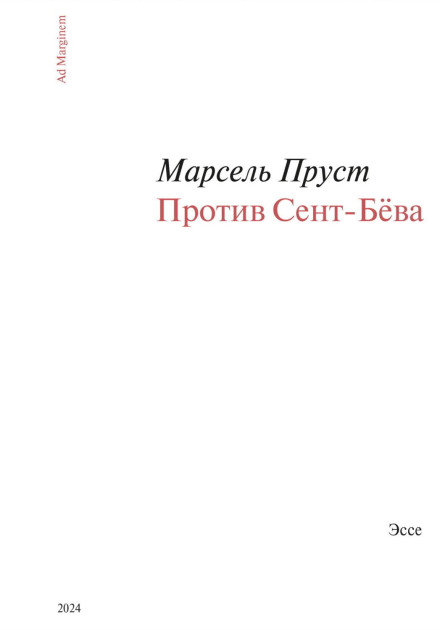
Against Sainte-Beuve
6 hrs. 49 min.
Language
Russian
Author
Marcel Proust
Author
Marcel Proust
Narrator
Inga Syomina
Narrator
Inga Syomina
Description
“Against Saint-Beuve” is a collection of critical articles and essays by Marcel Proust (1871–1922). Proust takes issue with the renowned literary critic Charles-Augustin Sainte-Beuve (1804–1869), the pioneer of the biographical method in literary studies. In his judgments, Sainte-Beuve relies primarily on his personal acquaintance with writers, whereas Proust believes that a work creates a person’s secret, profound “self,” distinct from the public persona. Writers should be judged by their books, not books by their authors. Carrying on a mental debate with the late critic, Proust examines the poetry of Charles Baudelaire and Gérard de Nerval, the novels of Gustave Flaubert and Honoré de Balzac, Tolstoy and Dostoevsky, and the paintings of Gustave Moreau, Antoine Watteau, and Claude Monet. But “Against Saint-Beuve” is not a set of dry theoretical essays—it is a living literary narrative in which the hero-narrator and his passionately loved mother exchange impressions. On the pages of the book, Proust-the-critic becomes Proust-the-writer, and from the articles there emerges “In Search of Lost Time.”
100%
14:57
01
04:30
02
37:41
03
25:41
04
33:54
05
11:09
06
1:02:24
07
23:57
08
08:33
09
07:20
10
09:44
11
09:10
12
05:12
13
24:03
14
13:54
15
05:47
16
17:30
17
05:49
18
02:39
19
01:21
20
11:38
21
03:14
22
06:57
23
03:26
24
02:57
25
06:48
26
04:20
27
05:53
28
05:02
29
34:12
30
