Forgiveness Sunday
3 hrs. 57 min.
Language
Russian
Author
Gennadiy Karpunin
Author
Gennadiy Karpunin
Narrator
Natalia Litvinova
Narrator
Natalia Litvinova
Description
Gennady Mikhailovich Karpunin was born in 1958 in the Moscow region town of Shcherbinka. He graduated from MADI. Worked for district newspapers, served as editor-in-chief of the regional newspaper “Moskovia,” and collaborated with Moscow publishing houses. Poet, prose writer. His works were published in various newspapers and journals. He is the author of more than a dozen books of prose and poetry collections, including “Pure Ponds” (1996), “Night Porter” (1996), “I’m with you, my Rus!..” (1999), “A Bush of Willows” (2003), the novel “Master of Watchmaker’s Affairs” (2008), and the book of novellas “A Boy from the Backyard Alley” and “Forgiveness Sunday” (2006). Lives in Shcherbinka, Moscow Region.
Gennady Karpunin’s novellas are written in the best traditions of Russian literature. There is no shooting and no gang feuds; the reader won’t find here a “wound-up plot” or crude “explicit” scenes. And yet behind the everyday language of the characters and a smoothly developing plot, almost Shakespearean tragedies are hidden—tragedies that resonate even more strongly because the heroes of both novellas are our contemporaries. The book is intended for a wide circle of readers who have not lost their taste for literature and their love for neighbors, despite the massive imposition of vulgarity in modern art.
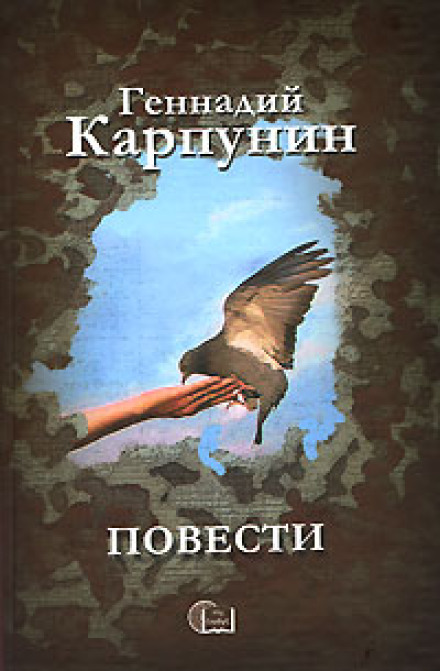
The prose writer and poet Gennady Karpunin included two novellas in his new book: “Forgiveness Sunday” and “A Boy from the Backyard Alley.” Both of them came into literature from today’s life, and both return to it. Their essence is expressed in the epigraph to “Forgiveness Sunday,” in the Gospel words of the Savior: “I go away from you and I will come to you.” That is exactly what the work of a true writer is: he passes through impressions experienced through his heart, saturates them with his own feelings, and returns them to us—renewed and energized by the power of his emotions. The expenditure of feelings is precisely the writer’s kind of self-sacrifice, through which the reader can unmistakably guess who this writer is—whether he cares about himself or about people. Undoubtedly, Gennady Karpunin belongs to those writers for whom concern for a person comes first.
In the novellas there is an internal echo: both are about not-so-cheerful fates; both are openly truthful; both are about the present; and both are about how the absence of love kills a person. A boy with an injured life, who sees happiness in pigeons because people are evil and cruel, and an adult man who has lost his wife and is losing his daughter—are these not the characters of prose? But what life is like, so are the heroes. And the impression of the novellas would be unrelievedly bleak if not for Karpunin’s very prose—bright and life-affirming. And he chooses as his heroes people who are conscientious, honest, who give of themselves, who forget about themselves. Not holding any grudge against anyone, the departing scholar Boltinkov—we hear his voice as if from the other world— and this is the wonder of the prose: it comes into our lives and stays with us. Just like the boy and the backyard alley.
Gennady Karpunin’s novellas are written in the best traditions of Russian literature. There is no shooting and no gang feuds; the reader won’t find here a “wound-up plot” or crude “explicit” scenes. And yet behind the everyday language of the characters and a smoothly developing plot, almost Shakespearean tragedies are hidden—tragedies that resonate even more strongly because the heroes of both novellas are our contemporaries. The book is intended for a wide circle of readers who have not lost their taste for literature and their love for neighbors, despite the massive imposition of vulgarity in modern art.
The prose writer and poet Gennady Karpunin included two novellas in his new book: “Forgiveness Sunday” and “A Boy from the Backyard Alley.” Both of them came into literature from today’s life, and both return to it. Their essence is expressed in the epigraph to “Forgiveness Sunday,” in the Gospel words of the Savior: “I go away from you and I will come to you.” That is exactly what the work of a true writer is: he passes through impressions experienced through his heart, saturates them with his own feelings, and returns them to us—renewed and energized by the power of his emotions. The expenditure of feelings is precisely the writer’s kind of self-sacrifice, through which the reader can unmistakably guess who this writer is—whether he cares about himself or about people. Undoubtedly, Gennady Karpunin belongs to those writers for whom concern for a person comes first.
In the novellas there is an internal echo: both are about not-so-cheerful fates; both are openly truthful; both are about the present; and both are about how the absence of love kills a person. A boy with an injured life, who sees happiness in pigeons because people are evil and cruel, and an adult man who has lost his wife and is losing his daughter—are these not the characters of prose? But what life is like, so are the heroes. And the impression of the novellas would be unrelievedly bleak if not for Karpunin’s very prose—bright and life-affirming. And he chooses as his heroes people who are conscientious, honest, who give of themselves, who forget about themselves. Not holding any grudge against anyone, the departing scholar Boltinkov—we hear his voice as if from the other world— and this is the wonder of the prose: it comes into our lives and stays with us. Just like the boy and the backyard alley.
100%
10:55
01-proschyonnoe-voskresenie
05:53
02-proschyonnoe-voskresenie
06:03
03-proschyonnoe-voskresenie
12:43
04-proschyonnoe-voskresenie
08:08
05-proschyonnoe-voskresenie
08:37
06-proschyonnoe-voskresenie
15:13
07-proschyonnoe-voskresenie
13:44
08-proschyonnoe-voskresenie
06:53
09-proschyonnoe-voskresenie
07:00
10-proschyonnoe-voskresenie
04:40
11-proschyonnoe-voskresenie
07:39
12-proschyonnoe-voskresenie
07:36
13-proschyonnoe-voskresenie
09:55
14-proschyonnoe-voskresenie
09:33
15-proschyonnoe-voskresenie
07:51
16-proschyonnoe-voskresenie
09:31
17-proschyonnoe-voskresenie
10:35
18-proschyonnoe-voskresenie
10:16
19-proschyonnoe-voskresenie
09:53
20-proschyonnoe-voskresenie
08:14
21-proschyonnoe-voskresenie
12:27
22-proschyonnoe-voskresenie
10:53
23-proschyonnoe-voskresenie
08:43
24-proschyonnoe-voskresenie
14:58
25-proschyonnoe-voskresenie
