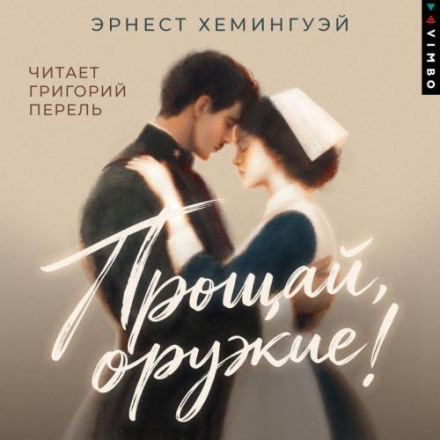
A Farewell to Arms
10 hrs. 39 min.
Language
Russian
Author
Ernest Hemingway
Author
Ernest Hemingway
Narrator
Grigory Perel
Narrator
Grigory Perel
Description
American Frederick Henry is an officer in the medical service on the Italian front. He doesn’t dream of heroics and doesn’t indulge in illusions about war—he simply tries to cope with what’s happening. In the hospital, Frederick meets the English nurse Catherine Barkley; their feelings take root and grow stronger amid the grind of wartime life, fear, and loss. After the defeat at Caporetto, the Italian army retreats. Worn down and broken in spirit, the soldiers trudge through driving rain, and Frederick is faced with a choice that will change his life forever.
In 1918, the young Hemingway went to Italy as a volunteer, served in the medical service, received a grievous wound, was treated in a hospital in Milan, and was presented for an award. His personal experience formed the basis of the novel A Farewell to Arms, in which the war is shown without embellishment and without heroic illusions. Striving for accuracy in every phrase, Hemingway rewrote the ending thirty-nine times. By right, this book is considered one of the most striking antiwar statements in literature.
Listen to one of Ernest Hemingway’s major novels in a moving performance by Grigory Peryel.
From reviews:
“The story of the love of an English nurse and an American medical officer, just as hopeless as that of Romeo and Juliet—an achievement of the highest order in what one might call a new romanticism,”— Percy Hutchison, The New York Times
“We seem unable to stop talking about war in elevated, heroic language, and our duty is always to puncture that language. No one has done this so eloquently as Hemingway: through the accumulating weight of his phrases, through emotional clarity, through revulsion—and yet, at the same time, through reverence—for what had been done,”— Tobias Wolff, writer
“In these troubling times, Hemingway’s clarity, his spirituality, and his sense of hard reality amid the chaos are a great help,”— Sunday Telegraph
Alternative readings
