Goodbye to Berlin
7 hrs. 44 min.
Language
Russian
Author
Christopher Isherwood
Author
Christopher Isherwood
Narrator
Igor Knyazev
Narrator
Igor Knyazev
Description
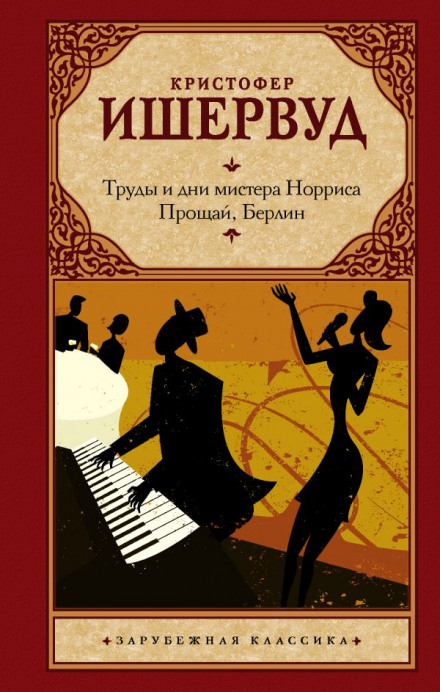
The novel “Goodbye, Berlin,” is perhaps Christopher Isherwood’s most famous work. Its plot served as the basis for the script of the Broadway musical “Cabaret” and for Bob Fosse’s cult film of the same name with Liza Minnelli in the leading role. This book is often called, somewhat autobiographical, a novel—yet with the same success it could be considered a conceptual collection of stories. Stories united by a common hero, time, and place.
So, the hero is a not-very-well-off young English writer. The time is a strange, shifting, twilight era at the very beginning of the 1930s, just before the National Socialists come to power. And finally, the place is Berlin, the most bohemian of the megacities of prewar Europe. A decadent, nervous Berlin of the “jazz age”—a city where, in some unimaginable knot, the fates of bohemian girls of very loose morals tangle together, as they go mad with the permissiveness of the rich, with prosperous Jewish intellectuals, and many, many other passengers of a debauched Noah’s ark of freedom—an ark that very soon will become a “Titanic.”
So, the hero is a not-very-well-off young English writer. The time is a strange, shifting, twilight era at the very beginning of the 1930s, just before the National Socialists come to power. And finally, the place is Berlin, the most bohemian of the megacities of prewar Europe. A decadent, nervous Berlin of the “jazz age”—a city where, in some unimaginable knot, the fates of bohemian girls of very loose morals tangle together, as they go mad with the permissiveness of the rich, with prosperous Jewish intellectuals, and many, many other passengers of a debauched Noah’s ark of freedom—an ark that very soon will become a “Titanic.”
100%
20:28
01_01
23:54
01_02
25:20
02_01
17:50
02_02
11:50
02_03
14:48
02_04
17:51
02_05
16:26
02_06
17:09
02_07
16:51
03_01
15:43
03_02
23:07
03_03
10:30
04_01
28:40
04_02
10:21
04_03
19:18
04_04
22:32
04_05
15:02
05_01
16:02
05_02
24:09
05_03
28:04
05_04
18:45
05_05
13:12
06_01
17:31
06_02
18:41
06_03
