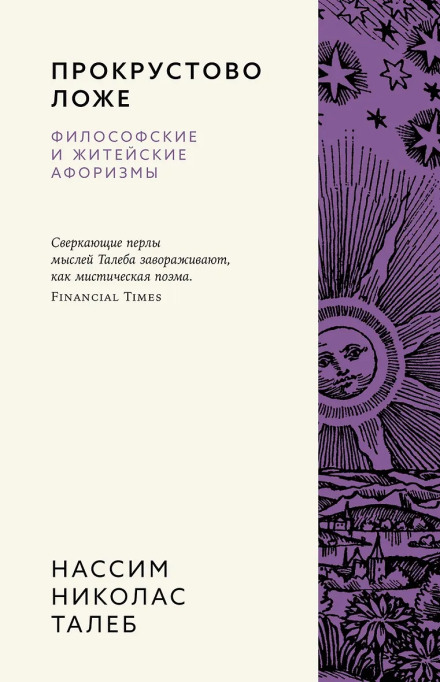
The Bed of Procrustes: Philosophical and Practical Aphorisms
1 hr. 49 min.
Language
Russian
Author
Nassim Nicholas Taleb
Author
Nassim Nicholas Taleb
Narrator
Vladimir Lesnykh
Narrator
Vladimir Lesnykh
Description
In ancient Greek legends, Procrustes appears as a merciless robber who operated on the road near Athens. He lured travelers to himself, treated them to dinner, and then offered them a rest on a strange bed. The tormentor made sure a person “fit” the bed’s size: to those who were taller, he cut off their legs, while those who were too short he stretched out. The end of Procrustes came at the hands of the Athenian hero Theseus—he beheaded him right on that infamous notorious bed.
Since then, the phrase “Procrustean bed” has become a set expression meaning rigid, forcibly imposed frameworks meant to cram other people’s desires, thoughts, or beliefs.
That’s why Nassim Nicholas Taleb’s collection of aphorisms is called exactly this. According to the author, every text in the book is about a “Procrustean bed”: about how people run into the limits of their own knowledge—into the unseen and the unknown—into what we can’t or don’t want to notice, and therefore relieve inner tension by squeezing life and the structure of the world into excessively narrow forms of ready-made ideas: oversimplified categories, professional jargon, and pre-made plots. All of that sometimes leads to catastrophic consequences.
Since then, the phrase “Procrustean bed” has become a set expression meaning rigid, forcibly imposed frameworks meant to cram other people’s desires, thoughts, or beliefs.
That’s why Nassim Nicholas Taleb’s collection of aphorisms is called exactly this. According to the author, every text in the book is about a “Procrustean bed”: about how people run into the limits of their own knowledge—into the unseen and the unknown—into what we can’t or don’t want to notice, and therefore relieve inner tension by squeezing life and the structure of the world into excessively narrow forms of ready-made ideas: oversimplified categories, professional jargon, and pre-made plots. All of that sometimes leads to catastrophic consequences.
This audiobook has been removed at the request of the copyright holder.
